Homemade Beet Sauerkraut

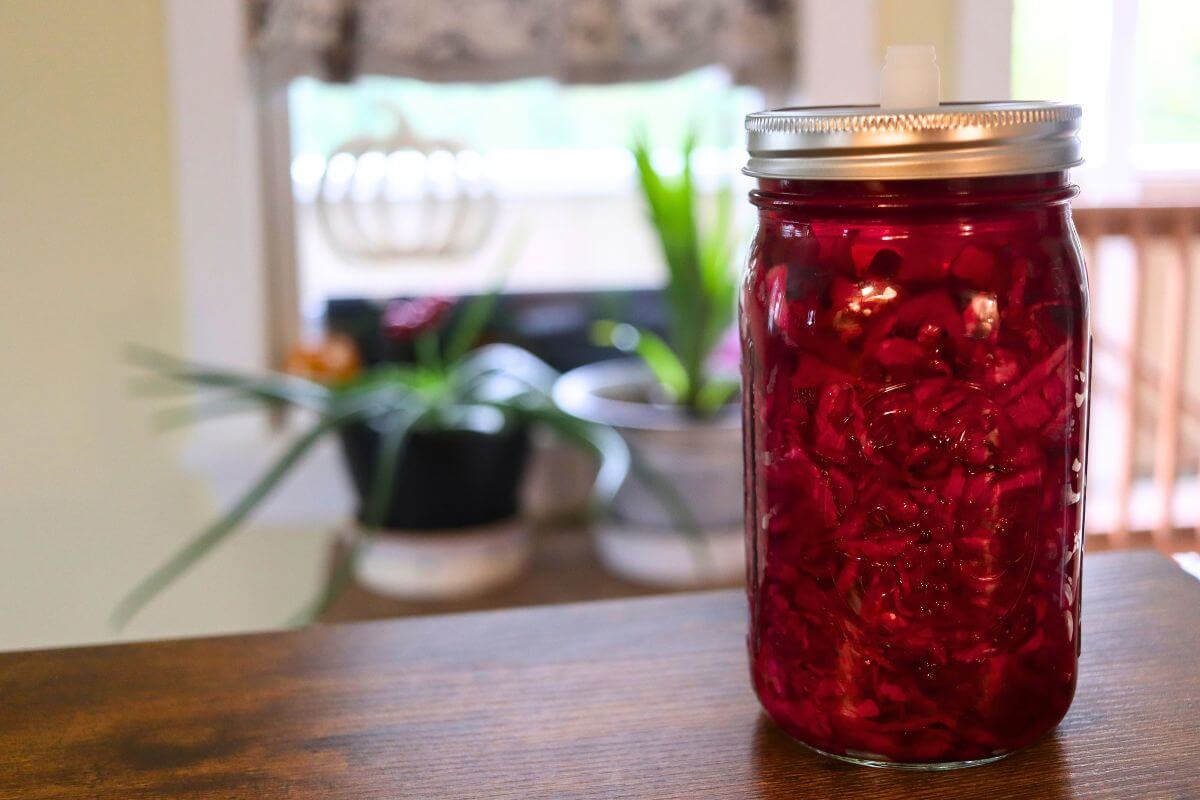
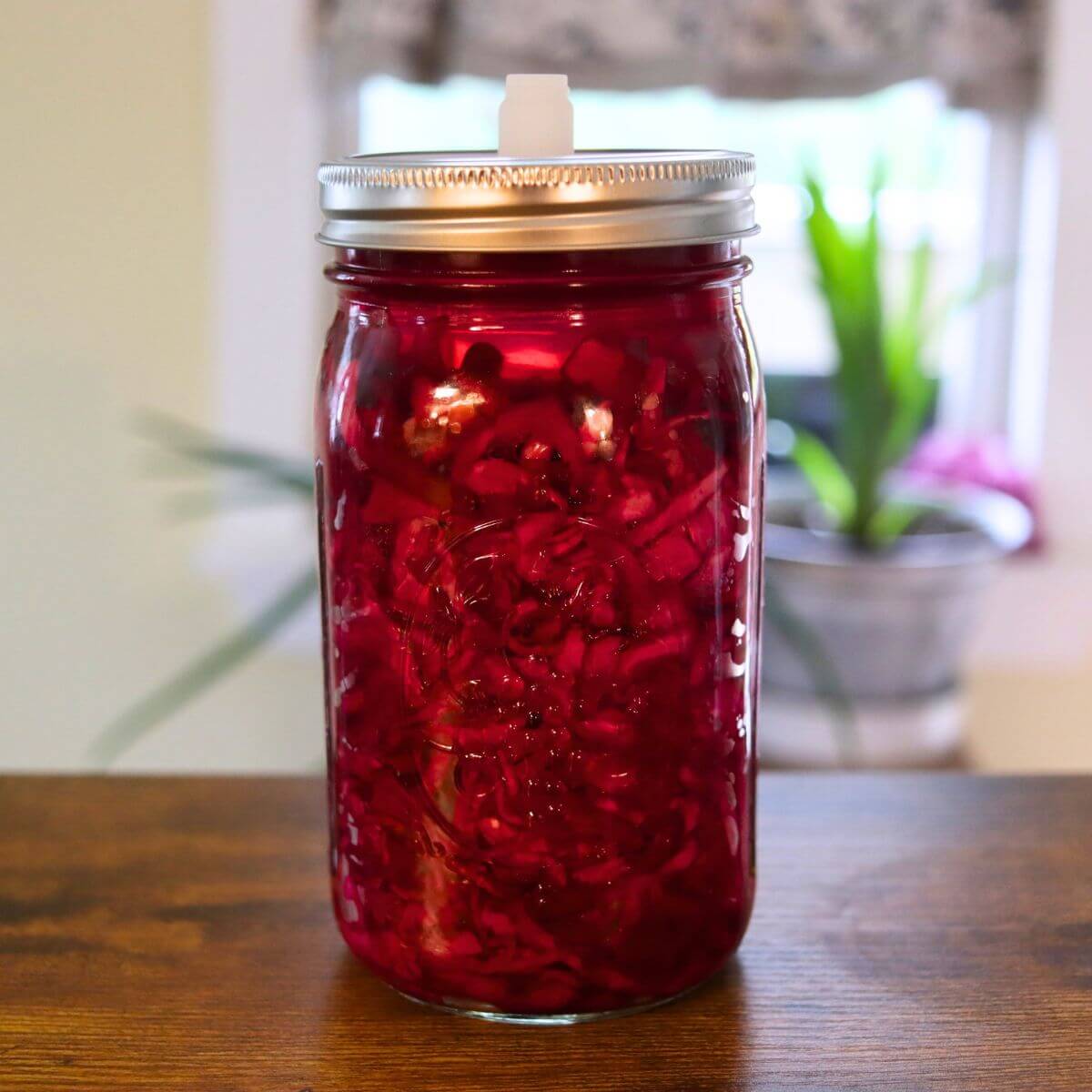
Homemade beet sauerkraut combines crisp cabbage and earthy beets in a naturally fermented kraut with a vibrant color and pleasantly tangy flavor. This small-batch recipe takes just minutes to prepare, making it an easy way to keep a flavorful homemade ferment on hand.
Beets and kraut play well together
I embarked on my sauerkraut making journey a few years ago. I love having this simple fermented vegetable on hand to serve regularly with sandwiches and dishes of all kinds. Recently, I’ve been expanding beyond simple cabbage kraut and experimenting with variations that have different flavor profiles.
This beet variety is one I quickly fell in love with. It has a tangy bite and just a hint of spiciness from fresh ginger, and the vibrant color is so eye-catching it practically begs you to dig in. If you’ve been intimidated by the thought of making your own sauerkraut at home, rest assured that it’s actually a very easy process that takes only about 15 minutes of hands on time. And with so many different varieties to experiment with, it’s a lot of fun too!
If you love preserving fruits and vegetables in the kitchen as much as I do, be sure to give my Bavarian style wine sauerkraut, homemade spicy pickled garlic, and white wine pickled mushrooms a try too.
Recipe ingredients
- Cabbage: Choose a firm, dense head of fresh cabbage with crisp leaves and no soft or discolored spots. Fresh cabbage has plenty of natural moisture, which is important for producing the brine that keeps the vegetables submerged as they ferment. It provides the crisp texture and familiar tangy cabbage flavor that form the base of the sauerkraut.
- Beets: Look for firm, smooth beets that feel heavy for their size. Fresh beets contribute natural sweetness and an earthy flavor that complements the tanginess of the fermented cabbage. They also release their deep color into the brine, giving the finished beet sauerkraut its vibrant color.
- Ginger: Fresh ginger root brings a clean, lively heat that mellows and blends with the vegetables as they ferment. Choose ginger that is firm and plump with smooth, taut skin rather than pieces that are shriveled or soft. A small amount adds a warm, spicy note that balances the earthy sweetness of the beets.
See the recipe card for full information on ingredients and quantities.
How to make beet sauerkraut
Step 1: Quarter and core the cabbage, then slice it thinly and as evenly as possible. Consistent slices will ferment more evenly and give the finished sauerkraut a better texture.
Step 2: Place the sliced cabbage in a large mixing bowl and sprinkle it with the salt. Toss thoroughly so the salt is evenly distributed throughout the cabbage. Set the bowl aside while you prepare the remaining vegetables. The salt will begin drawing moisture from the cabbage to create the natural brine needed for fermentation.
Step 3: Shred the beet and finely dice the fresh ginger while the salted cabbage rests. Add both to the bowl, then toss everything together thoroughly so the beet and ginger are evenly distributed throughout the cabbage.
Step 4: Transfer the mixture to a clean quart jar a little at a time. Use a fermentation pounder to firmly pack down each addition before adding more. Continue filling and packing the jar until the vegetables reach about 1 inch below the rim.
Would you like to save this post for later?
Step 5: Place a fermentation weight over the vegetables to hold them below the liquid as the brine develops. Cover the jar with a clean towel and allow it to sit at room temperature for 24 hours.
Step 6: After 24 hours, check the jar to make sure the vegetables are completely covered with brine. If there is not enough natural brine to keep them submerged, dissolve 1/2 teaspoon pickling salt in 1/2 cup water and add only as much of this prepared brine as needed to cover the vegetables.
Step 7: Replace the fermentation weight, making sure the vegetables remain beneath the brine, and secure a fermentation lid on the jar. If you are using a regular canning lid instead, screw it on loosely enough to allow gases produced during fermentation to escape. Alternatively, briefly loosen the lid each day to release built-up pressure, then secure it again without overtightening.
Step 8: Allow the beet sauerkraut to continue fermenting at room temperature, checking it about every 2 days. Remove any scum that develops on the surface and make sure the vegetables remain submerged beneath the brine. Begin tasting the sauerkraut after about 4 days. Once it has fermented to the tanginess and flavor you prefer, transfer it to the refrigerator.
Top tips
- Keep out of direct sunlight: Ferment the sauerkraut in a spot away from direct sunlight and major temperature fluctuations. A consistently cool room temperature encourages steady fermentation and helps maintain a crisp texture.
- Watch the temperature: A room temperature around 65°F to 72°F is a good range for sauerkraut fermentation. Warmer conditions speed fermentation and can soften the vegetables, while cooler temperatures slow the process.
- Expect color change: The beets will gradually release their pigment as the vegetables ferment, turning the cabbage and brine increasingly vibrant. This is a normal part of making beet sauerkraut.
- Use your senses: A pleasantly sour aroma, bubbling, and increasing acidity are normal signs of active fermentation. If the sauerkraut develops a distinctly rotten odor, unusual fuzzy growth, or other obvious signs of spoilage, discard the batch rather than tasting it.
Serve
Beet sauerkraut is especially good with rich, savory foods because its tangy flavor and crisp texture provide a bright contrast. Serve it alongside homemade sweet Italian sausage, fennel sausage from scratch, homemade spicy pork sausage, or savory apple pork sausage. It also makes a flavorful accompaniment to baked pork tenderloin and apples and traditional hunter beef.
Use it as a topping for sandwiches when you want to add acidity and crunch. Try it on an apple grilled cheese sandwich, traditional New York club sandwich, spicy chicken salad sandwich from scratch, or alongside a diner style hot roast beef sandwich, or old-fashioned hot hamburger sandwich.
For a simple side, pair beet sauerkraut with homemade German potato pancakes, baked or roasted potatoes, or a hearty grain bowl with roasted vegetables. It’s also an easy addition to breakfast plates with fried or scrambled eggs, omelets, or quick avocado toast.
And don’t overlook it when putting together a charcuterie board. Its vibrant color makes a beautiful addition alongside cheeses, cured meats, small batch Dijon mustard, classic garlic dill pickles, and traditional spicy pickled garlic while its tangy flavor provides a welcome contrast to the richer foods on the board.
Other recipes you’ll love
If you loved this homemade beet sauerkraut recipe, give these other great recipes a try too!
Easy Salt Preserved Lemons Recipe
Spicy Pickled Eggs Recipe With Jalapeños
Yellow Mustard Pickled Eggs Recipe
Farmhouse Red Beet Pickled Eggs (Old-Fashioned Recipe)
Beet Sauerkraut
Ingredients
- 1 pound cabbage
- 2 teaspoons pickling salt
- 6 ounces beets trimmed, peeled, and coarsely grated
- 2 slices fresh ginger peeled, quarter size
Instructions
- Quarter and core the cabbage, then thinly slice it.
- Place the cabbage in a large mixing bowl, sprinkle with the salt, and toss thoroughly to evenly distribute the salt. Let the cabbage rest while you prepare the beet and ginger.
- Shred the beet and finely dice the ginger. Add them to the cabbage and toss until evenly combined.
- Transfer the mixture to a clean quart jar, packing it down firmly with a fermentation pounder as you go. Fill the jar until the packed vegetables reach about 1 inch below the rim.
- Place a fermentation weight over the vegetables. Cover the jar with a clean towel and let it sit at room temperature for 24 hours.
- Check that the vegetables are completely covered with brine. If needed, dissolve 1/2 teaspoon pickling salt in 1/2 cup water and add enough to the jar to keep the vegetables submerged.
- Replace the fermentation weight and secure a fermentation lid. If using a regular canning lid, screw it on loosely enough to allow fermentation gases to escape, or briefly loosen it each day to release built-up pressure.
- Ferment at room temperature, checking about every 2 days for surface scum and making sure the vegetables remain submerged. Begin tasting after 4 days and continue fermenting until the beet sauerkraut reaches your preferred flavor.
- Remove the fermentation weight, cover the jar, and refrigerate the finished beet sauerkraut.
Notes
- Ferment the sauerkraut away from direct sunlight in a spot with a fairly consistent temperature. About 65°F to 72°F is a good range for steady fermentation.
- The beet will gradually color both the cabbage and brine as the sauerkraut ferments. This is completely normal.
- Bubbling and a pleasantly sour aroma are normal signs of fermentation. Discard the batch if it develops fuzzy mold, a rotten odor, or other clear signs of spoilage.
- Once refrigerated, keep the vegetables beneath the brine and use a clean utensil each time you remove sauerkraut from the jar.
Nutrition information is automatically calculated, so should only be used as an approximation.