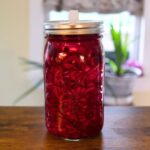
Beet Sauerkraut
This small-batch beet sauerkraut combines cabbage, fresh beets, and ginger for a crisp, tangy fermented kraut with earthy flavor and a hint of spice.
Servings 8 servings
Ingredients
- 1 pound cabbage
- 2 teaspoons pickling salt
- 6 ounces beets trimmed, peeled, and coarsely grated
- 2 slices fresh ginger peeled, quarter size
Instructions
- Quarter and core the cabbage, then thinly slice it.
- Place the cabbage in a large mixing bowl, sprinkle with the salt, and toss thoroughly to evenly distribute the salt. Let the cabbage rest while you prepare the beet and ginger.
- Shred the beet and finely dice the ginger. Add them to the cabbage and toss until evenly combined.
- Transfer the mixture to a clean quart jar, packing it down firmly with a fermentation pounder as you go. Fill the jar until the packed vegetables reach about 1 inch below the rim.
- Place a fermentation weight over the vegetables. Cover the jar with a clean towel and let it sit at room temperature for 24 hours.
- Check that the vegetables are completely covered with brine. If needed, dissolve 1/2 teaspoon pickling salt in 1/2 cup water and add enough to the jar to keep the vegetables submerged.
- Replace the fermentation weight and secure a fermentation lid. If using a regular canning lid, screw it on loosely enough to allow fermentation gases to escape, or briefly loosen it each day to release built-up pressure.
- Ferment at room temperature, checking about every 2 days for surface scum and making sure the vegetables remain submerged. Begin tasting after 4 days and continue fermenting until the beet sauerkraut reaches your preferred flavor.
- Remove the fermentation weight, cover the jar, and refrigerate the finished beet sauerkraut.
Notes
- Ferment the sauerkraut away from direct sunlight in a spot with a fairly consistent temperature. About 65°F to 72°F is a good range for steady fermentation.
- The beet will gradually color both the cabbage and brine as the sauerkraut ferments. This is completely normal.
- Bubbling and a pleasantly sour aroma are normal signs of fermentation. Discard the batch if it develops fuzzy mold, a rotten odor, or other clear signs of spoilage.
- Once refrigerated, keep the vegetables beneath the brine and use a clean utensil each time you remove sauerkraut from the jar.
