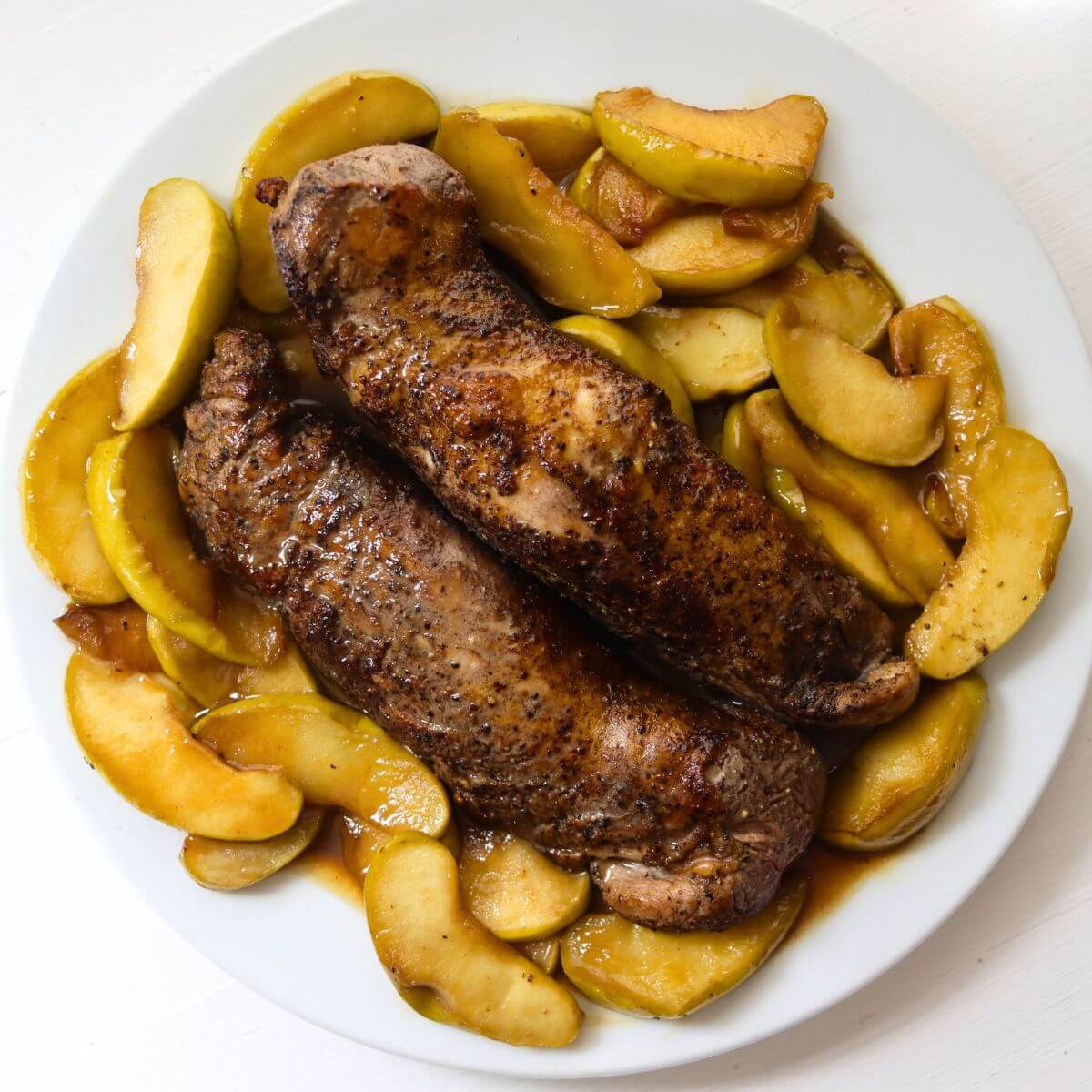
Apple and Pork Tenderloin with Maple Dijon Sauce

This apple and pork tenderloin recipe combines juicy roasted pork tenderloin, tender cooked apples, and a rich maple Dijon sauce for an easy dinner that’s full of comforting fall flavor. It’s a simple meal that’s elegant enough for guests but easy enough for a cozy family dinner any night of the week.
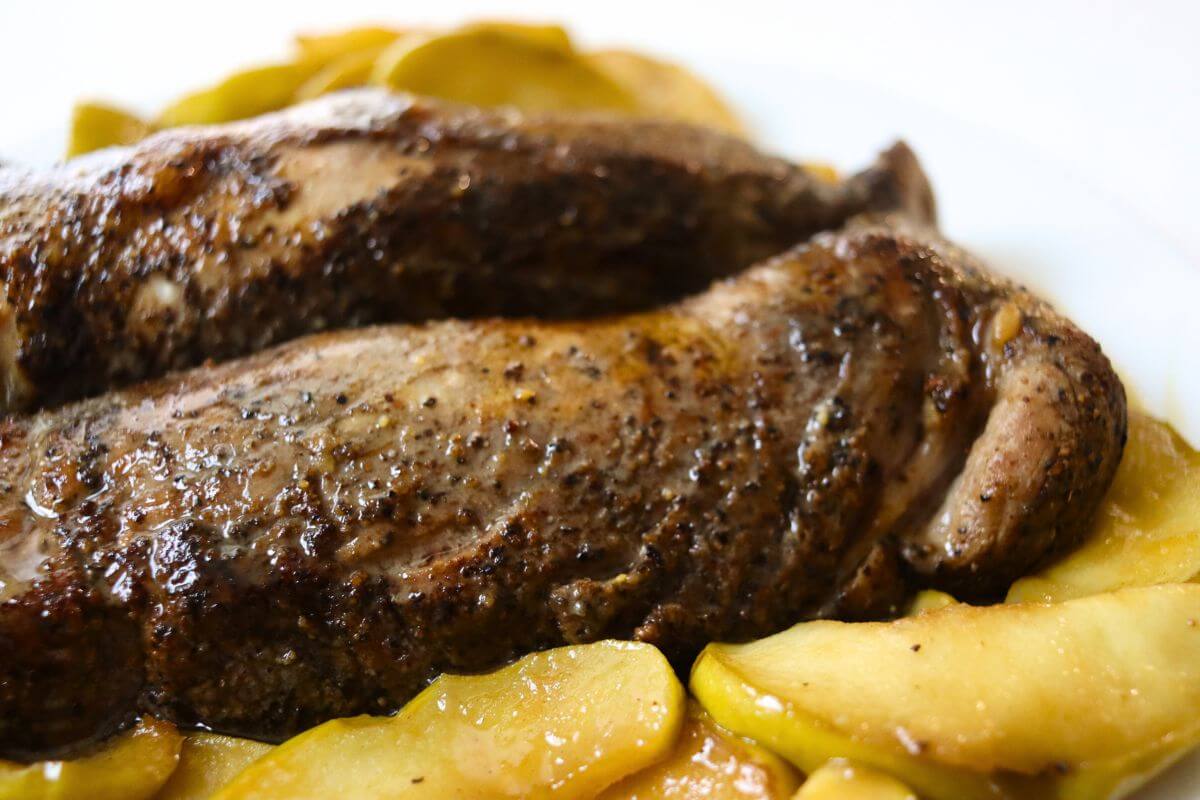
Apples and Pork — a marriage made in heaven
The first time I made this recipe, I thought I was going to be impressed by the combination of tender apples and savory, sage-seasoned pork tenderloin, and I was. But the reason I went back for seconds was the sauce — oh my, that sauce! It ties everything together with just the right balance of sweet, tangy, and savory flavors.
This dish came together so quickly in the kitchen that I found myself making it once a week all through the fall season. It still found its way onto my dinner table several more times throughout the rest of the year because it had earned its place as a favorite in my house. One of the best things about this dish is that it’s simple enough for a weeknight dinner, yet it looks and tastes like something you’d order at an upscale restaurant.
To bring more delicious main dishes to your kitchen table, give my baked pineapple BBQ chicken, sticky hot honey glazed chicken, and chicken with almond crust a try next.
Recipe ingredients
- Pork tenderloin: Choose a pork tenderloin, not a pork loin, as they’re two different cuts of meat that cook very differently. Look for a tenderloin that’s pink in color with a small amount of white marbling and little to no excess surface fat. Pork tenderloin stays tender and juicy when roasted and pairs beautifully with the sweet apples and maple Dijon sauce.
- Butter: Butter is used to sear the pork and cook the apples, adding rich flavor while helping both develop beautiful golden color. If you’d like to make your own, try my butter made from fresh cream.
- Apples: I like Granny Smith apples because their tart flavor balances the sweetness of the maple syrup, and they hold their shape well during cooking instead of turning to mush. Honeycrisp, Pink Lady, Braeburn, Jonagold, Cortland, Northern Spy, and Jazz apples are all excellent choices if you prefer a different variety.
- Maple syrup: Use 100% pure maple syrup for the best flavor. It adds natural sweetness to the sauce while bringing the rich, caramel-like notes that make the maple Dijon sauce so delicious. Avoid pancake syrup, which won’t produce the same depth of flavor.
- Apple cider vinegar: Apple cider vinegar brightens the sauce with a touch of acidity, balancing the sweetness of the maple syrup and complementing the apples without taking over the flavor of the dish.
- Dijon mustard: Dijon mustard gives the sauce its signature tangy flavor while helping emulsify the butter, maple syrup, and vinegar into a smooth, silky sauce that coats the pork and apples beautifully. Make your own simple Dijon mustard or use a good-quality prepared Dijon with balanced acidity and little to no added sweetness.
See the recipe card for full information on ingredients and quantities.
How to make apple and pork tenderloin
Step 1: Preheat your oven to 425°F (220°C). Generously season the pork tenderloin on all sides with the salt, coarse black pepper, and ground sage, then gently pat the seasonings onto the meat with your hands so they adhere well.
Step 2: Melt 2 tablespoons of the butter in a large skillet over medium heat. Once the butter begins to foam, add the pork tenderloin and sear it on all sides until lightly browned, turning as needed to develop an even golden crust.
Step 3: Transfer the seared pork tenderloin to a silicone-lined baking sheet. Roast for about 15 minutes, or until the thickest part reaches an internal temperature of 145°F (63°C). Remove it from the oven and let it rest for 5 minutes before slicing to help keep the juices in the meat.
Step 4: While the pork is roasting, prepare the maple Dijon sauce. Melt the remaining butter in the same skillet used to sear the pork, then add the apple slices. Sauté, stirring occasionally, until they begin to soften but still hold their shape.
Would you like to save this post for later?
Step 5: In a small bowl, whisk together the maple syrup, apple cider vinegar, and Dijon mustard until smooth and well combined.
Step 6: Pour the maple Dijon mixture into the skillet with the apples and stir to coat them evenly. Bring the sauce to a gentle simmer and cook for about 3 minutes, stirring occasionally, until it thickens slightly and coats the apples.
Step 7: Slice the rested pork tenderloin and arrange it on serving plates. Spoon the cooked apples over and around the pork, then drizzle the warm maple Dijon sauce over the top before serving.
Top tips
- Don’t skip the sear: Searing the pork before roasting creates a flavorful golden crust that adds richness and depth to the finished dish while improving its color and texture.
- Use an instant-read thermometer: Pork tenderloin cooks quickly because it’s a lean cut of meat. An instant-read thermometer is the most reliable way to know when it’s perfectly cooked, helping you serve juicy, tender pork every time.
- Slice the apples evenly: Cut the apples into slices of equal thickness so they cook evenly. Uniform slices soften at the same rate, hold their shape better, and give the finished dish a more polished presentation.
- Let the skillet do the work: Stir the apples only occasionally as they cook. Leaving them undisturbed between stirs allows them to develop light caramelization, creating deeper flavor and better color.
- Watch the sauce as it reduces: The maple Dijon sauce thickens quickly as it simmers. Remove it from the heat as soon as it lightly coats the back of a spoon so it stays smooth enough to spoon over the pork and apples.
- Serve immediately: This dish is best served while the pork is warm and the maple Dijon sauce is still silky. Serving it right away lets you enjoy the best texture and flavor from both the pork and the apples.
Serve
This apple and pork tenderloin is delicious served with a hearty potato side. Creamy homemade garlic cheese mashed potatoes and homemade twice baked potatoes are easy favorites, while crispy Asiago potato wedges are the perfect choice when you’re craving something with a little crunch. Classic German potato pancakes are a comforting twist that pairs perfectly with tender sage-seasoned pork and soft cooked apples.
For vegetables, southern style stewed green beans bring rich, slow-cooked flavor that pairs beautifully with the savory pork, while honey balsamic glazed carrots complement the sweet apples beautifully. Roasted Brussels sprouts or steamed broccoli also make excellent choices for bringing more vegetables to the plate.
No comforting dinner is complete without warm bread on the table. Make a batch of farmhouse yeast dinner rolls or homemade pumpkin dinner rolls to serve alongside the meal. Or, make a batch of easy homemade slider buns (which also make great dinner rolls) and use the leftover pork and buns to make delicious mini pork sandwiches for lunch the next day.
Other recipes you’ll love
If you loved this from scratch dinner recipe, give these other great main dish recipes a try too!
Italian Baked Chicken and Potatoes
Old-Fashioned Chicken Casserole
Cajun Smothered Chicken Recipe
BBQ Chicken Leg Quarters Recipe
Spicy Grilled Chicken Recipe
Old-Fashioned Baked Chicken
Apple and Pork Tenderloin
Ingredients
- 2 pounds pork tenderloin
- salt
- coarse ground black pepper
- ground sage
- 4 tablespoons butter separated
- 2 Granny Smith apples cored and sliced
- 6 tablespoons pure maple syrup
- 1/4 cup apple cider vinegar
- 4 teaspoons Dijon mustard
Instructions
- Preheat the oven to 425°F (220°C). Generously season the pork tenderloin on all sides with the salt, coarse black pepper, and ground sage, gently patting the seasonings onto the meat.
- Melt 2 tablespoons of butter in a skillet over medium heat. When the butter begins to foam, sear the pork on all sides until lightly browned.
- Transfer the pork to a silicone-lined baking sheet and roast for about 15 minutes, or until it reaches an internal temperature of 145°F (63°C). Rest for 5 minutes before slicing.
- Meanwhile, melt the remaining butter in the same skillet. Add the apples and cook until they begin to soften.
- Whisk together the maple syrup, apple cider vinegar, and Dijon mustard. Stir the mixture into the apples and simmer for about 3 minutes, or until the sauce thickens slightly.
- Slice the pork and serve with the cooked apples. Spoon the maple Dijon sauce over the top before serving.
Notes
- Pork tenderloin and pork loin are different cuts of meat. Use pork tenderloin for this recipe to ensure the correct cooking time and a tender result.
- Check the pork with an instant-read thermometer and remove it from the oven when it reaches 145°F (63°C). Resting the meat before slicing helps keep it juicy.
- Granny Smith apples provide a tart flavor and hold their shape well during cooking, but Honeycrisp, Pink Lady, Braeburn, Jonagold, Cortland, Northern Spy, and Jazz apples are all excellent alternatives.
- The maple Dijon sauce will continue to thicken slightly as it cools. If it becomes thicker than you’d like, stir in a small splash of water or chicken broth until it reaches your desired consistency.
Nutrition
Nutrition information is automatically calculated, so should only be used as an approximation.