Homemade Wine Sauerkraut

Homemade wine sauerkraut turns simple cabbage into a tangy, deeply flavorful fermented side with the added complexity of white wine. It’s a versatile staple to keep on hand for serving alongside everything from simple weeknight meals to hearty traditional dishes.
Boozy kraut makes dinner better
I’m a sauerkraut lover, and I like to keep a variety of krauts with different flavor profiles in the refrigerator. That way, I can choose which one to serve with dinner based on both my mood and the dish I’m making.
This wine fermented sauerkraut recipe is one of my favorites. It’s a Bavarian-style sauerkraut with a distinctive white wine-infused flavor and warm, earthy notes of caraway seed. And because it uses a simple, traditional fermentation method, it takes just minutes of hands-on time to get a batch started.
If you love preserving fruits and vegetables in the kitchen as much as I do, be sure to give my quick pickled spicy garlic, classic pickled mushrooms, and traditional garlic pickles a try too.
Recipe ingredients
- Cabbage: Choose a firm, heavy head of fresh cabbage with tightly packed, crisp leaves. Fresh cabbage contains plenty of natural moisture, which is drawn out during salting to create the brine needed for fermentation. Its mild flavor also provides a clean base for the wine and caraway.
- Caraway seeds: Use whole caraway seeds for their distinctive earthy, warm flavor with subtle anise-like notes. Caraway is a traditional pairing with cabbage and gives the wine sauerkraut much of its characteristic Bavarian-style flavor.
- White wine: Choose a dry white wine rather than a sweet variety so it adds complexity without introducing unnecessary sweetness. A clean, crisp wine brings gentle acidity and fruit-forward notes that complement the tang of the fermented cabbage and the earthy caraway.
See the recipe card for full information on ingredients and quantities.
How to make wine sauerkraut
Step 1: Cut the cabbage into quarters and remove the tough core from each quarter. Thinly slice the cabbage into shreds about the thickness of a quarter, keeping the slices as even as possible so they ferment at a similar rate.
Step 2: Place the sliced cabbage in a large mixing bowl. Sprinkle the salt and caraway seeds evenly over the top, then toss thoroughly so they are well distributed throughout the cabbage.
Step 3: Transfer the cabbage to a clean quart jar a little at a time, firmly pressing it down with a fermentation tamper as you work. Packing the cabbage tightly helps release its natural juices and remove air pockets. Place a fermentation weight on top to keep the cabbage submerged beneath the brine as it develops, then secure a fermentation lid on the jar. If you’re using a regular canning jar lid instead, screw it on loosely enough to allow the gases produced during fermentation to escape; do not tighten it as you would for storage.
Step 4: After 24 hours, remove the lid and fermentation weight. Pour the white wine over the cabbage, then replace the weight, making sure the cabbage remains pressed beneath the liquid. Replace the fermentation lid, or loosely replace the regular lid.
Step 5: Check the jar every two days for any scum that develops on the surface. Remove it promptly, take out the fermentation weight and wash it thoroughly before returning it to the jar. Keep the cabbage beneath the liquid, then replace the lid and allow the fermentation to continue.
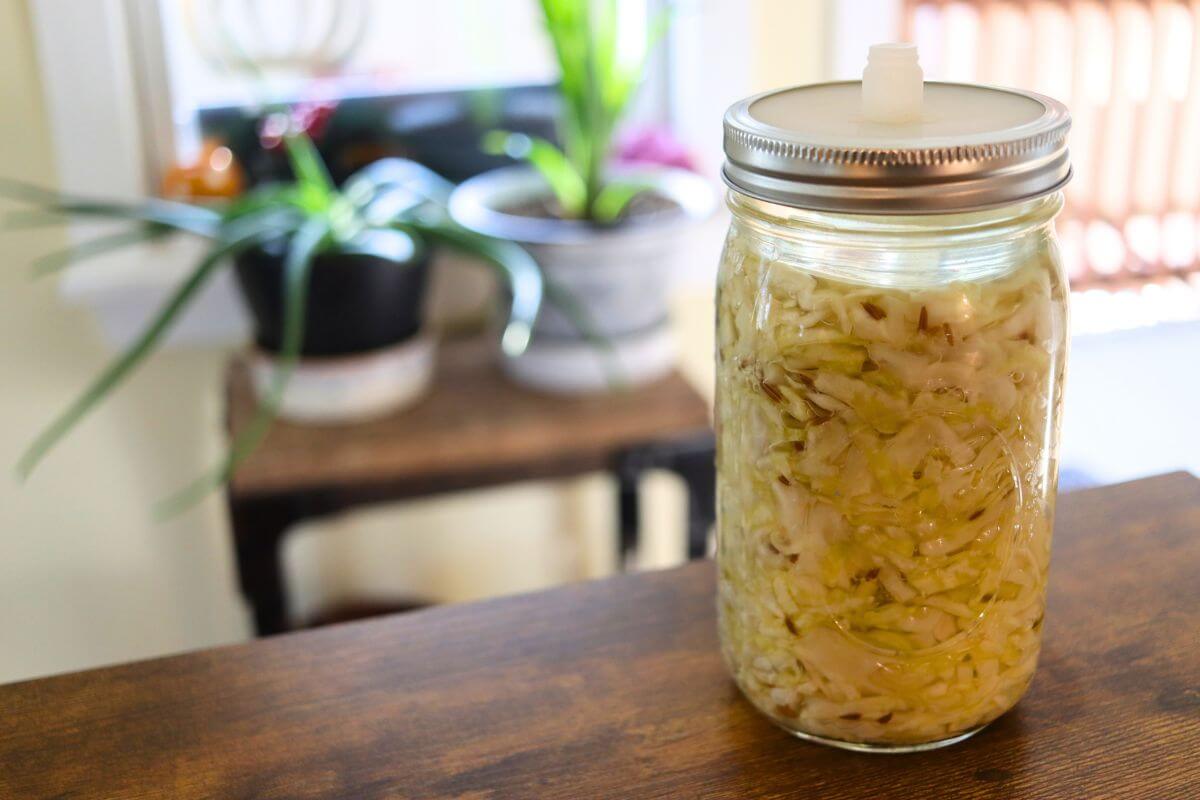
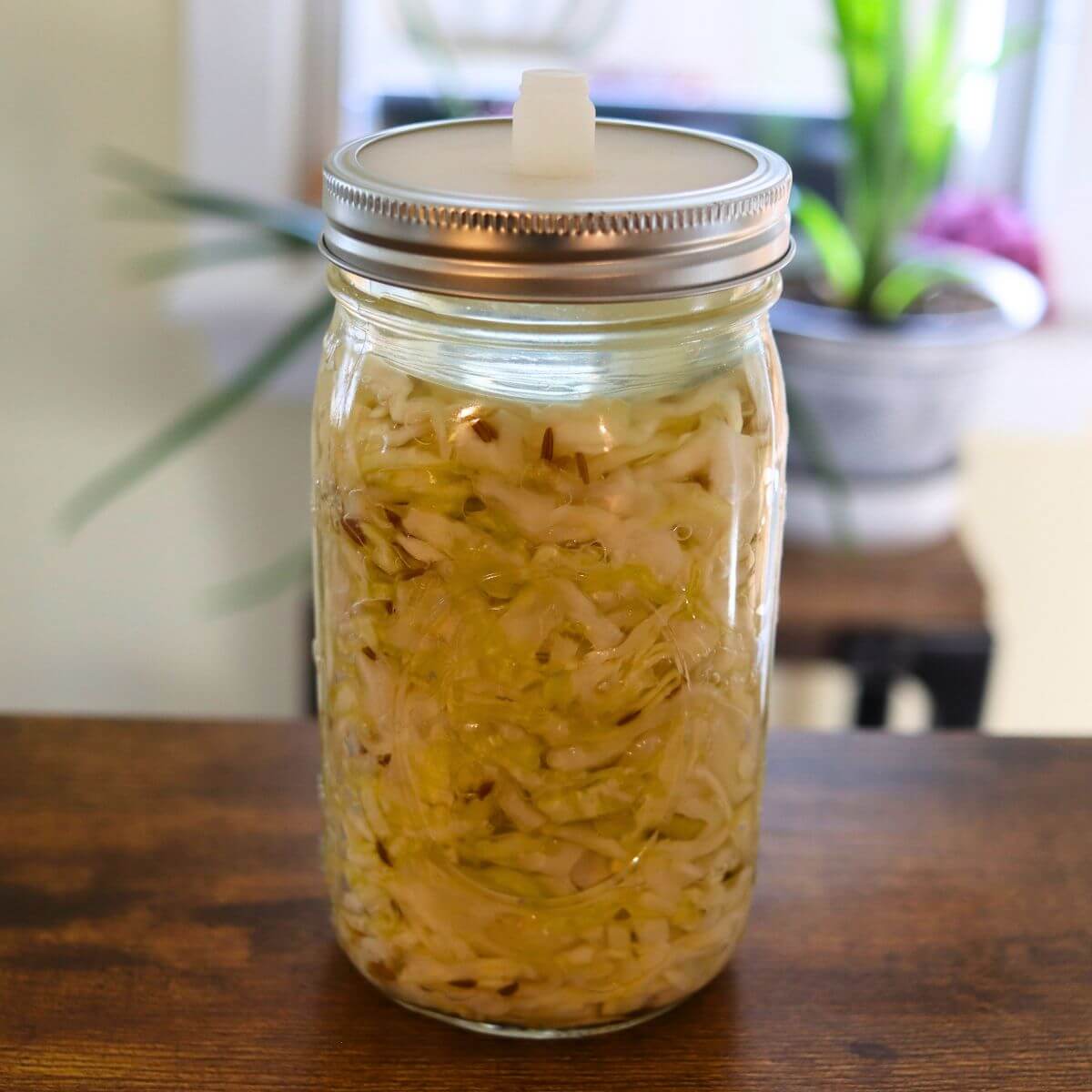
Step 6: Begin tasting the wine sauerkraut after about 2 weeks. Continue fermenting until it develops the tart, full flavor you prefer. When finished, the cabbage will have softened while retaining some texture and will take on a pale golden color. Once the flavor is where you want it, store the sauerkraut in the refrigerator or another reliably cold location to slow the fermentation.
Would you like to save this post for later?
Top tips
- Leave enough headspace: Fermenting cabbage can expand and push liquid upward as gases develop. Leaving some open space at the top of the jar helps prevent brine from being forced out.
- Set jar on a small plate: Even with adequate headspace, an active ferment can bubble liquid through the lid. A dish underneath catches any overflow and keeps your work surface clean.
- Keep out of direct sunlight: Ferment the sauerkraut in a shaded location with a relatively stable temperature. Direct sunlight and large temperature swings can interfere with a steady fermentation.
- Expect fermentation rate to vary: A warmer kitchen generally speeds fermentation, while a cooler kitchen slows it down. This is one reason flavor, rather than a strict number of days, is the best indicator of when your sauerkraut is ready.
- Use clean utensils: Anything that comes into contact with the sauerkraut during fermentation should be thoroughly clean. This helps avoid introducing unwanted microorganisms into the ferment.
- Watch the liquid level: If evaporation or overflow causes the brine level to drop enough that the cabbage is no longer submerged, add enough properly prepared salt brine (1/2 teaspoons pickling salt to 1/2 cup water) to restore coverage rather than adding plain water.
Serve
Wine sauerkraut pairs particularly well with rich meats, hearty sausages, and simple potato dishes. Its tart flavor and notes of white wine and caraway make it a natural addition to both traditional German-style meals and everyday dinners.
For a hearty sausage dinner, serve it with sweet Italian sausage from scratch, homemade fennel sausage, spicy Italian sausage, or homemade apple pork sausage. It’s also a great topping for bratwurst, knockwurst, kielbasa, and sausage sandwiches served with Dijon mustard from scratch.
Pork is another natural pairing. Try it with pork tenderloin with apples, roasted pork, pork chops, or a slow-cooked pork roast. For poultry, serve it alongside oven baked Italian chicken and potatoes, seasoned baked chicken, Cajun seasoned turkey breast, or apple cider brine turkey thighs.
For a traditional pairing, serve wine sauerkraut with traditional German potato pancakes. It also goes well with classic mashed potatoes, crispy roasted potatoes, buttered potatoes, spaetzle, or pierogi.
You can also pile it onto a Reuben or corned beef sandwich, serve it with pot roast, or add it to a spread of cured meats, cheeses, mustard (try my small batch Dijon) , and artisan rye bread from scratch.
Other posts you’ll love
If you loved this homemade wine sauerkraut recipe, give these other great recipes a try too!
Easy Salt Preserved Lemons Recipe
Spicy Pickled Eggs Recipe With Jalapeños
Yellow Mustard Pickled Eggs Recipe
Farmhouse Red Beet Pickled Eggs (Old-Fashioned Recipe)
Wine Sauerkraut
Ingredients
- 1 1/2 pounds cabbage
- 5 teaspoons pickling salt
- 2 teaspoons caraway seeds
- 1/4 cup dry white wine
Instructions
- Cut the cabbage into quarters and remove the core. Thinly slice the cabbage into shreds about the thickness of a quarter.
- Place the cabbage in a large mixing bowl. Sprinkle the salt and caraway seeds over the top and toss until evenly distributed.
- Pack the cabbage firmly into a clean quart jar, pressing it down with a fermentation tamper as you work. Place a fermentation weight on top and cover with a fermentation lid. If using a regular canning lid, screw it on loosely to allow fermentation gases to escape.
- After 24 hours, remove the lid and fermentation weight. Pour in the white wine, then replace the weight and lid, keeping the cabbage beneath the liquid.
- Check the sauerkraut every 2 days. Remove any scum from the surface, wash the fermentation weight, and return it to the jar. Replace the lid and continue fermenting.
- Begin tasting the wine sauerkraut after 2 weeks. When it has a tart, full flavor and pale golden color, transfer it to the refrigerator or another reliably cold location for storage.
Notes
- Use fresh, firm cabbage for the best texture and natural moisture content.
- Choose a dry white wine rather than a sweet variety.
- Leave some headspace in the jar to allow for expansion and bubbling during fermentation.
- Set the jar on a small plate or shallow dish to catch any brine that may bubble out.
- Keep the ferment out of direct sunlight in a location with a relatively stable temperature.
- Fermentation progresses faster in a warmer kitchen and more slowly in a cooler one, so use flavor rather than time alone to determine when the sauerkraut is ready.
- Always use clean utensils when handling the sauerkraut during fermentation.
- If the liquid level drops below the cabbage, add salt brine rather than plain water (½ teaspoon pickling salt dissolved in ½ cup water) to keep the cabbage submerged.
Nutrition information is automatically calculated, so should only be used as an approximation.