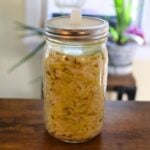
Wine Sauerkraut
Homemade wine sauerkraut is a simple fermented cabbage with dry white wine and caraway seeds for a tart, full flavor.
Servings 8 servings
Ingredients
- 1 1/2 pounds cabbage
- 5 teaspoons pickling salt
- 2 teaspoons caraway seeds
- 1/4 cup dry white wine
Instructions
- Cut the cabbage into quarters and remove the core. Thinly slice the cabbage into shreds about the thickness of a quarter.
- Place the cabbage in a large mixing bowl. Sprinkle the salt and caraway seeds over the top and toss until evenly distributed.
- Pack the cabbage firmly into a clean quart jar, pressing it down with a fermentation tamper as you work. Place a fermentation weight on top and cover with a fermentation lid. If using a regular canning lid, screw it on loosely to allow fermentation gases to escape.
- After 24 hours, remove the lid and fermentation weight. Pour in the white wine, then replace the weight and lid, keeping the cabbage beneath the liquid.
- Check the sauerkraut every 2 days. Remove any scum from the surface, wash the fermentation weight, and return it to the jar. Replace the lid and continue fermenting.
- Begin tasting the wine sauerkraut after 2 weeks. When it has a tart, full flavor and pale golden color, transfer it to the refrigerator or another reliably cold location for storage.
Notes
- Use fresh, firm cabbage for the best texture and natural moisture content.
- Choose a dry white wine rather than a sweet variety.
- Leave some headspace in the jar to allow for expansion and bubbling during fermentation.
- Set the jar on a small plate or shallow dish to catch any brine that may bubble out.
- Keep the ferment out of direct sunlight in a location with a relatively stable temperature.
- Fermentation progresses faster in a warmer kitchen and more slowly in a cooler one, so use flavor rather than time alone to determine when the sauerkraut is ready.
- Always use clean utensils when handling the sauerkraut during fermentation.
- If the liquid level drops below the cabbage, add salt brine rather than plain water (½ teaspoon pickling salt dissolved in ½ cup water) to keep the cabbage submerged.
