
Korean Vegetable Pancakes (with Dipping Sauce)

Korean vegetable pancakes (Yachaejeon) are a traditional Korean dish made by combining a variety of fresh vegetables with a light batter before pan-frying them until crisp and golden. They’re traditionally served with a simple homemade dipping sauce that adds a savory, tangy finish to every bite.

Turn veggies into savory pancakes
If there’s a way to use up extra vegetables from my refrigerator, I’ll find it! So when a friend introduced me to this vegan Korean pancake recipe, I knew they were going to become a staple in my kitchen for that very reason. They’re the perfect way to turn just about any combination of vegetables and a few everyday pantry ingredients into a delicious appetizer, side dish, snack, light lunch, or even a simple dinner.
These traditional Korean pancakes are naturally vegan, using a simple batter that’s made without eggs or dairy. It binds the vegetables together while still cooking up light and crisp, giving the pancakes their signature texture without weighing them down.
If you’re looking for more vegetable-forward side dishes to bring to your kitchen table, give my slow simmered green beans, sautéed zucchini and tomatoes, and honey balsamic glazed carrots a try next.
Recipe ingredients
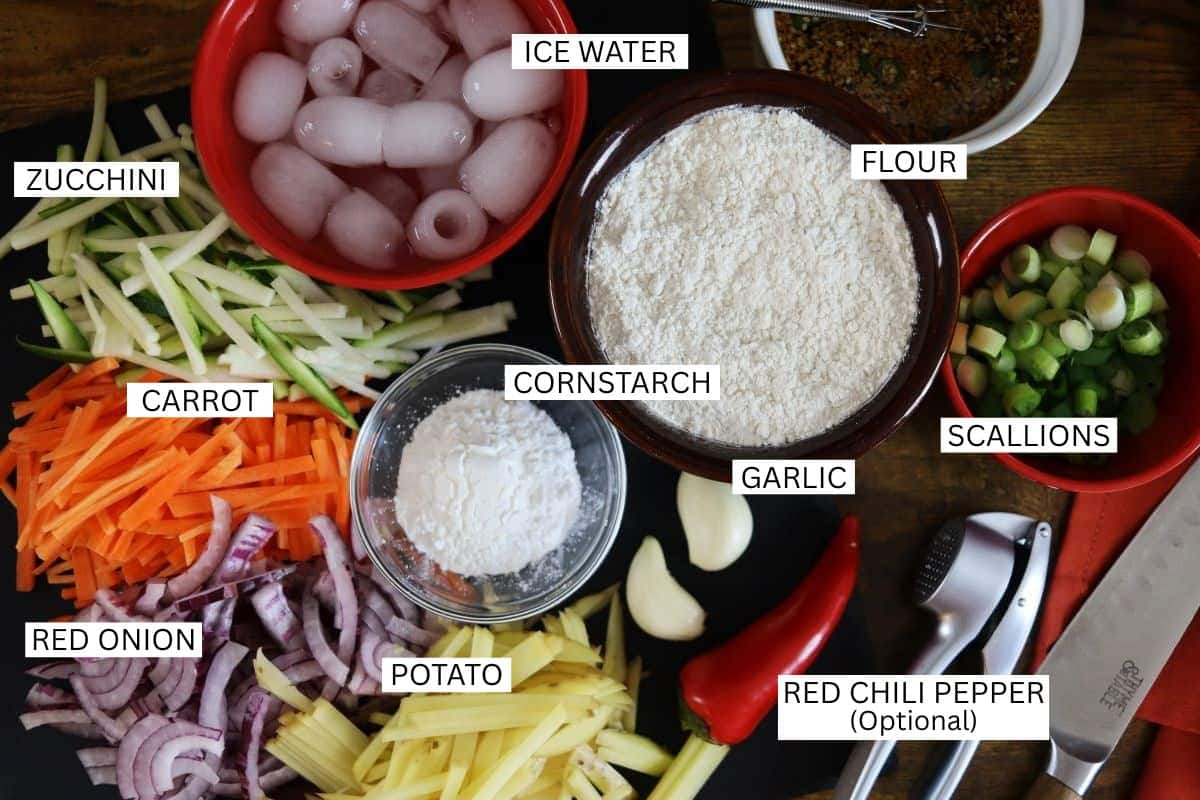
- Vegetables: Almost any combination of vegetables works well in these veggie pancakes, making them a great recipe to use up what you already have on hand. I used zucchini, yellow potatoes, red onion, and carrots, but vegetables like cabbage, mushrooms, green onions, bell peppers, bean sprouts, and sweet potatoes are all excellent choices. Try to slice the vegetables into thin, uniform pieces so they cook evenly and hold together well in the batter.
- Cornstarch: Cornstarch is what gives these pancakes their signature light, crisp texture. It helps the batter fry up beautifully without becoming dense or heavy, allowing the vegetables to remain the star of the dish.
- Ice-Cold Water: The colder the water, the better. Ice-cold water helps create a lighter batter that crisps beautifully as it cooks, producing the delicate texture that’s characteristic of traditional Korean vegetable pancakes.
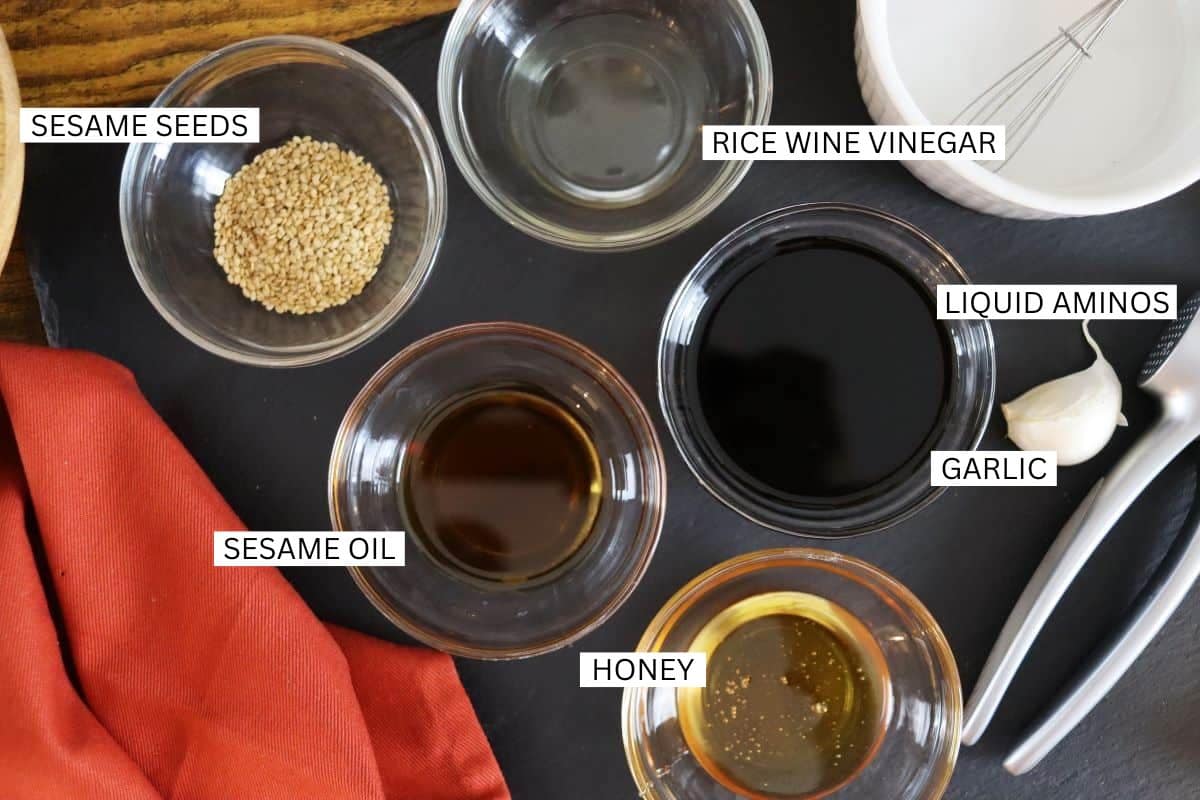
- Liquid Aminos: Liquid aminos give the dipping sauce a rich, savory flavor with plenty of umami. Soy sauce can be substituted if needed, but the flavor won’t be nearly as pronounced, resulting in a milder dipping sauce.
- Sesame Oil: Sesame oil adds a deep, nutty aroma that’s essential to the dipping sauce. Because its flavor is concentrated, a small amount is all that’s needed for its flavor to shine in the sauce.
- Rice Vinegar: Use unseasoned rice vinegar for the cleanest flavor. Its mild acidity balances the savory ingredients in the dipping sauce while allowing the flavor of the vegetables to remain front and center.
See the recipe card for full information on ingredients and quantities.
How to make Korean vegetable pancakes
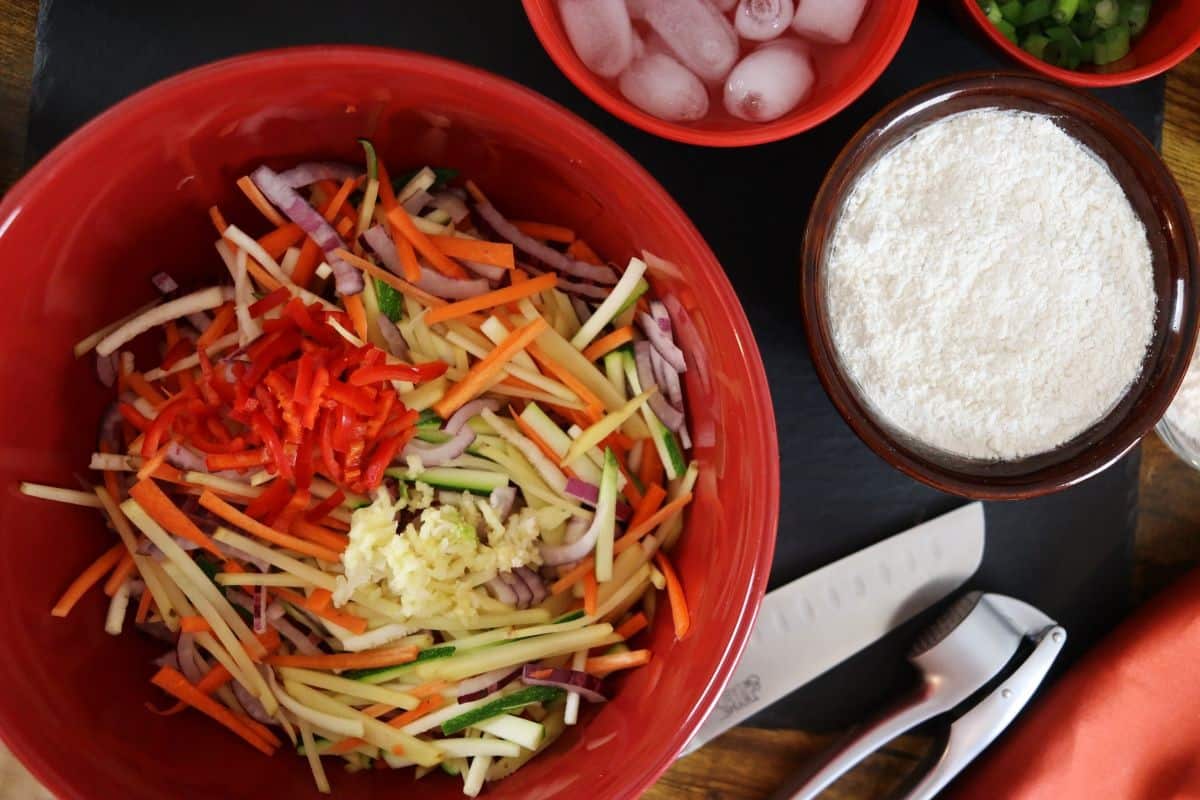
Step 1: Julienne the zucchini, yellow potatoes, carrot, and red onion into thin, even strips and place them in a large mixing bowl. Press two cloves of the garlic directly into the vegetables, then add the thinly sliced chili pepper if you’re using it. Toss everything together until the vegetables and garlic are evenly distributed.
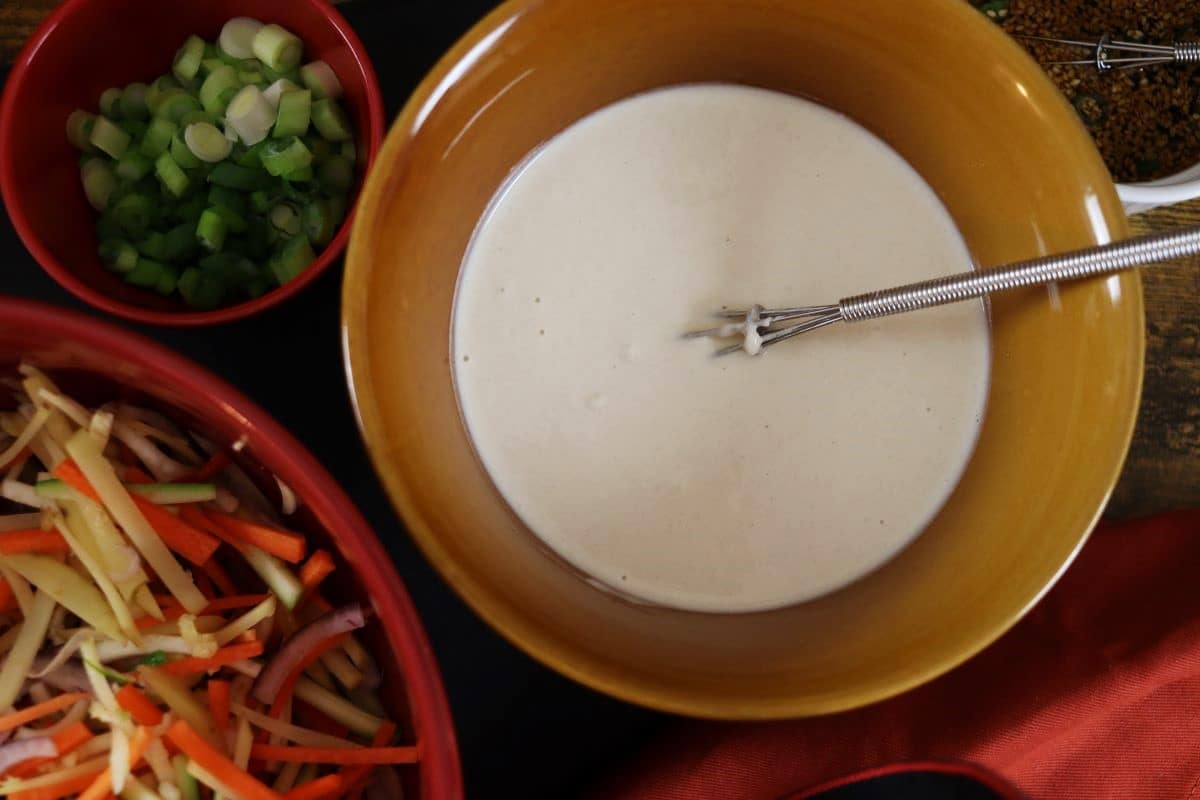
Step 2: In a medium mixing bowl, whisk the flour and cornstarch together until combined. Gradually pour in the ice-cold water while whisking continuously until a very thick, smooth batter forms with no dry pockets of flour remaining.
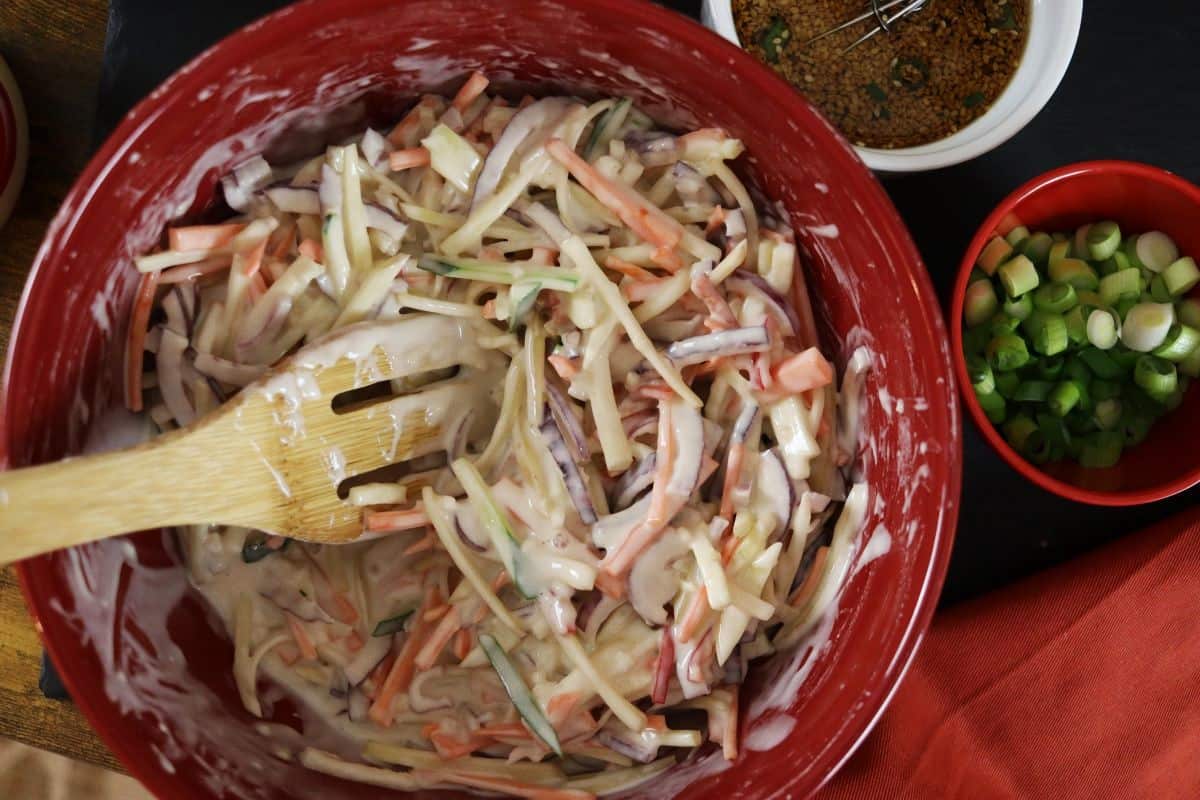
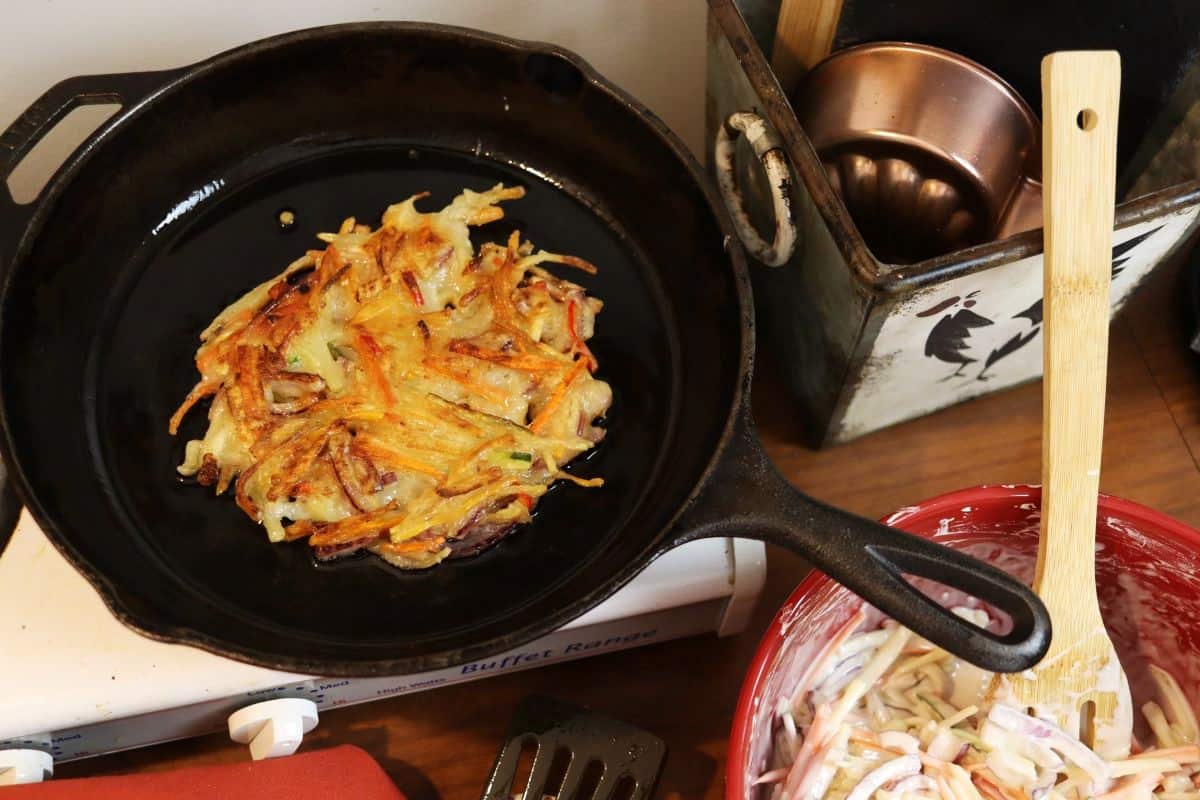
Step 3: Pour the batter over the vegetables and stir thoroughly until every piece is evenly coated. The batter should cling to the vegetables rather than pool in the bottom of the bowl.
Step 4: Pour enough oil into a cast iron skillet to completely coat the bottom and heat it over medium heat. Working in batches, spoon portions of the vegetable mixture into the hot skillet and gently flatten each one into an even layer with the back of a spatula. Cook until the bottom is deep golden brown and crisp, then carefully flip and cook the second side until equally crisp and the vegetables are tender.
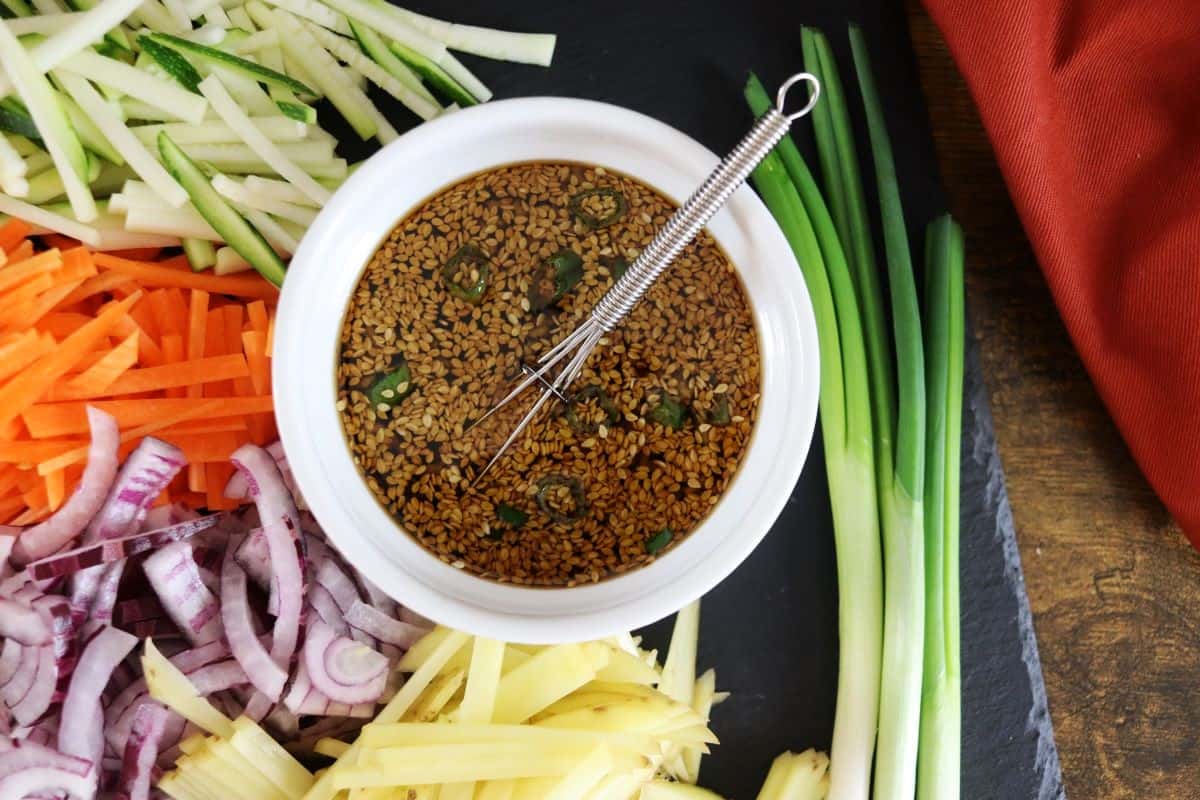
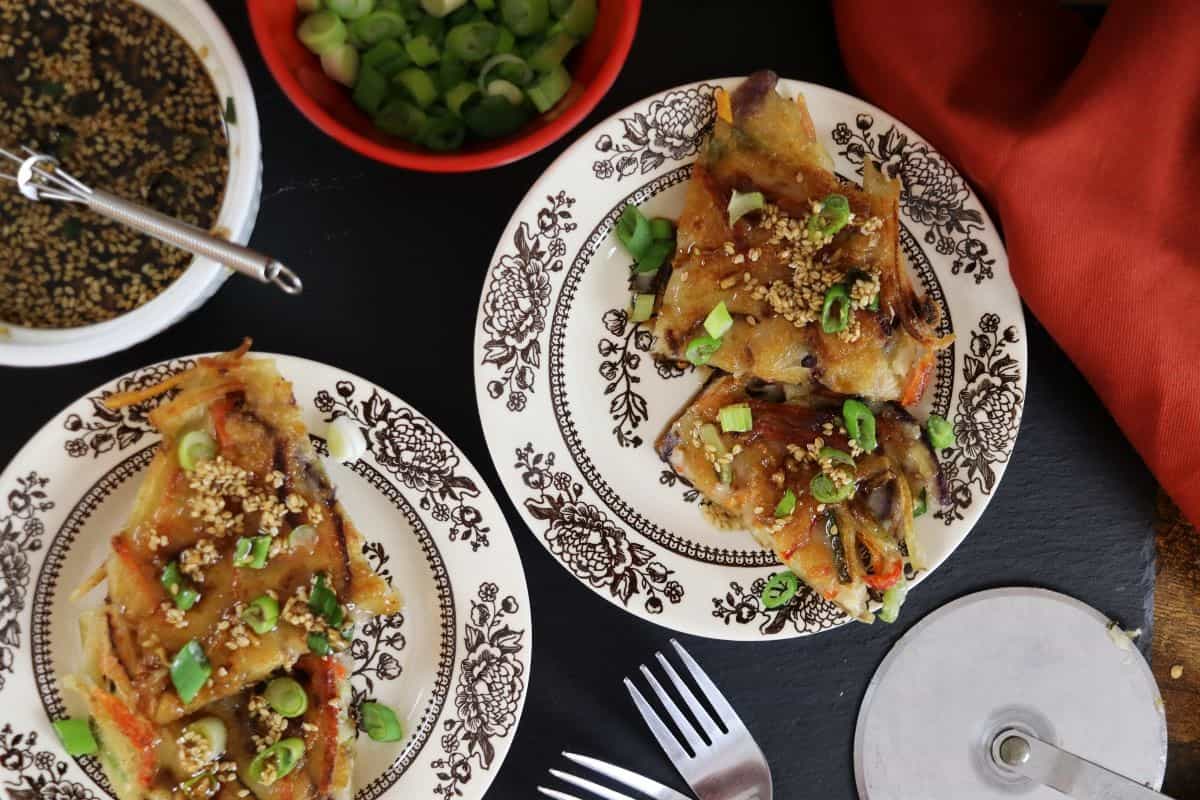
Step 5: While the pancakes are cooking, combine the liquid aminos, sesame oil, honey, rice vinegar, sesame seeds, and remaining garlic clove in a small bowl. Whisk until the sauce is smooth and well combined.
Step 6: Slice each Korean vegetable pancake into quarters and transfer them to a serving platter. Sprinkle with freshly sliced scallions just before serving and serve immediately with the homemade dipping sauce alongside.
Top tips
- Prep Ahead: The vegetables can be washed, peeled if needed, and julienned up to a day in advance, then stored in an airtight container in the refrigerator. Wait to prepare the batter until just before combining it with the vegetables so you can use ice-cold water for the lightest, crispiest pancakes.
- Keep Vegetables Dry: Fresh vegetables naturally release moisture after they’re cut, especially zucchini. If they become wet before you mix the batter, gently pat them dry with paper towels. Excess moisture can dilute the batter, making it more difficult for the pancakes keep their structure while cooking.
- Adjust the Heat: Medium heat is a good starting point, but every stovetop cooks differently. If the pancakes are browning before the vegetables have softened, reduce the heat slightly. If they’re taking too long to develop color, increase it just enough to maintain a steady, even sizzle without scorching the batter.
- Spread Gently in Pan: Once the vegetable mixture is in the skillet, use a the backside of a spoon to gently flatten it into an even layer. Applying only light pressure helps the vegetables stay coated in batter while ensuring the pancake cooks evenly from edge to center.
- Let Fully Crisp: Allow the first side to develop a deep golden crust before attempting to flip it. A well-formed crust helps hold the pancake together, making it much easier to turn without breaking apart and giving the second side the best chance to brown evenly.
- Serve Immediately: Korean vegetable pancakes are at their best straight from the skillet. Serving them while they’re still hot preserves their crisp exterior and provides the best contrast with the tender vegetables inside.
- Reheat in Skillet: For the crispiest results, reheat leftover pancakes in a lightly oiled skillet over medium heat until they’re hot and crisp on both sides. This restores their texture much better than microwaving, which softens the crust.
Other recipes you’ll love
If you loved this Korean pancake side dish recipe, give these other great side dish recipes a try too!
Authentic German Potato Pancakes
Old Fashioned Farmhouse Coleslaw
Classic Twice Baked Potato
Garlic Asiago Potato Wedges
Caramel Applesauce Recipe
Old Fashioned Turkey Dressing Recipe

Korean Vegetable Pancakes
Ingredients
- 1 cup julienned zucchini
- 1 cup julienned yellow potatoes
- 1 cup julienned red onion
- 1 cup julienned carrots
- 1 julienned red chili pepper optional
- 3 large garlic cloves separated, pressed
- 1 1/2 cups all-purpose flour
- 3 tablespoons cornstarch
- 1 1/3 cups water icy cold
- 1/2 cup vegetable oil for frying
- 3 scallions chopped
- 1/2 cup liquid aminos
- 1 tablespoon sesame oil
- 1 tablespoon honey
- 2 teaspoons rice vinegar
- 1 1/2 teaspoons sesame seeds toasted
Instructions
- Julienne the zucchini, yellow potatoes, carrot, and red onion. Place them in a large bowl with two of the pressed garlic cloves and sliced chili pepper, if using. Toss to combine.
- Whisk the flour and cornstarch together in a medium bowl. Add the ice-cold water and whisk until a thick, smooth batter forms.
- Pour the batter over the vegetables and stir until all of the vegetables are evenly coated.
- Heat enough oil to coat the bottom of a cast iron skillet over medium heat.
- Spoon portions of the vegetable mixture into the hot skillet and gently flatten each into an even layer.
- Cook until the bottom is golden brown and crisp. Flip and cook the second side until golden brown and the vegetables are tender. Repeat with the remaining batter, adding more oil as needed.
- Whisk together the liquid aminos, sesame oil, honey, rice vinegar, sesame seeds, and the remaining garlic clove in a small bowl until well combined.
- Cut the pancakes into quarters, garnish with sliced scallions, and serve immediately with the dipping sauce.
Notes
- Use ice-cold water when preparing the batter for the lightest, crispiest texture.
- Julienne the vegetables into thin, evenly sized pieces so they cook at the same rate.
- If the vegetables release excess moisture after slicing, pat them dry before adding the batter.
- Add oil between batches as needed to keep the bottom of the skillet lightly coated.
- Store leftover pancakes in an airtight container in the refrigerator for up to 3 days.
- Reheat in a lightly oiled skillet over medium heat to restore their crispy exterior.
Nutrition
Nutrition information is automatically calculated, so should only be used as an approximation.

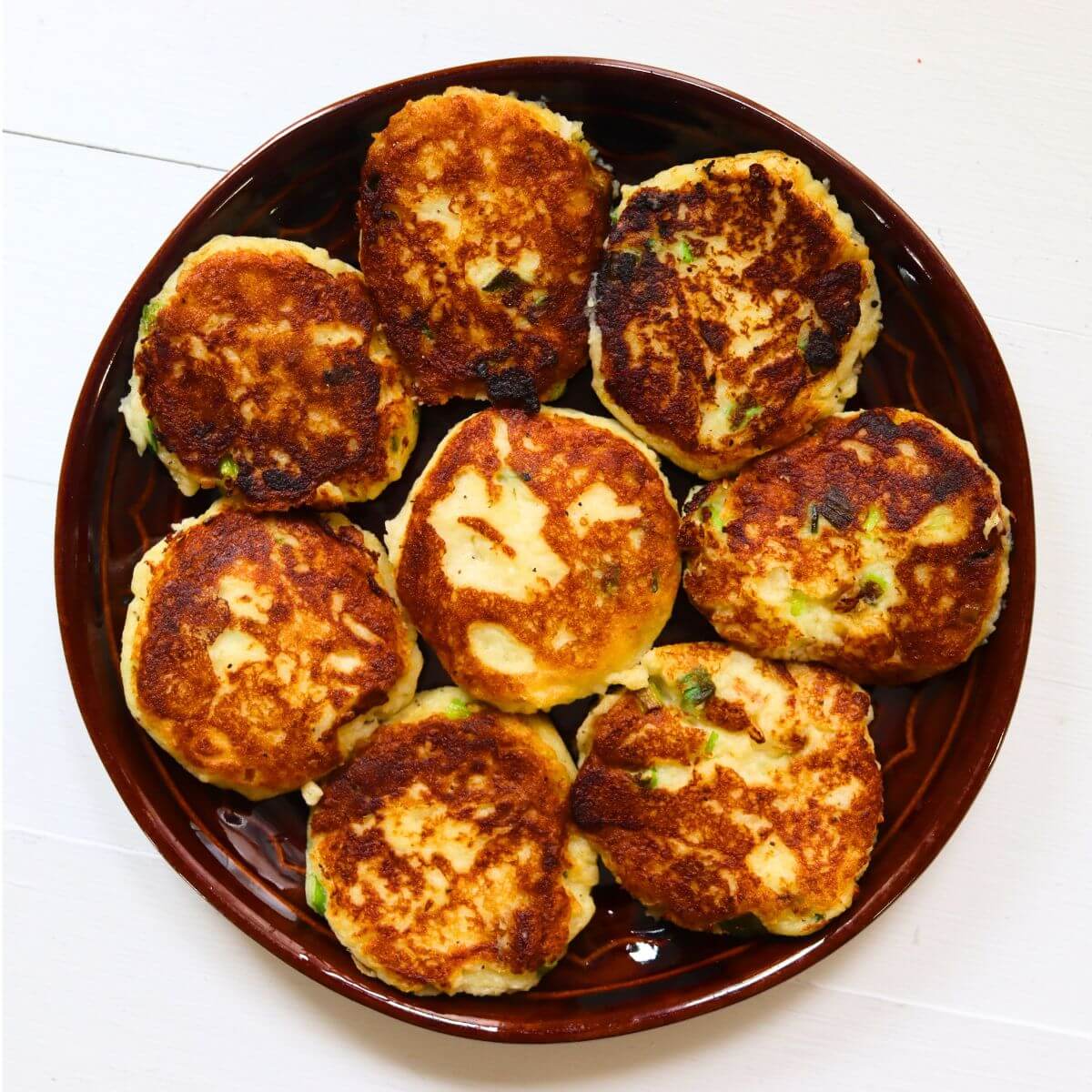
I hope you love these vegan Korean pancakes — they’re packed with flavor and the perfect savory treat! If you give this recipe a try, I’d love to hear how it turned out for you — please leave a review and share your thoughts. And if you have any questions or need a little help with the recipe, feel free to drop a comment below. I’m happy to answer any questions and help you out!