Easy Apple Sauerkraut Recipe (3-Ingredient Ferment)
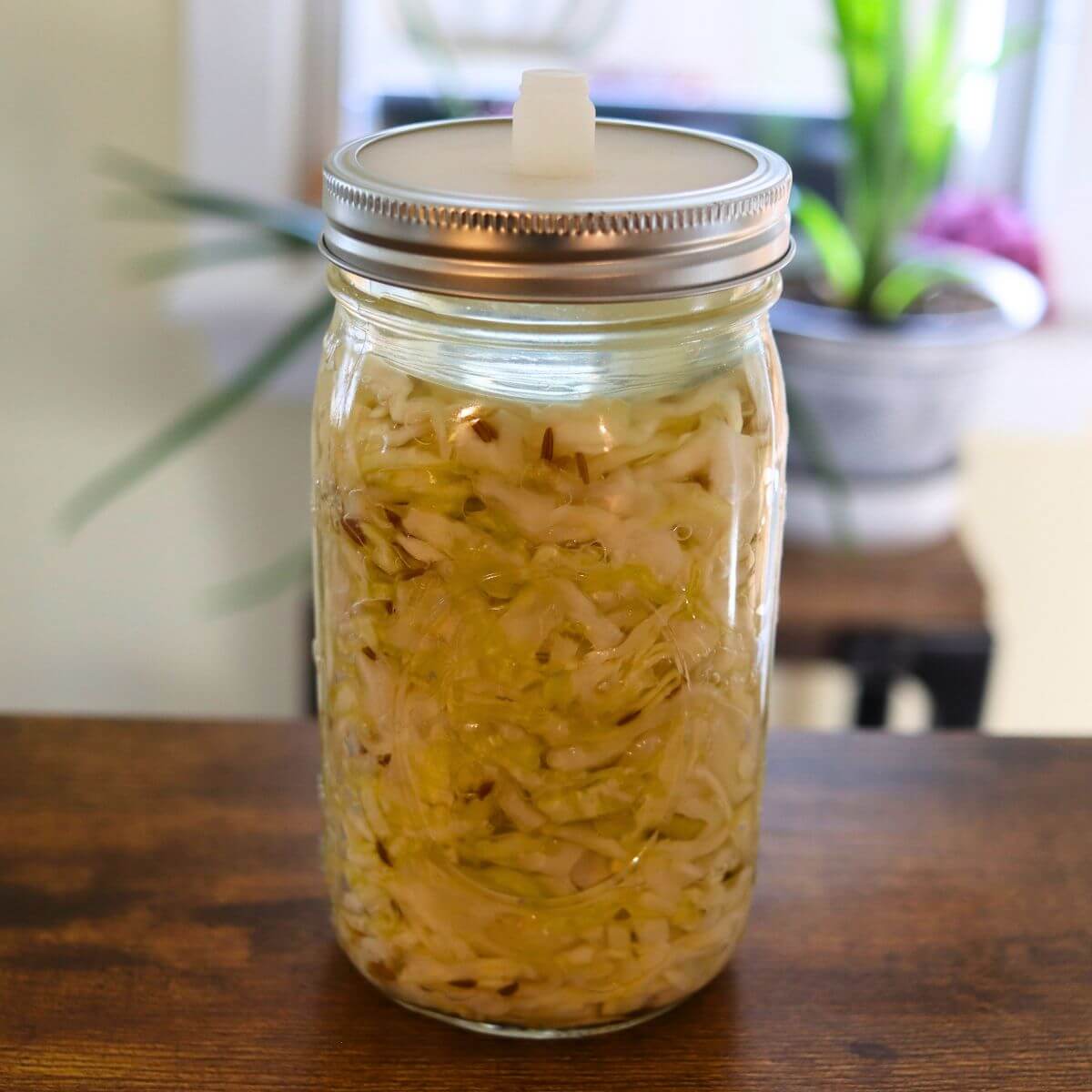
Apple sauerkraut, also known as apfelkraut, is an easy homemade ferment that combines fresh cabbage, crisp Honeycrisp apple, and pickling salt. With just three ingredients and a little patience, you can make this tangy, lightly sweet sauerkraut right in your own kitchen.
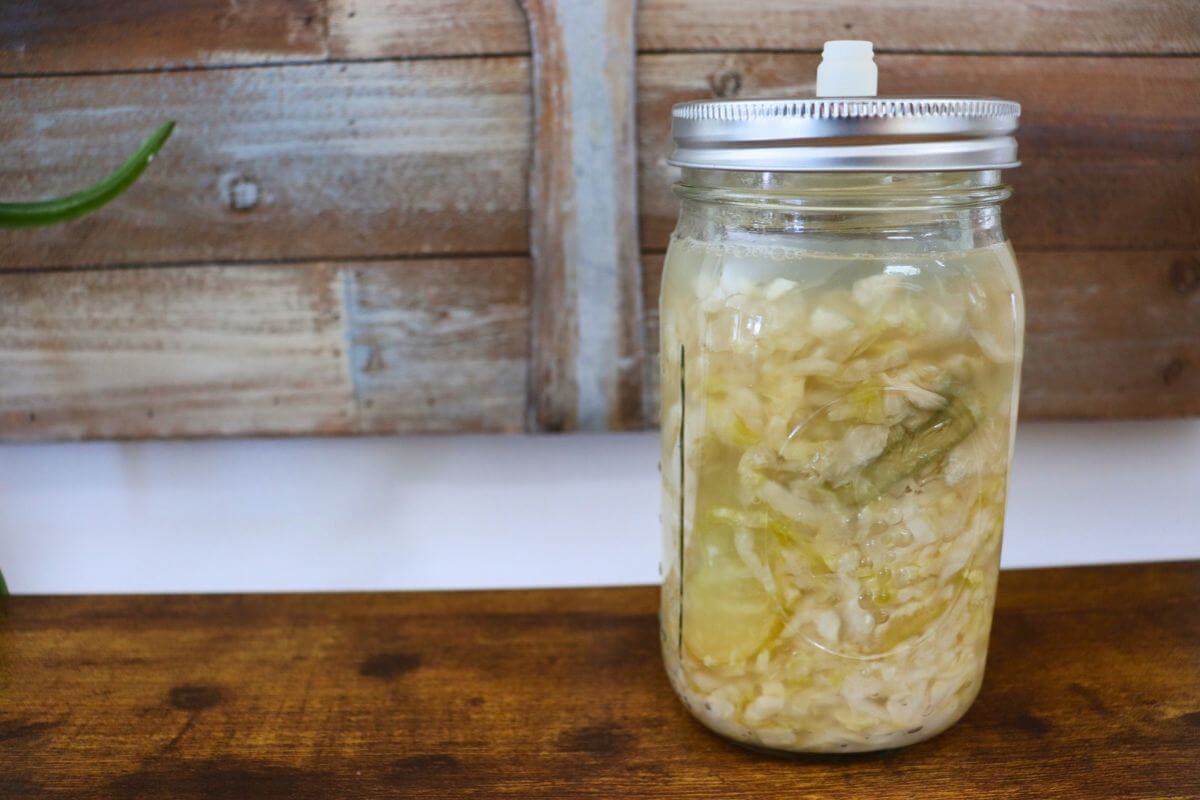
Sweet apples are a great addition to kraut
Lately, I’ve developed a real passion for building a collection of fermented recipes for my kitchen. There’s something satisfying about taking a few ordinary ingredients, putting them in a jar, and letting the fermentation process transform them into something tangy and delicious.
Experimenting with different sauerkraut recipes has become a big part of that passion, and this homemade apple sauerkraut is my latest creation.
The Honeycrisp apple brings a little natural sweetness to the cabbage, while fermentation process delivers the familiar tang of traditional sauerkraut. It’s a great recipe for anyone interested in fermenting vegetables at home that doesn’t require a long list of ingredients or complicated equipment.
If you love fermenting vegetables in your kitchen as much as I do, be sure to give my homemade Russian sour cabbage, traditional wine sauerkraut, and small-batch beet sauerkraut a try too.
Recipe ingredients
- Cabbage: Green cabbage is the traditional choice for sauerkraut. Look for a firm, heavy head with tightly packed leaves. Fresh cabbage generally releases plenty of liquid when salted, which is important for creating the brine needed during fermentation.
- Honeycrisp Apple: I chose Honeycrisp for its crisp texture and sweet-tart flavor. It adds a subtle apple flavor that complements the tanginess developed during fermentation. Fuji, Pink Lady, and Gala apples are other that work well in this recipe.
- Pickling Salt: Pickling salt dissolves readily and contains no iodine or anti-caking additives. Salt draws moisture from the cabbage, creating the brine, and helps establish the conditions needed for lactic acid fermentation.
See the recipe card for full information on ingredients and quantities.
Equipment needed
You don’t need an elaborate fermentation setup to make sauerkraut at home. A few basic kitchen tools will do the job.
- Large Mixing Bowl: Choose one with enough room to toss the cabbage and apple together thoroughly.
- Quart-Size Glass Jars: Wide-mouth canning jars are particularly helpful because they’re easier to fill and pack.
- Kraut Pounder: Used to firmly pack the cabbage and apple into the jars, pressing out trapped air and encouraging the brine to rise.
- Fermentation Weights: Glass fermentation weights hold the cabbage and apple beneath the brine while they ferment.
- Fermentation Lids: These allow carbon dioxide to escape during fermentation while limiting exposure to outside air.
- Sharp Knife: Used to shred the cabbage into thin strips.
Can you make apple sauerkraut without a kraut pounder, fermentation weights and lids?
Yes. Fermentation weights and airlock lids make the process easier, but they aren’t absolutely necessary.
If you don’t have a kraut pounder, you can use your hands or the end of a sturdy wooden spoon to press the cabbage and apple firmly into the jars. The goal is to remove trapped air and encourage the brine to rise above the vegetables.
If you don’t have fermentation weights, a small food-safe bag filled with brine can be used to hold the cabbage beneath the liquid. To make the brine, dissolve 1/2 teaspoon of pickling salt in 1/2 cup of water. Seal the bag securely and position it inside the jar so all the vegetables remain submerged.
A regular canning lid can also be used instead of a fermentation lid. Keep it loosely fitted so gases can escape. If you tighten the lid, you’ll need to loosen it briefly twice a day during the first several days, when fermentation is most active, to release accumulated pressure. Continue checking it daily for the remainder of fermentation. Never leave an actively fermenting jar tightly sealed without a way for gas to escape.
How to make apple sauerkraut from scratch
Making apple sauerkraut is a straightforward process. The most important parts are preparing the cabbage properly, packing the jars firmly, and keeping the vegetables beneath the brine throughout fermentation.
Step 1: Prepare the Cabbage
Remove any damaged outer leaves from the cabbage, cut it into manageable sections, and remove the core. Shred the cabbage into thin strips using a sharp knife, mandoline, or vegetable slicer.
Place the shredded cabbage in a large mixing bowl.
Step 2: Salt the Cabbage
Sprinkle the pickling salt over the shredded cabbage and toss well to distribute it evenly.
Work the cabbage with your hands, squeezing and massaging it until it begins to soften and release liquid. This liquid will become the brine that protects the vegetables during fermentation.
Give the cabbage enough attention at this stage to develop a good amount of brine before packing the jars.
Step 3: Add the Apple
Core the Honeycrisp apple and thinly slice it. Add it to the salted cabbage and toss thoroughly so the apple is distributed throughout the mixture.
Step 4: Pack the Jars
Transfer the cabbage and apple mixture into two clean quart-size glass jars. Pack it down firmly as you go, pressing out trapped air and encouraging the brine to rise around the vegetables.
The cabbage and apple should be completely covered by brine. If there isn’t enough liquid, allow the cabbage to sit for 24 hours, pressing it down periodically to encourage more brine to develop. If additional liquid is still needed, dissolve 1/2 teaspoon of pickling salt in 1/2 cup of water and add just enough to cover the vegetables. Leave adequate headspace so the ferment has room to expand as gases develop.
Step 5: Add the Weights and Fermentation Lids
Place a fermentation weight inside each jar to keep the vegetables submerged beneath the brine. Secure a fermentation lid on each jar according to the manufacturer’s instructions. The lids allow gases produced during fermentation to escape while limiting exposure to outside air.
Step 6: Ferment the Apple Sauerkraut
Set the jars in a cool, dark location away from direct sunlight. An ideal fermentation temperature is approximately 60–75°F (16–24°C). Temperatures toward the cooler end of that range generally produce a slower ferment.
Allow the apple sauerkraut to ferment for at least two weeks. If you prefer a stronger sour flavor, you can continue fermenting it for up to four weeks, provided the ferment remains healthy and the vegetables stay submerged.
Once it reaches the flavor you like, move the jars to the refrigerator.
Would you like to save this post for later?
How to tell when the sauerkraut is ready
Fermentation doesn’t happen on an exact schedule. Temperature, the condition of the cabbage, and the activity of the naturally occurring bacteria all influence how quickly the sauerkraut develops.
During the first several days, you may notice tiny bubbles forming in the jars or rising through the cabbage. This is carbon dioxide produced during fermentation. The brine may also become cloudy, which is normal during lactic acid fermentation.
As fermentation progresses, the cabbage develops a pleasantly sour aroma, and the apple’s sweetness becomes part of the overall flavor.
The best way to judge the finished sauerkraut is by its acidity, aroma, and taste. It should smell pleasantly fermented and taste distinctly tangy rather than simply salty. If the sauerkraut hasn’t developed enough sourness after the initial fermentation period, give it more time and check it again.
Fermentation troubleshooting
Even a straightforward vegetable ferment can raise questions, particularly if you’re new to making sauerkraut.
Why isn’t my sauerkraut bubbling?
Not every ferment produces obvious bubbling. Cooler temperatures can slow fermentation, and some jars release gas without creating much visible activity. If the cabbage is developing a pleasantly sour aroma and becoming more acidic, fermentation may be progressing normally even without dramatic bubbling.
What’s the difference between kahm yeast and mold on sauerkraut?
A thin, flat, white film on the surface of your sauerkraut may be kahm yeast. It can develop when the ferment is exposed to oxygen and is generally harmless, although it can affect the flavor. If you’re confident it’s kahm yeast, carefully skim the film off with a clean spoon, discard it, and make sure the cabbage remains completely submerged beneath the brine. Kahm yeast can return, so continue checking the jar throughout fermentation.
Mold is a different concern. Unlike kahm yeast, mold often appears fuzzy or raised and may develop green, blue, black, or other colored patches. However, appearance alone isn’t always enough to distinguish mold from yeast. If you see mold or cannot confidently identify the growth, discard the entire batch. Do not attempt to salvage it by removing the affected surface.
What if the brine drops below the cabbage?
The cabbage and apple need to remain submerged throughout fermentation. As fermentation progresses, brine levels can fluctuate, and some liquid may escape from the jars during periods of active bubbling.
If the brine drops below the cabbage, dissolve 1/2 teaspoon of pickling salt in 1/2 cup of water and add just enough to completely cover the vegetables again. Replace the fermentation lid and continue fermenting as usual.
How to store homemade sauerkraut
Once the sauerkraut has finished fermenting, refrigerate it promptly. Properly fermented sauerkraut can often maintain good quality for several months under refrigeration. A practical storage estimate is approximately 4–6 months when it has fermented successfully and is handled and stored correctly.
Keep it refrigerated at 40°F (4°C) or below, use clean utensils when serving, and discard it if mold or other signs of spoilage appear.
Serving ideas
Apple sauerkraut is a natural pairing for pork dishes. Try serving it alongside homemade apple pork tenderloin, savory garlic basil sausage, hot Italian sausage from scratch, or homemade fennel sausage.
It’s also a good addition to a plate of oven-roasted turkey breast, old-fashioned turkey tips, or sticky hot honey glazed chicken. The acidity provides a pleasant contrast to the savory flavors of these dishes.
For a more traditional combination, serve apple sauerkraut with homemade German potato pancakes or leftover mashed potato patties. It also works well alongside an apple grilled cheese sandwich or a homemade turkey club melt.
Frequently asked questions
Does the apple need to be peeled before making sauerkraut?
No. You can leave the peel on if you prefer. Just wash the apple thoroughly and remove the core before slicing it.
What’s the difference between apple sauerkraut and regular sauerkraut?
Traditional sauerkraut is generally made with cabbage and salt. Apple sauerkraut includes fresh apple, which contributes natural sweetness and a subtle fruit flavor as the cabbage ferments.
Can I add caraway seeds or other spices?
Yes. Caraway seeds and juniper berries are both traditional additions that complement fermented cabbage. They can be added when the apple is mixed into the salted cabbage.
Does apple sauerkraut need to be refrigerated after fermentation?
Yes. Once it has reached the desired acidity and flavor, move it to the refrigerator. Cold storage slows fermentation considerably and helps preserve the finished sauerkraut.
Other recipes you’ll love
If you loved this from scratch apple sauerkraut recipe, give these other great recipes a try too!
Pickled Mushrooms: Traditional Polish Quick Pickle Recipe
Easy Salt Preserved Lemons Recipe
Spicy Pickled Garlic Recipe
Spicy Pickled Eggs Recipe With Jalapeños
Yellow Mustard Pickled Eggs Recipe
Farmhouse Red Beet Pickled Eggs (Old-Fashioned Recipe)
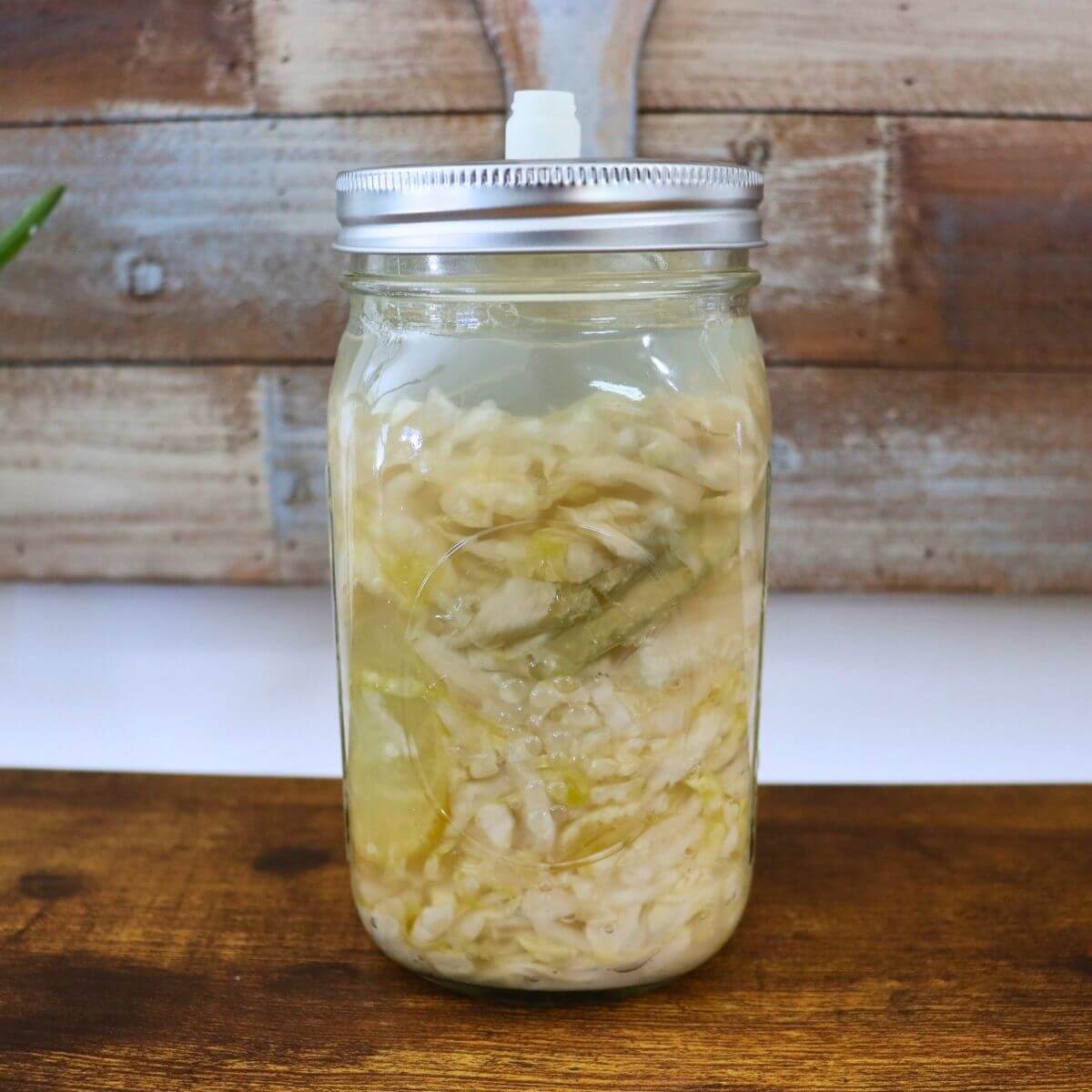
Apple Sauerkraut
Ingredients
- 3 pounds cabbage
- 1 medium honeycrisp apple
- 2 tablespoons pickling salt
Instructions
- Remove damaged outer leaves, cut the cabbage into sections, and remove the core. Shred into thin strips and place in a large mixing bowl.
- Sprinkle the pickling salt over the cabbage and toss well. Massage and squeeze the cabbage until it softens and releases liquid.
- Core and thinly slice the Honeycrisp apple. Add it to the cabbage and toss until evenly distributed.
- Firmly pack the cabbage and apple into two clean quart-size glass jars, pressing out trapped air. The vegetables should be covered by brine. If more liquid is needed, let sit for 24 hours, pressing down periodically. If still not covered, dissolve ½ teaspoon pickling salt in ½ cup water and add enough to cover the vegetables. Leave headspace for expansion.
- Place a fermentation weight in each jar to keep the vegetables submerged. Secure fermentation lids according to the manufacturer's instructions.
- Place the jars in a cool, dark location at 60–75°F (16–24°C) for at least 2 weeks. For a stronger sour flavor, ferment for up to 4 weeks, keeping the vegetables submerged. Refrigerate when the desired flavor develops.
Notes
-
Honeycrisp works well, but Fuji, Pink Lady, or Granny Smith apples can also be used.
-
Use your hands or the end of a sturdy wooden spoon to firmly pack the cabbage and apple into the jars if you don’t have a kraut pounder.
-
Use a small, securely sealed food-safe bag filled with salt brine made of 1/2 teaspoon pickling salt dissolved in 1/2 cup water to keep the vegetables submerged if you don’t have a weight.
-
Use regular canning lids, loosening them twice daily during active fermentation to release gases, if you don’t have fermentation lids, then checking daily.
-
Refrigerate finished apple sauerkraut for up to 4–6 months.
Nutrition
Nutrition information is automatically calculated, so should only be used as an approximation.