Roasted Turkey Thighs with Apple Cider Brine

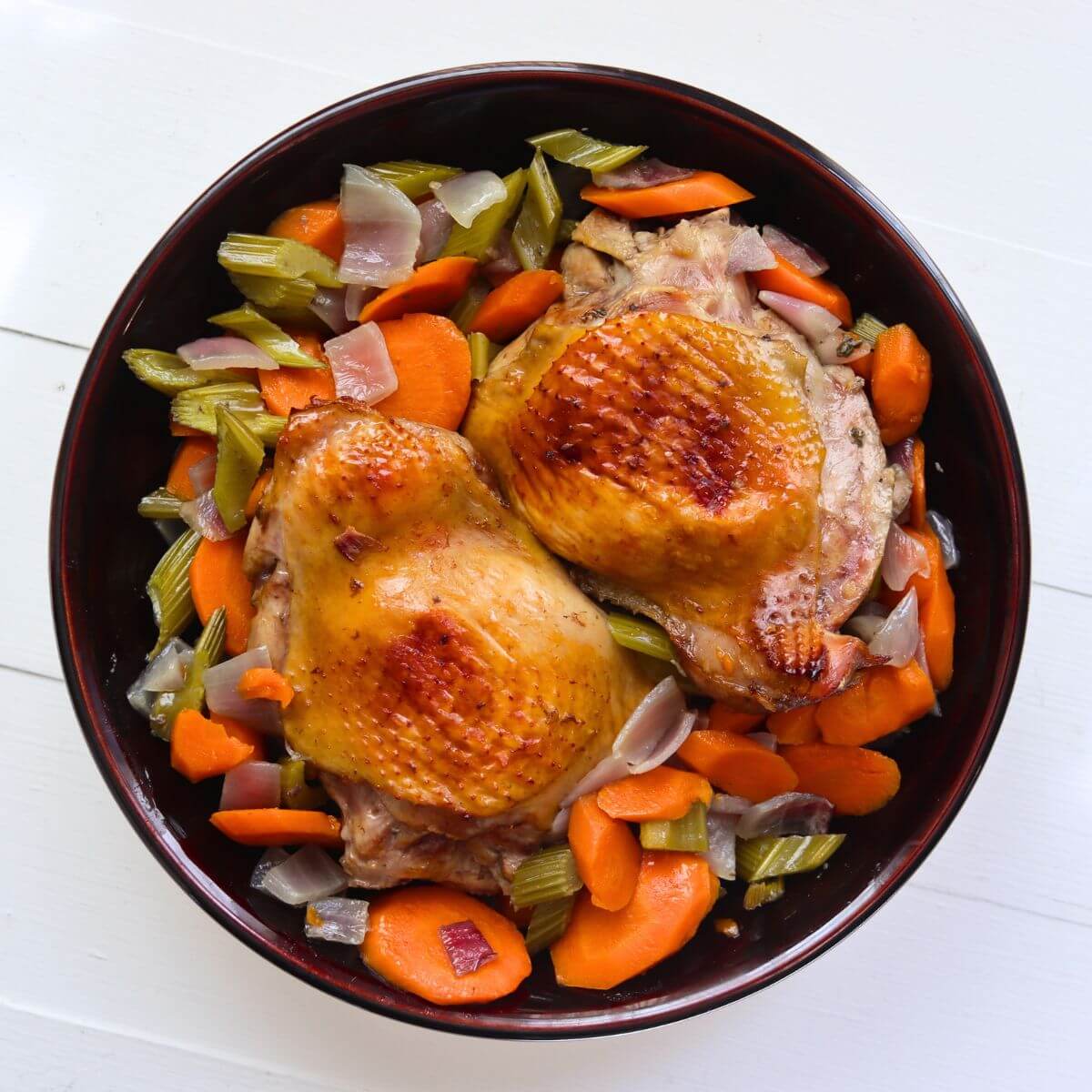
These roasted turkey thighs with apple cider brine have crisp, golden skin and juicy, well-seasoned meat. Savory herbs and the subtle sweetness of apple cider give every bite the kind of rich fall flavor that belongs on a cozy Sunday dinner or holiday table.
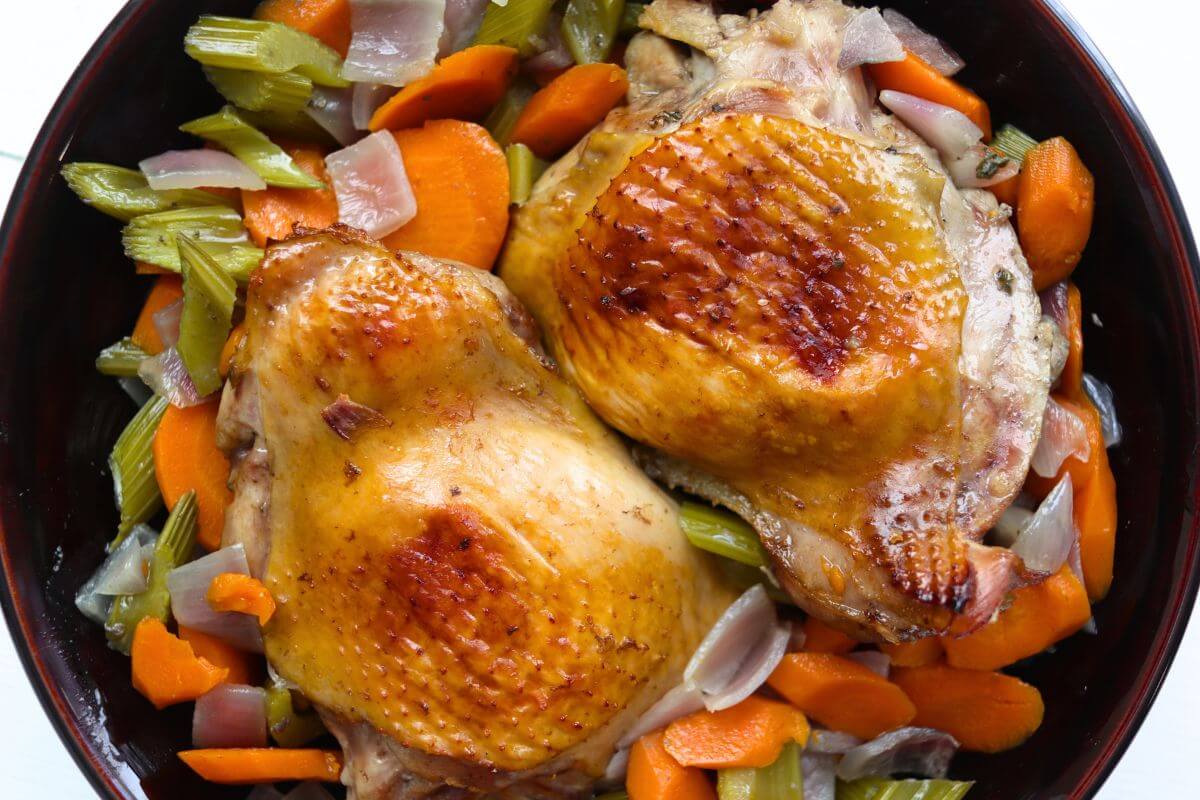
Brine your turkey thighs with apple cider
The thigh has always been my favorite cut of turkey. And when apple cider season arrives, I get pretty excited about brining a few in a batch of herby apple cider brine. Let me tell you, that brine takes roasted turkey thighs from good to absolutely droolworthy.
It’s a low-effort way to put juicy, tender turkey on the table for a small gathering without roasting a whole bird. But there’s no need to wait for a special occasion to enjoy it. You get all that holiday-worthy flavor in a dish that works just as well for a weeknight or Sunday dinner.
As a bonus, adding vegetables to the skillet while the thighs roast gives you a built-in side dish. And those veggies, roasted in all those flavorful pan juices, are arguably better than the turkey itself.
If you want to explore other ways to bring turkey to the table when your gathering is small, be sure to try my Cajun roasted turkey breast, skillet turkey tips, and pulled turkey with BBQ sauce too.
Recipe ingredients
- Apple cider: Use fresh, unfiltered apple cider rather than apple juice for the fullest apple flavor. Its natural sweetness balances the savory herbs in the brine and gives the turkey a subtle apple note without making the finished dish taste sweet.
- Fresh herbs: Use fresh rosemary, sage, thyme, and bay leaf whenever possible. They give the apple cider brine a brighter, more aromatic flavor that works particularly well with rich, dark turkey meat. Dried herbs will work in a pinch, but fresh herbs are the better choice for this recipe. If needed, substitute 1/2 teaspoon dried rosemary, 1/2 teaspoon rubbed sage, 1/4 teaspoon dried thyme, and 1 dried bay leaf.
- Turkey thighs: Choose bone-in, skin-on turkey thighs for the juiciest meat and crispest roasted skin. The bone helps protect the dark meat during roasting, while the skin renders and browns in the oven. Look for thighs that are similar in size so they brine and cook at roughly the same rate.
See the recipe card for full information on ingredients and quantities.
How to make roasted turkey thighs
Step 1: Combine the apple cider, water, and salt in a saucepan and warm over medium-low heat, stirring until the salt is completely dissolved. Do not allow the mixture to come to a simmer.
Step 2: Remove the brine from the heat and add the rosemary, sage, thyme, bay leaf, peppercorns, and garlic. Allow the brine to cool completely to room temperature before adding the turkey.
Step 3: Place the turkey thighs in a nonreactive container and pour the cooled brine over them, making sure they are submerged. Cover and refrigerate for 8 hours.
Would you like to save this post for later?
Step 4: Remove the turkey thighs from the brine and place them skin-side up in a 10-inch cast iron skillet. Arrange the carrots, celery, and onion around the thighs in an even layer.
Step 5: Strain the herbs, peppercorns, and garlic from the brine. Pour 3/4 cup of the strained brine over the vegetables. Discard the remaining brine.
Step 6: Roast in a preheated 350°F (175°C) oven for approximately 55–60 minutes, basting the turkey thighs with the brine and pan juices in the skillet every 20 minutes. Begin checking the internal temperature after 45 minutes, as smaller thighs may cook more quickly. Remove them from the oven when the thickest part of each thigh reaches 165°F (74°C) on an instant-read thermometer, without touching the bone.
Step 7: Let the thighs rest for about 10 minutes before serving.
Top tips
- Cut the vegetables generously: Keep the carrots, celery, and onions in substantial pieces so they hold their shape as they roast in the cider brine and turkey drippings. Smaller pieces can become overly soft before the turkey is finished.
- Check each thigh individually: Turkey thighs can vary quite a bit in size and thickness, even within the same package. If one reaches the proper internal temperature before the others, remove it from the skillet and let the remaining thighs continue roasting.
- Don’t skip the basting: It’s an important part of developing the flavor of this dish. The apple cider brine mingles with the turkey drippings as they roast, creating increasingly rich, savory pan juices that coat the thighs with every basting.
- Save the pan juices: Spoon some of the flavorful cider-and-turkey juices from the skillet over the vegetables when serving. They’re one of the best parts of the dish.
Serve
These roasted turkey thighs already come with cider-roasted carrots, celery, and onions, so you can keep the rest of the meal simple or build them into a full Sunday or holiday dinner. Serve them with creamy mashed potatoes or garlic mashed potatoes with cheese and homemade turkey stuffing for a classic turkey dinner. Brown sugar pecan sweet potato casserole is another great choice when you want a richer side for Thanksgiving or a fall gathering.
For something beyond the vegetables roasted right in the skillet, add slow simmered green beans or spiced braised red cabbage. If you want a cool, crisp side to balance the warm roasted meal, old-fashioned creamy coleslaw works particularly well.
Bread makes an easy addition to the table too. Pair the turkey with homemade pumpkin cornbread for a seasonal fall meal, keep things traditional with yeast rolls from scratch, or serve homemade pumpkin dinner rolls for a holiday dinner.
Wild rice pilaf, creamy polenta, buttered egg noodles, roasted Brussels sprouts, or cranberry sauce also pair well with roasted turkey thighs when you’re looking for something different from the classic sides.
Other recipes you’ll love
If you loved this apple cider brined turkey thighs recipe, give these other great dinner recipes a try too!
Creamy Baked Pumpkin Pasta
Traditional Cottage Pie
Mushroom Macaroni and Cheese Skillet
Apple and Pork Tenderloin with Maple Dijon Sauce
Baked Hawaiian BBQ Chicken Recipe
Hot Honey Chicken Thighs
Roasted Turkey Thighs with Apple Cider Brine
Ingredients
- 2 cups apple cider
- 1 cup water
- 2 sprigs fresh rosemary
- 2 large sage leaves
- 1 sprig fresh thyme
- 1 large fresh bay leaf
- 1/2 teaspoon black peppercorns
- 3 large garlic cloves pressed
- 2 turkey thighs
- 1 cup coarsely chopped carrots
- 3/4 cup coarsely chopped celery
- 3/4 cup coarsely chopped onion
Instructions
- Combine the apple cider, water, and salt in a saucepan. Warm over medium-low heat, stirring until the salt dissolves completely. Do not bring to a simmer.
- Remove from the heat and add the rosemary, sage, thyme, bay leaf, peppercorns, and garlic. Allow the brine to cool completely to room temperature.
- Place the turkey thighs in a nonreactive container. Pour the cooled apple cider brine over them, making sure they are fully submerged. Cover and refrigerate for 8 hours.
- Preheat the oven to 350°F (175°C). Remove the turkey thighs from the brine and place them skin-side up in a 10-inch cast iron skillet. Arrange the carrots, celery, and onions around them.
- Strain the herbs, peppercorns, and garlic from the brine. Pour 3/4 cup of the strained brine over the vegetables. Discard the remaining brine.
- Roast for 55–60 minutes, basting with the brine and pan juices every 20 minutes. Begin checking for doneness after 45 minutes, as smaller thighs may cook faster. The turkey is done when the thickest part of each thigh reaches 165°F (74°C), measured without touching the bone.
- Remove from the oven and let the turkey thighs rest for 10 minutes before serving.
Notes
-
Brining: Prepare the brine ahead of time so it has plenty of time to cool before adding the turkey.
-
Vegetables: Cut the carrots, celery, and onion into generous pieces so they hold their shape when roasting.
-
Extra browning: If the turkey is fully cooked but you’d prefer deeper golden skin, place the skillet under the broiler briefly. Watch closely to prevent burning.
-
Pan juices: Spoon some of the flavorful pan juices over the roasted vegetables when serving.
-
Storage: Refrigerate leftover turkey and vegetables in an airtight container for up to 3–4 days. Freeze cooked turkey for up to 3 months for best quality.
Nutrition
Nutrition information is automatically calculated, so should only be used as an approximation.