Homemade Flatbread Recipe With Yeast

Homemade flatbread is a quick and easy way to make a soft, chewy bread for pizzas, sandwiches, and more, with just 25 minutes of hands-on time in the kitchen. It’s made right on the stovetop in a hot skillet using just six basic ingredients.
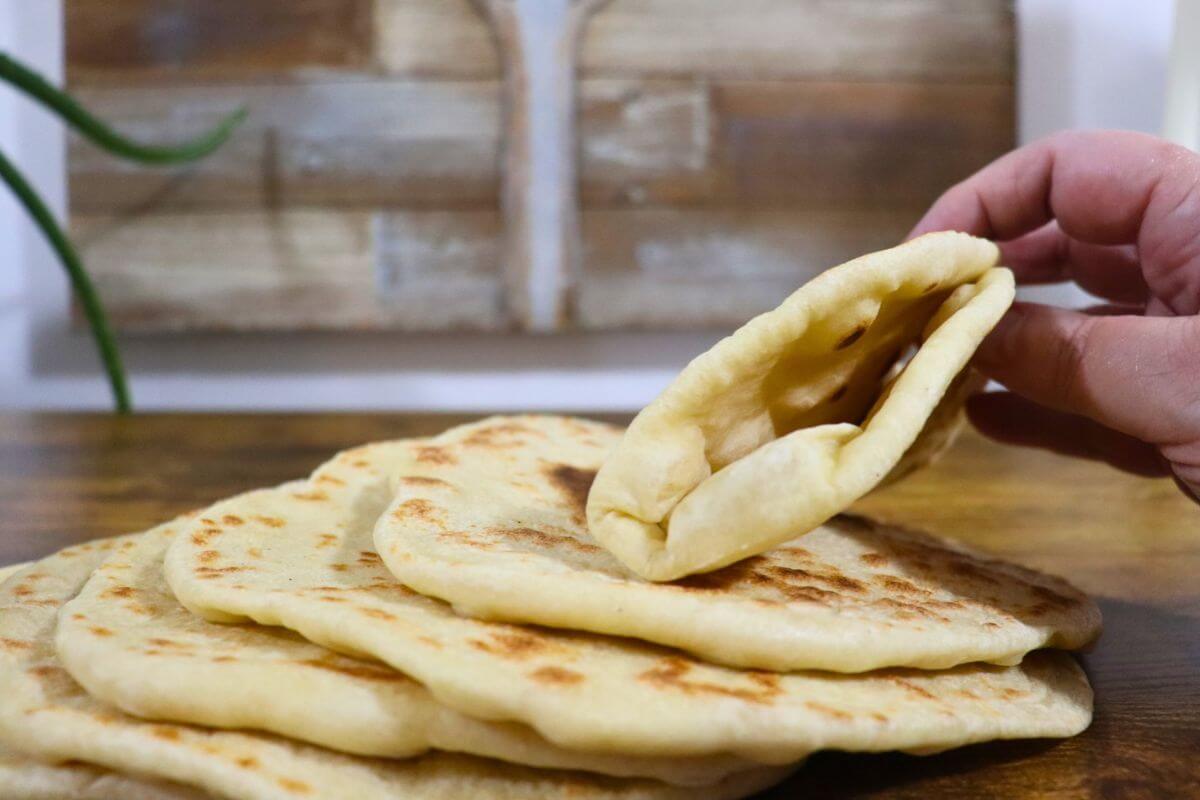
Yeasted flatbreads make for quick meals in the kitchen
The first time I had flatbread pizza was at a friend’s house in northern California. I was hooked! I knew right away that I had to start making flatbread at home so I could throw together a pizza whenever the mood struck me.
These days, there’s almost always a few homemade flatbreads tucked away in my freezer for just that purpose. But I use them for so much more than pizza. You can top them with just about anything, hot or cold, and they’re equally good either way.
This homemade yeast flatbread has a soft, pillowy texture with just enough chew to make it satisfying. And it’s just as good served fresh from the skillet as it is pulled from the freezer and reheated for a quick meal.
If you’re looking for an even quicker option, try my easy no-yeast flatbread recipe. It skips the rising time, producing a thinner, flatter bread that’s equally delicious. And if you love bringing homemade bread to the table as much as I do, be sure to try my homemade garlic focaccia, flour tortillas from scratch, and traditional New York bagels too.
Recipe ingredients
- All-Purpose Flour: Choose a good-quality, unbleached all-purpose flour. Its moderate protein content provides enough gluten development to give the flatbread structure and a pleasant chew while keeping it soft and tender.
- Olive Oil: Choose a good-quality extra virgin olive oil for its subtle fruity flavor. It adds richness to the dough and helps keep the finished flatbread soft and flexible.
See the recipe card for full information on ingredients and quantities.
How to make homemade flatbread
Step 1: Activate the Yeast
Combine the active warm water, yeast, and sugar in the bowl of a stand mixer. Allow the mixture to stand for 5–10 minutes, until the yeast becomes foamy.
The foam indicates that the yeast is active and ready to use. If the mixture doesn’t develop any foam, the yeast may be old or inactive and should be replaced.
Step 2: Mix and Knead the Dough
Add the flour, olive oil, and salt to the yeast mixture. Using the dough hook attachment, mix until the ingredients form a cohesive dough.
Continue kneading for about 5 minutes, until the dough becomes smooth and elastic. The finished dough should feel soft and supple rather than stiff or dry.
If you don’t have a stand mixer, the dough can also be mixed and kneaded by hand. Allow approximately 8–10 minutes for hand kneading.
Step 3: Allow the Dough to Rise
Cover the dough and place it in a warm, draft-free location. Allow it to rise until doubled in size, approximately 30 minutes.
The exact rising time will depend on the temperature of your kitchen. A cooler room may require a little more time.
Step 4: Divide and Rest the Dough
Once the dough has doubled in size, transfer it to a lightly floured work surface. Divide it into six equal portions and shape each portion into a ball.
Cover the dough balls with a clean kitchen towel and allow them to rest for 20 minutes. This resting period gives the gluten time to relax, making the dough easier to roll without springing back.
Step 5: Roll the Flatbreads
Roll each dough ball into a round approximately 8 inches in diameter. The rounds don’t have to be perfectly circular. What’s important is keeping the thickness reasonably even so the flatbreads cook consistently.
Step 6: Cook in a Dry Skillet
Heat a skillet over medium-high heat. Place one rolled flatbread directly into the hot, dry skillet. There’s no need to add oil or butter to the pan.
Cook for 1–2 minutes, until bubbles form on the surface and the underside develops lightly browned spots. Flip the flatbread and cook the second side for another 1–2 minutes. Repeat with the remaining dough.
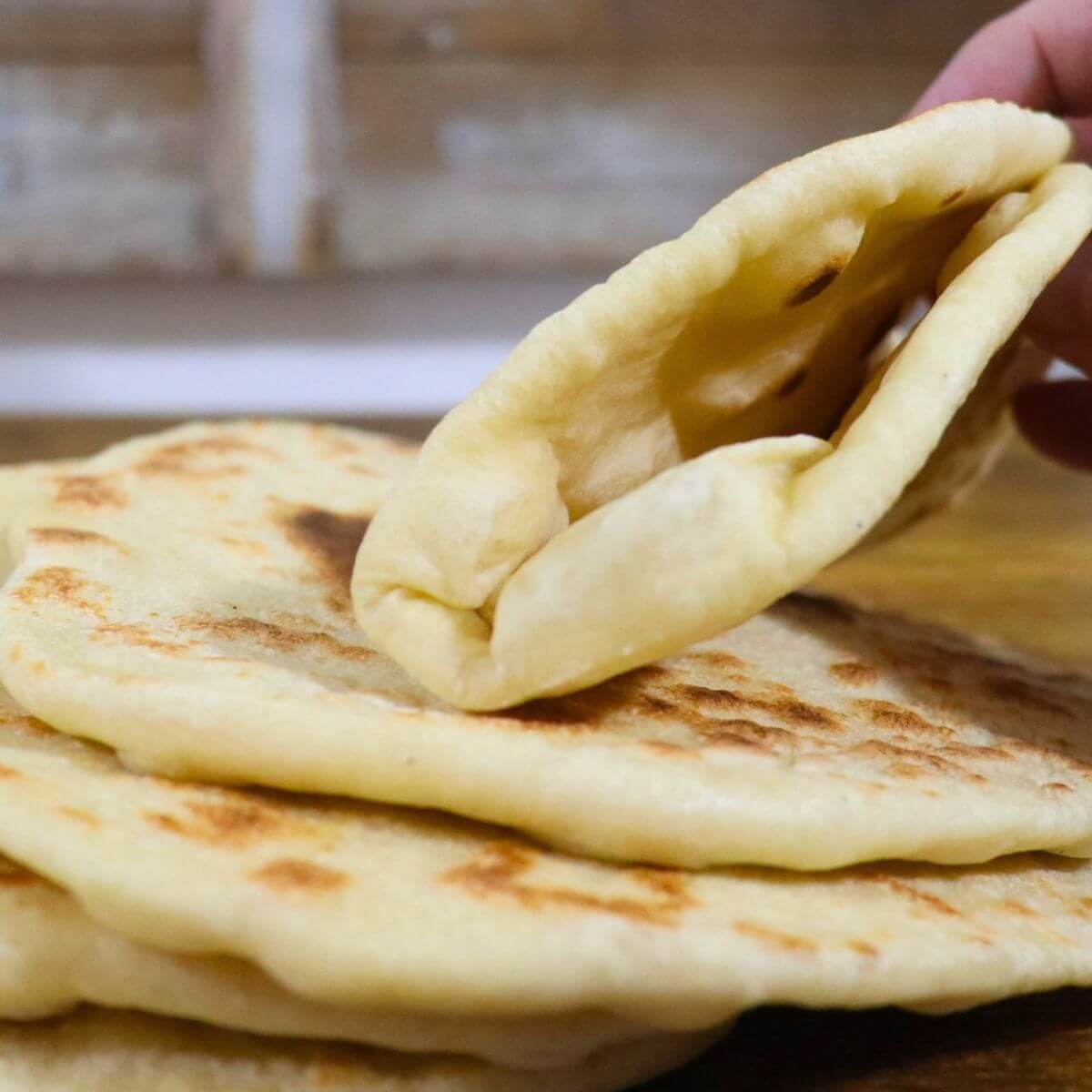
The bread should puff in places as it cooks, developing a soft interior with scattered golden-brown spots on the outside.
Step 7: Keep the Flatbreads Soft
As each flatbread finishes cooking, transfer it to a plate and cover it with a clean kitchen towel. Stacking the warm flatbreads beneath the towel helps retain moisture and keeps them soft and flexible.
Continue adding the cooked flatbreads to the stack until the entire batch is finished.
Pro tips
- Let the dough relax: If the dough repeatedly shrinks back while rolling, give it a few additional minutes to rest. Relaxed gluten makes shaping much easier.
- Roll as you cook: Roll out each flatbread while the previous one cooks in the skillet. Don’t lift the rolled dough from the work surface until you’re ready to transfer it directly to the skillet. This minimizes springback, helping to keep the flatbread from shrinking before cooking.
- Preheat the skillet thoroughly: A properly heated skillet encourages the flatbread to bubble and puff. If the pan is too cool, the dough can dry out before it develops those characteristic bubbles.
- Adjust the heat as needed: If the flatbreads brown too quickly before the centers cook, reduce the heat slightly. You want scattered brown spots without scorching the bread.
- Avoid overcooking: Leaving flatbread in the skillet too long causes it to lose moisture and become less flexible as it cools.
Variations and substitutions
This basic flatbread recipe is easy to adapt without making major changes to the dough.
Whole Wheat Flatbread: Replace 1/2 cup of the all-purpose flour with whole wheat flour. The resulting bread will have a heartier texture and a more pronounced wheat flavor.
Garlic Flatbread: Add finely minced garlic to the dough for a savory variation that pairs particularly well with Mediterranean-inspired meals.
Herb Flatbread: Incorporate chopped fresh herbs, such as rosemary, parsley, or oregano, into the dough. This is a nice option when serving the bread with dips or soups.
Storage and reheating
Allow the cooked flatbreads to cool completely before storing them. Packing them while they’re still warm can cause condensation to develop inside the container.
Room Temperature: Store the flatbreads in an airtight container or tightly sealed bag for 1–2 days.
Refrigerator: Keep them in an airtight container in the refrigerator for up to one week. Refrigeration can make bread firmer, so reheating is helpful before serving.
Freezer: Homemade yeast flatbread freezes beautifully for up to two months. Allow the flatbreads to cool completely, then arrange them in a single layer on a silicone-lined baking sheet. Freeze until solid, then transfer them to an airtight freezer-safe bag or container. Store in the freezer for up to two months.
Reheating: To reheat flatbread, place it in a dry skillet over medium heat and warm it briefly on each side until soft and heated through. You can also wrap several flatbreads in a damp kitchen towel and warm them in a low oven until heated through.
Avoid overheating the bread, as prolonged cooking can cause it to become dry and less flexible.
Homemade flatbread vs. pita bread
Although flatbread and pita bread share many similarities, they’re not necessarily the same thing. Flatbread is a broad category of bread that can be made with or without yeast. Depending on the recipe, it may be baked, grilled, or cooked in a skillet.
Pita bread is a specific type of yeast-leavened flatbread traditionally baked at high temperatures. The intense heat creates steam inside the dough, causing it to expand and form a hollow pocket.
This homemade skillet flatbread also puffs as it cooks, but it isn’t intended to develop a continuous pocket. Instead, it has a soft, chewy interior that makes it especially useful for topping, folding, and wrapping around fillings.
Serving ideas
One of my favorite ways to use homemade yeast flatbread is as a pizza base. Simply add your favorite homemade pizza sauce and toppings and bake until everything is heated through and the cheese has melted. My black olive spider pizza is a fun option for spooky season, but it’s just as delicious without the spider decorations any time of year.
Flatbread also makes a great base for cold toppings. Spread it with hummus or simple homemade guacamole and add fresh vegetables. Or fold it and tuck your favorite sandwich fillings inside.
And, of course, you can cut it into wedges and serve it with your favorite dips. Creamy shrimp dip, warm honey BBQ chicken dip, and Italian sausage party dip are some of my favorites. Flatbread wedges are great with soups too. Try them alongside homemade potato kielbasa soup, yellow split pea soup from scratch, or Italian zucchini soup.
Frequently asked questions
What is the best flour for homemade flatbread?
All-purpose flour is the best choice for this recipe because it produces soft, flexible flatbread with just the right amount of chew. Bread flour can also be used for a chewier texture. If you prefer whole wheat flour, replace only a portion (25% is recommended) of the all-purpose flour, as whole wheat absorbs more moisture and produces a denser bread.
Can you make a yeasted flatbread dough ahead of time?
Yes! Prepare the dough through its first rise, then transfer it to a covered container and refrigerate for up to 24 hours. When you’re ready to cook, let the dough warm until it’s easy to handle. Divide it into portions, allow the dough to rest, then roll and cook as directed.
Why didn’t my flatbread puff up?
Flatbread may not puff properly if the skillet isn’t hot enough, the dough is rolled unevenly, or the yeast hasn’t developed enough gas during rising. Make sure the dough has doubled during its first rise and that the skillet is thoroughly preheated before cooking.
Keep in mind that this recipe isn’t intended to create the large hollow pocket associated with pita bread. Smaller bubbles and areas of puffing are perfectly normal.
Other recipes you’ll love
If you loved this from scratch flatbread with yeast recipe, give these other great bread recipes a try too!
Homemade Semolina Bread
Savory Pumpkin Dinner Rolls
Farmhouse Yeast Rolls From Scratch
Old Fashioned Buttermilk Biscuits Recipe (Flaky and Tender)
Buttermilk Dinner Rolls From Scratch
Rustic Dutch Oven Rye Bread Recipe With Caraway Seeds
Homemade Flatbread with Yeast
Ingredients
- 3/4 cup warm water 105°F–110°F (40°C–43°C)
- 1 1/4 teaspoon active dry yeast
- 1/2 teaspoon granulated sugar
- 2 cups all-purpose flour
- 1 tablespoon extra virgin olive oil
- 1 teaspoon salt
Instructions
- Combine the warm water, active dry yeast, and sugar in the bowl of a stand mixer. Let stand for 5–10 minutes, until the mixture becomes foamy.
- Add the flour, olive oil, and salt. Mix with the dough hook until a cohesive dough forms. Knead on low speed for about 5 minutes, until smooth, soft, and elastic. Alternatively, knead by hand for 8–10 minutes.
- Cover the dough and place it in a warm, draft-free location. Allow it to rise until doubled in size, approximately 30 minutes.
- Transfer the dough to a lightly floured work surface. Divide into 6 equal portions and shape each into a ball. Cover with a clean kitchen towel and rest for 20 minutes.
- Roll each dough ball into a round approximately 8 inches in diameter, keeping the thickness as even as possible.
- Heat a dry, ungreased skillet over medium-high heat. Add one flatbread and cook for 1–2 minutes, until bubbles form and the underside develops lightly browned spots. Flip and cook for another 1–2 minutes. Repeat with the remaining dough.
- Transfer each cooked flatbread to a plate and cover with a clean kitchen towel. Stack the flatbreads beneath the towel as they finish cooking to keep them soft and flexible.
Notes
-
Adjust the heat if the flatbreads brown too quickly in the skillet. They should develop lightly browned spots and puff in places without becoming dry or stiff.
-
Refrigerate the covered dough for up to 24 hours after its first rise. Allow it to warm until easy to handle before dividing, resting, and rolling.
-
Store cooled flatbreads in an airtight container at room temperature for 1–2 days or refrigerate for up to one week.
-
Arrange cooled flatbreads on a silicone-lined baking sheet and freeze until solid. Transfer to a freezer-safe bag or container and freeze for up to 2 months.
Nutrition
Nutrition information is automatically calculated, so should only be used as an approximation.