Baked Apple Cider Donut

This baked apple cider donut recipe makes soft, cake-style donuts with rich apple cider flavor and a generous cinnamon sugar coating. Made from scratch and baked instead of fried, they’re a simple way to make a favorite fall donut at home.
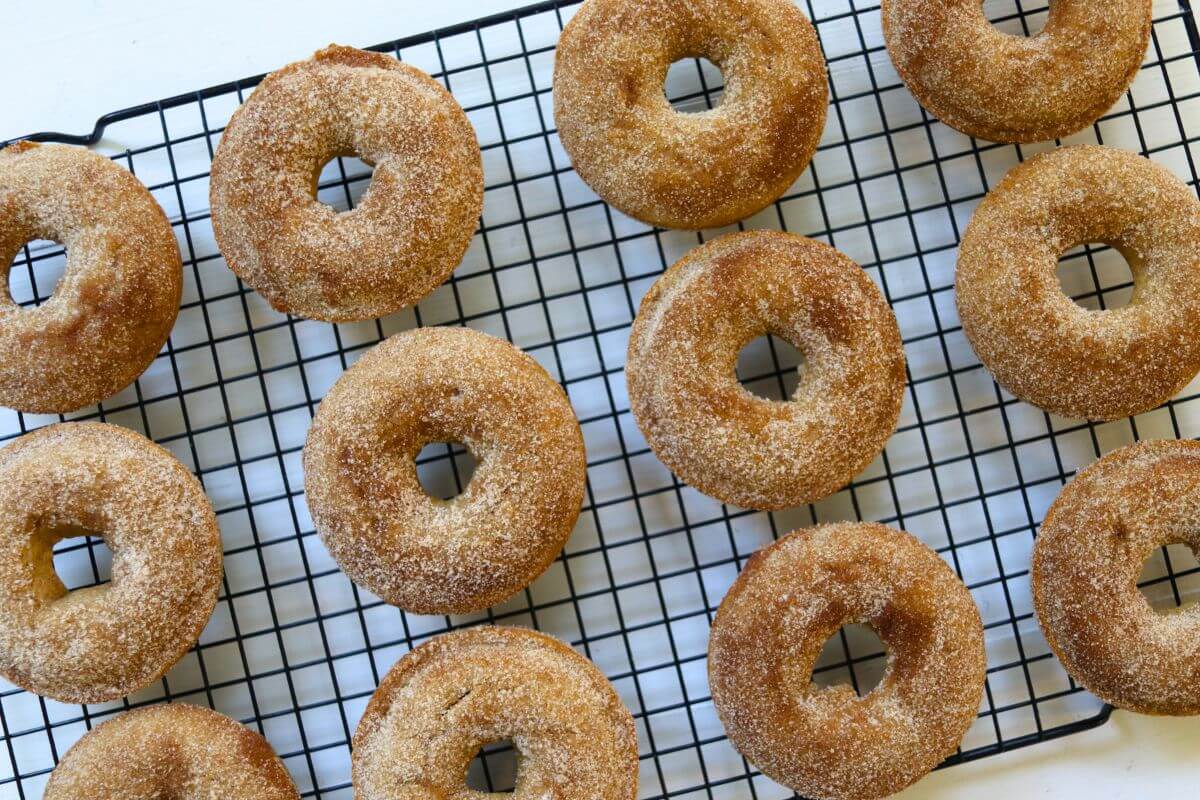
Apple cider loves donuts
When the craving for a moist, flavorful apple cider donut hits and I don’t have time to make a trip to the local apple orchard or bakery, I put this recipe together — problem solved! I just made my first batch of the year and took them to work, and they were literally gone in minutes. Not even kidding. Fifteen minutes after I walked in the door, I walked back out to put the empty container in my car.
It looks like I need to make another batch. And I don’t even mind because they come together so easily. It only takes about 20 minutes to mix the batter and get them into the oven, so I can make a batch without spending much time in the kitchen. And with a bake time of just 12–13 minutes, they’re ready to head out the door in very little time too.
If you love baking from scratch as much as I do, be sure to give my carrot muffins from scratch, easy pumpkin crumb muffins, and old-fashioned skillet cinnamon rolls a try too.
Recipe ingredients
- All-purpose flour: Provides the structure for the donuts while still producing the soft, cake-like crumb you want in a baked apple cider donut. Use a good-quality all-purpose flour for the best results.
- Butter: Adds richness and flavor to the batter and is also brushed over the baked donuts so the cinnamon sugar coating adheres to the surface. Use butter made from fresh cream for the best overall flavor.
- Brown sugar: Sweetens the batter while adding subtle molasses notes that complement the apple cider and warm spices. Light brown sugar is the best choice for adding that depth without competing with the cider flavor.
- Vanilla extract: Rounds out the flavors in the batter and complements both the apple cider and warm spices. Use pure vanilla extract for the fullest flavor.
- Apple cider: Provides the concentrated apple flavor that defines an apple cider donut. Choose a flavorful, unfiltered apple cider rather than apple juice; cider has a more pronounced apple character that carries through into the baked donuts.
See the recipe card for full information on ingredients and quantities.
Reduce apple cider for stronger cider flavor
Reducing the apple cider before adding it to the batter is an easy way to give your baked apple cider donuts a stronger cider flavor. As the cider simmers, some of the water evaporates and the apple flavor becomes more concentrated.
To reduce the cider, start with 1 cup in a small saucepan. Bring it to a gentle simmer over medium heat, then reduce the heat as needed to maintain a steady simmer. Cook the cider uncovered until it has reduced to 1/2 cup, stirring occasionally and checking the amount as it gets close. Pour the reduced cider into a heat-safe measuring cup to make sure you have the 1/2 cup needed for the recipe.
Allow the reduced cider to cool completely before adding it to the donut batter. Using it while it is still warm can soften the creamed butter and change the texture of the batter.
For an easier baking day, reduce the cider the night before. Once it has cooled, cover and refrigerate it overnight. The next day, bring it to room temperature along with the other refrigerated ingredients before making the donuts.
How to make baked apple cider donuts
Step 1: Preheat the oven to 350°F (177°C). Grease the cavities of a donut pan well so the baked donuts release easily.
Step 2: In a medium bowl, whisk together the all-purpose flour, baking powder, 1 teaspoon of the cinnamon, salt, and nutmeg until evenly combined. Set the dry ingredients aside.
Step 3: In a large mixing bowl, cream 10 tablespoons of the butter with the brown sugar and 1/4 cup of the granulated sugar until the mixture is light and fluffy. This incorporates air into the butter and sugar, which helps give the donuts a lighter, softer texture.
Step 4: Add the eggs one at a time, mixing well after each addition. Scrape down the sides and bottom of the bowl as necessary so the eggs are evenly incorporated into the butter mixture.
Would you like to save this post for later?
Step 5: Add the vanilla extract and mix until it is fully incorporated.
Step 6: Add the flour mixture and mix on low speed just until combined. Avoid continuing to mix once the dry ingredients have disappeared into the batter, as overmixing can make the donuts heavier.
Step 7: With the mixer running on low, slowly pour in the apple cider in a steady stream. Continue mixing just until the cider is evenly incorporated and the batter is smooth.
Step 8: Spoon the batter into the prepared donut pan, or transfer it to a piping bag and pipe it into the cavities. Fill each cavity about 2/3 full to leave room for the donuts to rise as they bake.
Step 9: Bake for 12–15 minutes, or until a toothpick inserted into a donut comes out clean. Remove the pan from the oven and carefully transfer the donuts to a cooling rack.
Step 10: Allow the donuts to cool on the rack for 5 minutes before topping.
Step 11: While the donuts cool, melt the remaining butter. In a separate shallow bowl, whisk together the remaining granulated sugar and cinnamon until evenly blended.
Step 12: Brush the top of each donut with melted butter, then dredge the buttered side in the cinnamon sugar mixture until evenly coated.
Top tips
- Try apple pie spice: Substitute an equal amount of apple pie spice for the cinnamon in the sugar coating to give the donuts a broader blend of warm fall spices.
- Pipe the batter: Use a piping bag for better control when distributing the batter around each donut cavity and to keep the donuts consistent in size. If you don’t have a piping bag, spoon the batter into a zip-top bag and snip off one corner to make your own.
- Use a muffin pan if needed: If you don’t have a donut pan, bake the batter in a greased muffin pan instead. Fill the cavities about 2/3 full and begin checking for doneness at the stated bake time, allowing additional time as needed.
- Cool the donut pan between batches: If you only have one donut pan, allow it to cool before greasing and filling it again. Adding batter to a hot pan can cause it to begin setting before it goes into the oven.
- Coat the donuts while they’re warm: Slightly warm donuts allow the melted butter to spread easily and help the cinnamon sugar adhere evenly to the surface.
- Store the donuts properly: Keep them covered at room temperature for up to 2 days or refrigerated in an airtight container for up to 5 days. For longer storage, freeze them in an airtight freezer-safe container for up to 3 months and thaw at room temperature.
Serve
Baked apple cider donuts are hard to beat with a hot cup of coffee, particularly when they’re still a little warm and covered in cinnamon sugar. Dress up your morning coffee with easy chocolate coffee creamer, homemade honey vanilla coffee creamer, or chocolate peanut butter coffee creamer. For something a little different, a warm mug of spiced chai cacao pairs beautifully with the apple, cinnamon, and nutmeg flavors in the donuts. Hot apple cider and black or chai tea are great choices too.
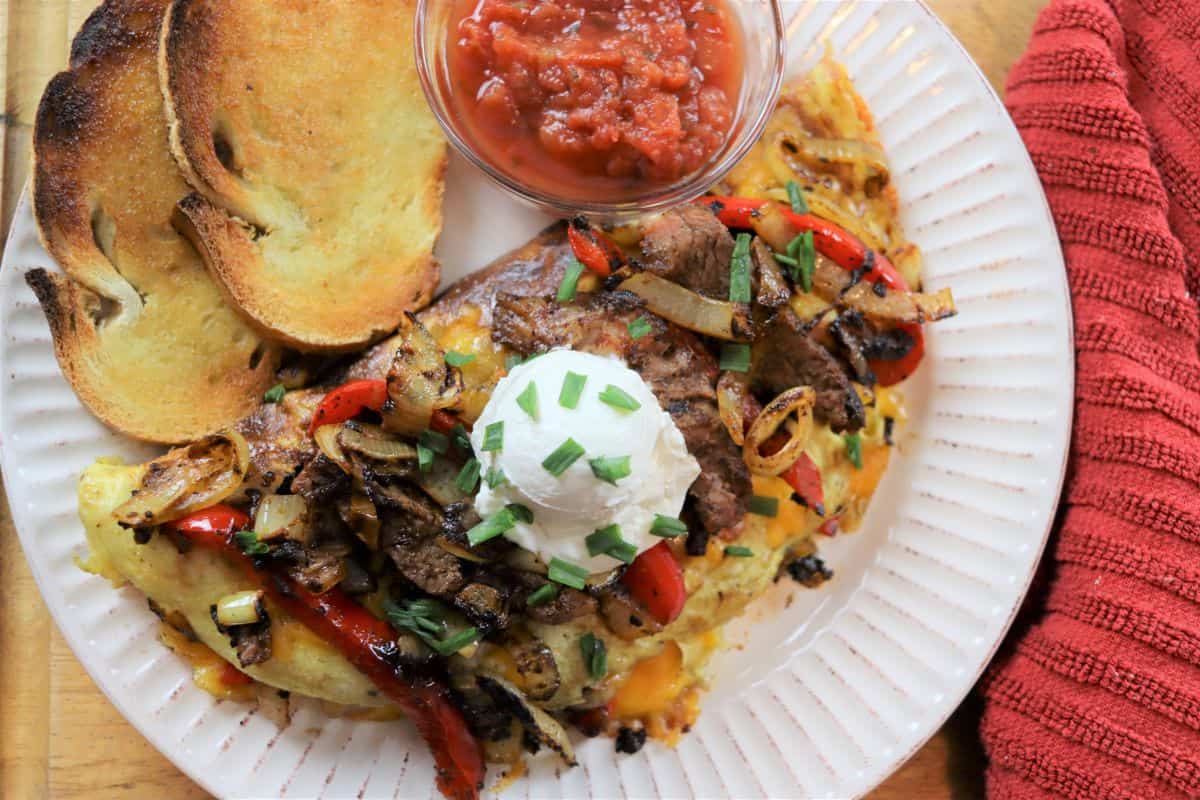
For a fall breakfast or brunch, serve the donuts alongside homemade pumpkin spice pancakes or blueberry almond bostock for a spread filled with seasonal favorites. To balance the sweeter side of the meal with something savory, add easy home fries with eggs or a hearty Denver omelet breakfast mess.
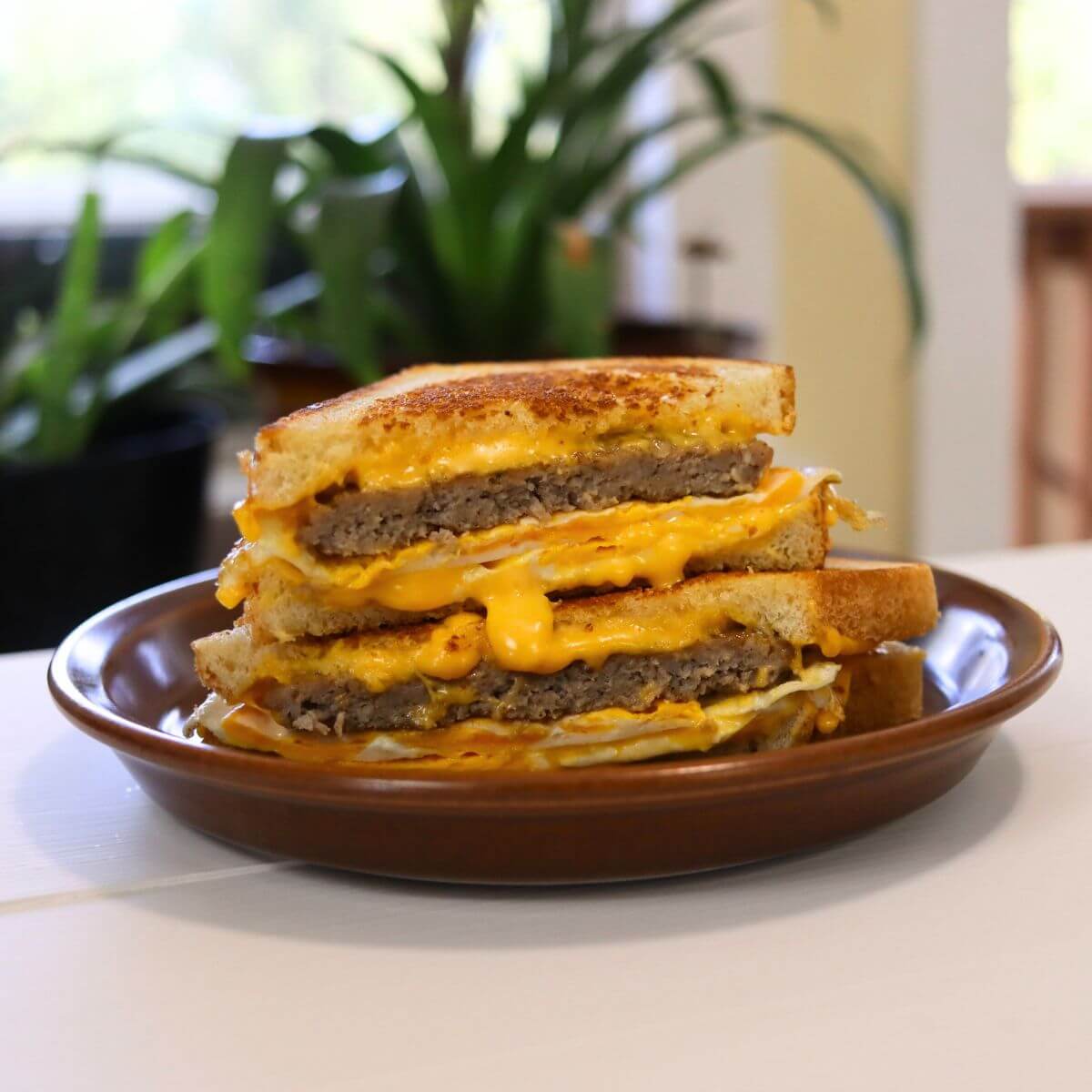
They also pair well with a savory breakfast sandwich. Try them with a bacon egg English muffin sandwich, an egg BLT sandwich on croissant, or a homemade breakfast grilled cheese sandwich.
And don’t limit these donuts to breakfast. Serve one slightly warm with a scoop of vanilla ice cream when you want to turn it into a simple fall dessert.
Other recipes you’ll love
If you loved this homemade apple cider donut recipe, give these other great recipes a try too!
Bacon Egg and Cheese Quesadilla
Sausage and Egg Quesadilla
Maple Walnut Scones
Cinnamon Roll Scones
Pumpkin Cranberry Scones
Apple Cheddar Scones
Baked Apple Cider Donuts
Ingredients
- 1 3/4 cups all-purpose flour
- 1 1/4 teaspoon baking powder
- 2 teaspoons ground cinnamon divided
- 3/4 teaspoon salt
- 1/4 teaspoon ground nutmeg
- 1 cup butter room temperature, divided
- 3/4 cup brown sugar
- 3/4 cup granulated sugar divided
- 2 large eggs room temperature
- 1 teaspoon vanilla extract
- 1/2 cup apple cider
Instructions
- Preheat the oven to 350°F (177°C). Grease the cavities of a donut pan.
- Whisk together the flour, baking powder, 1 teaspoon cinnamon, salt, and nutmeg in a medium bowl. Set aside.
- Cream 10 tablespoons butter with the brown sugar and 1/4 cup granulated sugar until light and fluffy.
- Add the eggs one at a time, mixing well after each addition and scraping down the bowl as needed.
- Mix in the vanilla extract until fully combined.
- Add the flour mixture and mix on low speed just until combined.
- With the mixer on low, add the apple cider in a slow, steady stream and mix just until incorporated.
- Spoon or pipe the batter into the prepared donut pan, filling each cavity about 2/3 full.
- Bake for 12–15 minutes, or until a toothpick inserted into a donut comes out clean. Transfer the donuts to a cooling rack and cool for 5 minutes.
- While the donuts cool, melt the remaining butter. Whisk together the remaining granulated sugar and cinnamon in a shallow bowl.
- Brush the top of each donut with melted butter, then dredge the buttered side in the cinnamon sugar mixture until coated.
Notes
- No piping bag? Use a zip-top bag with one corner snipped off to easily fill the donut pan.
- No donut pan? Bake the batter in a greased muffin pan instead, filling each cavity about 2/3 full. The muffins may need additional baking time.
- Store leftover donuts covered at room temperature for up to 2 days or refrigerated in an airtight container for up to 5 days. Freeze in an airtight freezer-safe container for up to 3 months.
- Brush the donuts with melted butter and add the cinnamon sugar coating while they are still warm for the best adhesion.
Nutrition
Nutrition information is automatically calculated, so should only be used as an approximation.