Denver Breakfast Mess in a Skillet (West Coast Style)

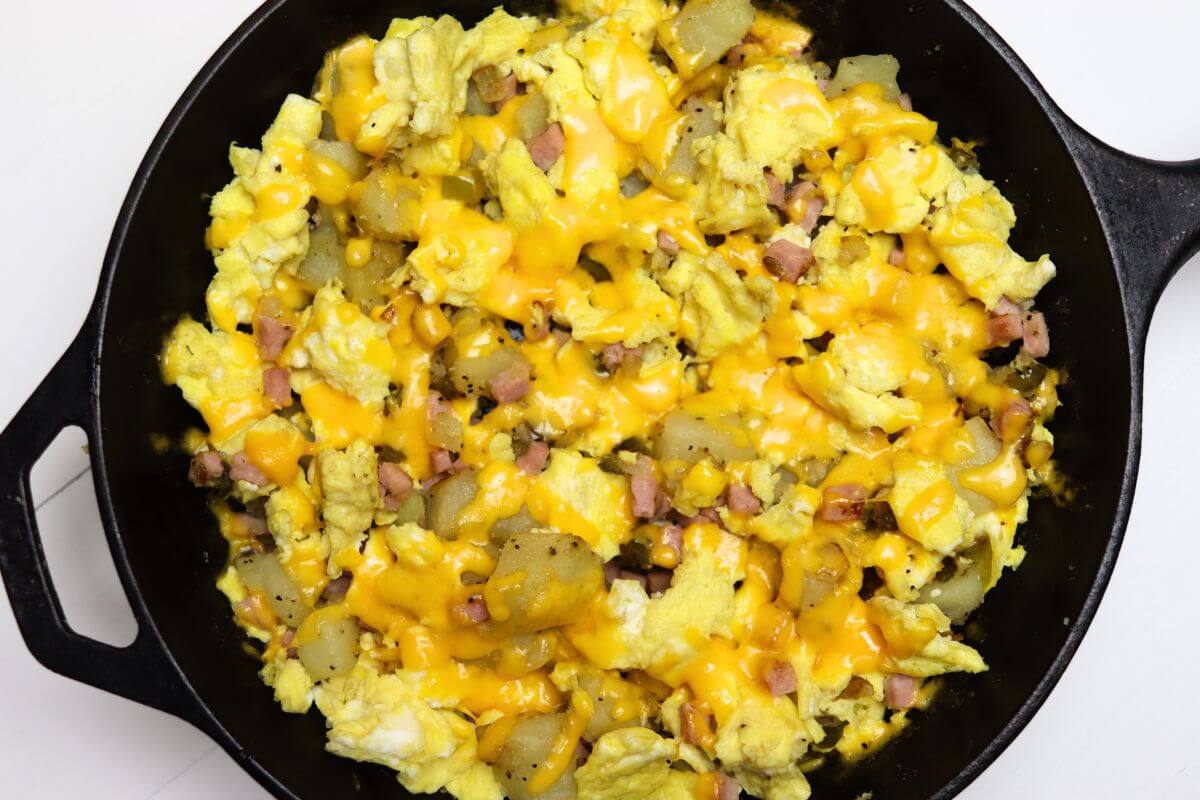
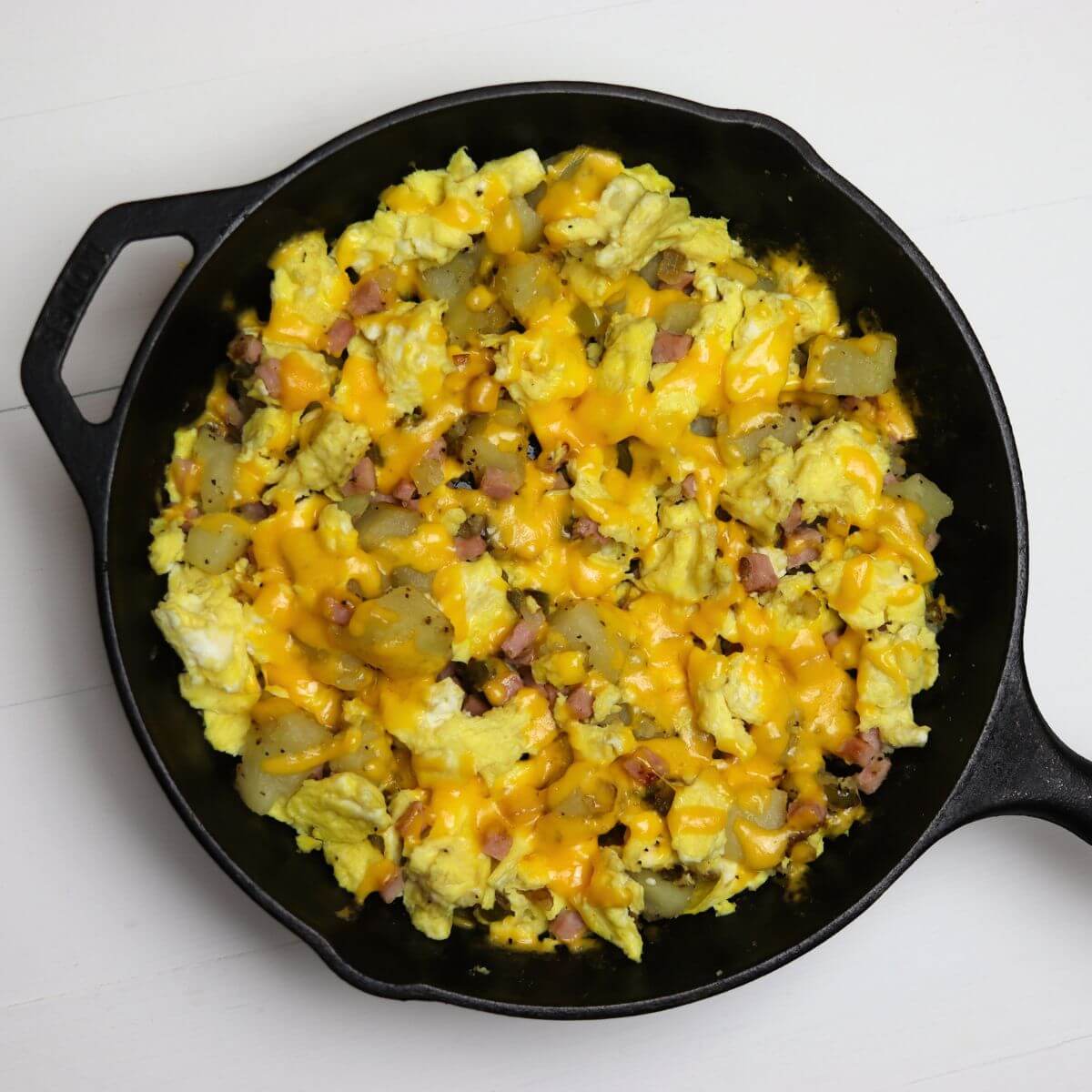
This Denver breakfast mess in a skillet brings all the classic Denver omelet ingredients together in a West Coast–style skillet breakfast. It’s hearty, loaded with favorite flavors, and a great way to start the day.
Make a breakfast mess in a skillet
While living in the Pacific Northwest, I noticed just about every breakfast spot I stopped at had several versions of a ‘breakfast mess’ on the menu. It didn’t take long before I started making them at home, and I’ve lost count of how many combinations I’ve put together over the years. You really can use just about anything to make a mess — but the Denver style, with ham, peppers, onions, eggs, and cheddar cheese, is one of my favorites.
If you like making breakfast in your own kitchen, give my breakfast potatoes and eggs skillet, smashed avocado toast, and fajita style steak omelet a try next.
And if you want to bring homemade toasted bread to the plate, make a loaf of artisan style no knead bread or whole wheat bread from scratch and toast a couple of slices. Or, if you have the time, go with a fresh batch of homemade New York style bagels instead.
Recipe ingredients
- Eggs: Choose farm fresh eggs when possible — they bring better color and a fuller, richer flavor to the finished skillet. This recipe uses scrambled eggs. But you can make the skillet and top it with any style eggs you prefer. Use my diner style eggs guide to cook them exactly the way you like every time.
- Green bell peppers: This is the pepper that defines the classic Denver flavor; you can use any bell pepper, but green keeps it true to style.
- Ham: Start with a thick ham steak and cube it yourself for uniform pieces that stay distinct as everything is combined.
- Cheddar cheese: Buy a block and shred it yourself so it melts cleanly and coats the skillet evenly without clumping.
- Russet potatoes: Go with russets — they hold their shape as they cook and give you the right texture for this kind of skillet breakfast.
See the recipe card for full information on ingredients and quantities.
Would you like to save this post for later?
How to make a Denver breakfast mess in a skillet
Step 1: Crack the eggs into a bowl, add the milk, and whisk until fully combined, using a fork or whisk.
Step 2: Heat a skillet over medium-low heat and add 1 tablespoon of olive oil. Pour in the eggs and let them sit for a few seconds, then begin gently stirring, pushing the eggs across the skillet as they set. Keep the movement slow and controlled so they stay soft and evenly cooked.
Step 3: Remove the scrambled eggs from the skillet while they are still tender and set them aside.
Step 4: In the same skillet, add the remaining olive oil and bring it up to heat. Add the onions and green bell peppers, cooking until they are softened.
Step 5: Add the cooked potato chunks, along with the salt, pepper, and garlic. Let everything cook together, giving the potatoes time to crisp before turning as needed for even color.
Step 6: Stir in the cubed ham and cook just long enough to heat it through without drying it out.
Step 7: Return the scrambled eggs to the skillet and gently fold them into the potato and vegetable mixture so everything is evenly distributed.
Step 8: Sprinkle the shredded cheddar over the top and allow it to melt into the mixture before serving straight from the skillet.
Top tips
- Control the egg texture: Pull the scrambled eggs from the skillet while they still look slightly underdone. They will finish cooking when folded back in, keeping them from turning dry.
- Give the potatoes time to crisp: Let the potatoes sit undisturbed for short stretches so they can develop a light crust before turning. Constant movement keeps them soft instead of crisp.
- Use a wide skillet: Give the ingredients enough surface area so the potatoes can make contact with the skillet and crisp instead of steaming.
- Finish everything together: Once the eggs go back in, keep the skillet moving just enough to combine everything without overworking it, so the texture stays intact across the dish.
- Add the cheese with controlled heat: Lower the heat slightly before adding the cheddar so it melts evenly across the skillet instead of tightening up.
Other recipes you’ll love
If you loved this breakfast recipe, give these other great breakfast recipes a try too!
Crunchy Honey Granola Recipe From Scratch
Crab Omelette Recipe
Traditional Irish Breakfast Sausage Recipe
Best Breakfast Omelettes
Blueberry Bostock || French-Inspired Breakfast Pastry
Farmhouse Pancakes || Gluten Free
Denver Breakfast Mess in a Skillet
Ingredients
- 3 tablespoons olive oil separated
- 8 large eggs
- 2 tablespoons whole milk
- 1/4 cup diced yellow onion
- 1/4 cup diced green bell pepper
- 1/2 cup diced ham steak
- 1/2 cup shredded cheddar cheese
- 1 1/2 cup cubed, cooked russet potatoes
Instructions
- Add the eggs and milk to a bowl and whisk together until fully combined and smooth.
- Heat 1 tablespoon olive oil in a skillet over medium-low heat, add the eggs, and cook while gently stirring until scrambled and just set.
- Remove the eggs from the skillet and set aside.
- Add the remaining olive oil to the skillet and cook the diced onion and bell pepper until softened.
- Add the cooked potato cubes along with the salt, pepper, and garlic, and cook until the potatoes are heated through and lightly crisped.
- Stir in the diced ham and cook until warmed through.
- Return the scrambled eggs to the skillet and stir to evenly combine with the potato mixture.
- Sprinkle the shredded cheddar over the top and allow it to melt before serving.
Notes
- Use pre-cooked potatoes: Start with fully cooked potatoes so the skillet step focuses on crisping, not cooking them through.
- Scramble the eggs separately: Cooking the eggs on their own first keeps their texture distinct when mixed back into the skillet.
- Shred the cheese fresh: Freshly shredded cheddar melts more evenly and coats the ingredients better than pre-shredded.
- Adjust seasoning at the end: Taste after everything is combined and add more salt or pepper if needed before serving.
Nutrition
Nutrition information is automatically calculated, so should only be used as an approximation.