Eggs Benedict with From Scratch Hollandaise

Eggs benedict with from scratch hollandaise is one of those breakfasts that feels like it’s too hard to make at home in your own kitchen. The truth is, it couldn’t be easier to make yourself. A toasted English muffin, a couple of slices of Canadian bacon, perfectly poached eggs, and a rich and creamy homemade hollandaise all come together to build a breakfast that rivals any restaurant plate.

From scratch hollandaise changes everything
When I was living in the Pacific Northwest, I used to frequent a small breakfast café that served nothing but eggs benedict and mimosas — different variations of each, but that was the entire menu.
All of their sauces were always made from scratch, always smooth, rich, and generously poured over every plate. That’s where I really fell in love with from scratch hollandaise sauce — and so I learned to make it in my own kitchen. I’m excited to share that with you today.
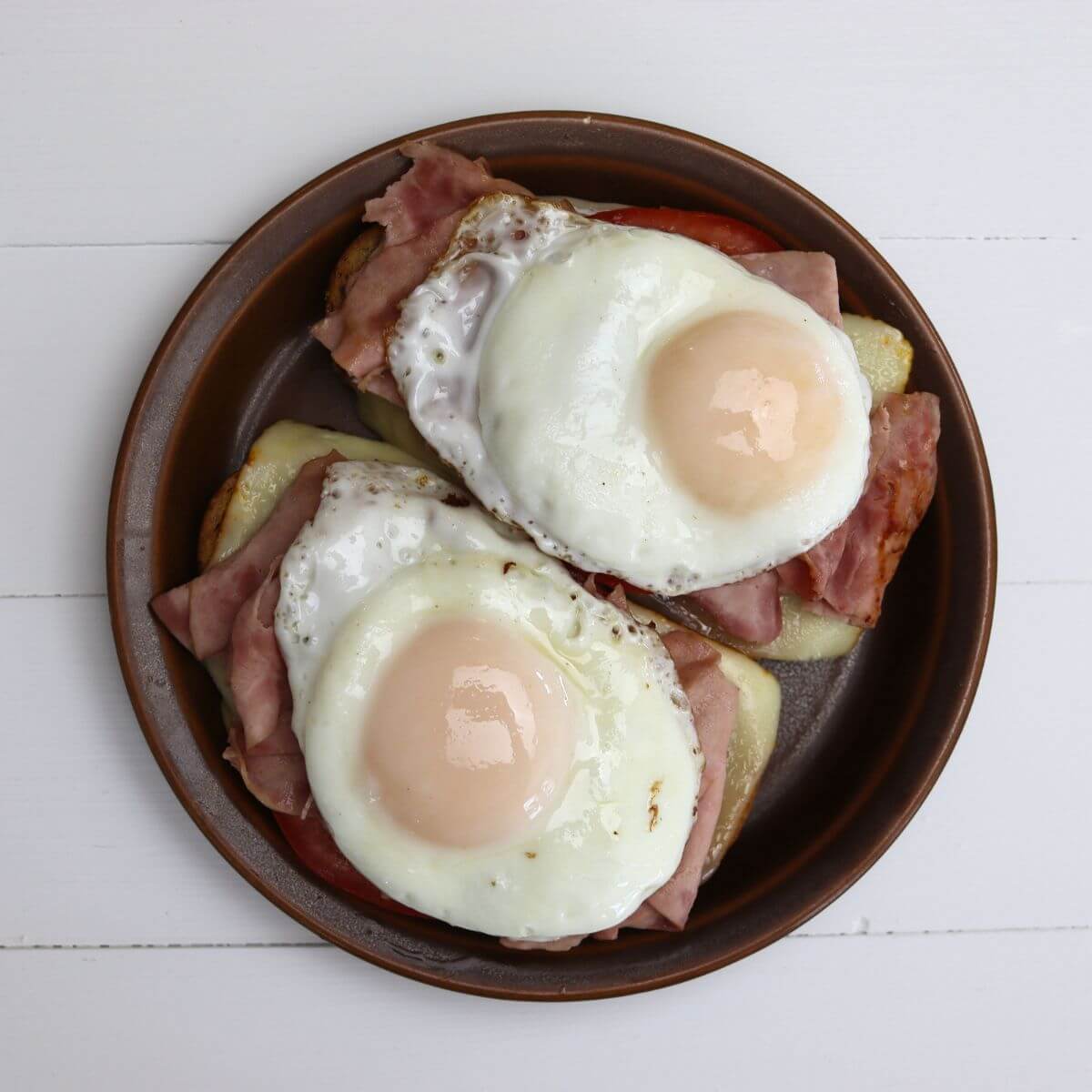
This breakfast sandwich hits just right every time. The same way a well-built breakfast BLT croissant sandwich, a hot homemade breakfast grilled cheese sandwich and an easy open faced ham and egg sandwich bring just the right combination of flavors to the breakfast plate.
Recipe ingredients
- Heavy cream: Use real heavy cream rather than half-and-half or light cream. The higher fat content helps the hollandaise stay smooth, rich, and stable while whisking.
- Dijon mustard: Adds a gentle tang and savory depth to the hollandaise, helping balance the richness of the egg yolks and butter without overpowering the sauce. Choose a smooth Dijon with clean acidity and no added sweetness, or make your own Dijon mustard from scratch to use here.
- Butter: Gives hollandaise its rich flavor and forms the body of the sauce as it’s emulsified with the egg yolks. Use a good-quality butter, such as from scratch farmhouse butter, since its flavor is prominent in the finished sauce.
- Eggs: Go with farm fresh eggs whenever possible. The yolks are richer in color and flavor, and fresher eggs tend to keep a tighter shape when poached instead of spreading through the water. If you’d rather prepare the eggs another way, you can use my diner style eggs guide to cook them exactly the way you like them.
- Canadian bacon: Stick with Canadian bacon for a classic eggs benedict. Choose evenly sliced pieces that will warm through quickly without becoming tough around the edges.
See the recipe card for full information on ingredients and quantities.
How to make eggs benedict with from scratch hollandaise
Step 1: Fill a saucepan with about 1 inch of water and set a stainless steel or glass bowl over the top. Bring the water to a gentle simmer, making sure the bottom of the bowl doesn’t touch the water.
Step 2: Add the heavy cream, egg yolks, lemon juice, Dijon mustard, and cayenne pepper to the bowl. Whisk thoroughly until the mixture is fully combined and smooth.
Step 3: Keep the heat at a steady simmer and whisk constantly as the mixture warms. Continue until it thickens enough to coat the back of a spoon — this happens around 160°F (71°C). Don’t rush this step or step away; steady whisking is what keeps the sauce from curdling.
Step 4: Reduce the heat to low and slowly drizzle in the melted butter while whisking continuously. Add it in a thin stream so it fully incorporates and creates a smooth, stable sauce.
Would you like to save this post for later?
Step 5: Remove the bowl from the heat and whisk in salt and pepper to taste. Set the hollandaise aside in a warm spot while you prepare the rest of the sandwich.
Step 6: Bring a small saucepan of water to a gentle simmer. Create a light swirl in the water to help the eggs hold their shape as they cook.
Step 7: Crack one egg into a small bowl and gently slide it into the center of the swirl. Repeat with the remaining eggs, adding them one at a time so the whites set cleanly.
Step 8: Let the eggs cook undisturbed until the whites are set and the yolks remain soft. Keep the water at a gentle simmer — never a boil.
Step 9: While the eggs cook, heat the Canadian bacon in a skillet over medium-low heat. Warm it through without browning so it stays tender.
Step 10: Place the toasted English muffin halves cut side up on a plate. Top each half with a slice of warmed Canadian bacon.
Step 11: Use a slotted spoon to lift each egg from the water, letting any excess water drain off before placing it on the Canadian bacon.
Step 12: Generously spoon the hollandaise over each egg, then finish with a light garnish of parsley and smoked paprika.
Top tips
- Control your heat from the start: Keep the water under your hollandaise at a true simmer, not a boil. Excess heat will scramble the yolks before the sauce has a chance to thicken properly.
- Use a wide whisking motion: Don’t just whisk in place — move around the entire bowl to keep the mixture heating evenly and prevent hot spots from forming along the edges.
- Watch the sauce, not the clock: Hollandaise doesn’t run on time — it runs on texture. The moment it coats the back of a spoon cleanly, it’s ready to be removed from the heat.
- Keep your butter warm, not hot: If the butter is too hot when you add it, it can break the emulsion. Let it sit just long enough to stay fluid without steaming.
- Stabilize before serving: If your hollandaise tightens up while it sits, whisk in a few drops of warm water to bring it back to a smooth, pourable consistency.
- Give the eggs space in the water: Crowding the saucepan will cause the whites to tangle. Keep enough room between the eggs so they hold their shape as they cook.
- Look for visual cues on the eggs: You’re not timing them — you’re watching for set whites with a soft, slightly jiggly center. That’s when they’re ready to come out.
- Drain the eggs properly: Let the eggs sit on the slotted spoon for a few seconds before plating so excess water doesn’t dilute the sauce on the muffin.
- Build and serve immediately: Eggs benedict is at it’s best the moment it’s assembled. Have everything ready so you can plate and serve without delay.
Other recipes you’ll love
If you loved this breakfast sandwich recipe, give these other great sandwich recipes a try too!
Croque Madame Recipe (Classic French Café Sandwich)
Bacon and Egg Muffin Sandwich (Diner Style at Home)
Chicken Parmesan Sandwich
BBQ Chicken Grilled Cheese Sandwich
Pulled Turkey BBQ Recipe
Easy Green Apple Grilled Cheese

Eggs Benedict with From Scratch Hollandaise
Ingredients
- 1/4 cup heavy cream
- 2 large egg yolks
- 2 teaspoons lemon juice
- 1/2 teaspoon Dijon mustard
- pinch cayenne pepper
- 1/4 cup melted butter
- salt to taste
- ground black pepper to taste
- 4 large eggs
- 2 english muffins split and toasted
- 8 slices Canadian bacon
- dried parsley for garnish
- smoked paprika for garnish
Instructions
- Fill a saucepan with 1 inch of water and bring to a gentle simmer. Place a heatproof bowl over the top, making sure it doesn’t touch the water.
- Add heavy cream, egg yolks, lemon juice, Dijon mustard, and cayenne pepper to the bowl. Whisk until fully combined.
- Whisk constantly over the simmering water until the mixture thickens and reaches 160°F (71°C), coating the back of a spoon.
- Reduce heat to low and slowly drizzle in melted butter while whisking continuously until smooth and emulsified.
- Remove from heat, whisk in salt and pepper, and set aside in a warm place.
- Bring a small saucepan of water to a gentle simmer and create a light swirl.
- Crack one egg into a small bowl and gently slide it into the water. Repeat with the remaining eggs. Cook until whites are set and yolks remain soft.
- While eggs are cooking, heat Canadian bacon in a skillet over medium-low heat until warmed through.
- Place toasted English muffin halves cut side up on a plate and top each with Canadian bacon.
- Lift eggs out of water with a slotted spoon, drain briefly, and place on top of the bacon.
- Spoon hollandaise over each egg and garnish with parsley and smoked paprika.
Notes
- Control hollandaise texture: If the sauce thickens too much while sitting, whisk in a few drops of warm water to loosen it back to a pourable consistency.
- Prevent sauce from breaking: Keep heat low when adding butter and whisk constantly to maintain a smooth, stable emulsion.
- Adjust seasoning at the end: Taste the hollandaise after it’s finished and adjust salt, lemon juice, or cayenne as needed.
- Poach eggs cleanly: Add eggs one at a time to gently simmering water so the whites stay compact and set properly.
- Serve immediately: Assemble and serve right away for the best texture and consistency across all components.
Nutrition
Nutrition information is automatically calculated, so should only be used as an approximation.