How to Cook Chicken Properly on the Stove

Learning how to cook chicken properly on the stove comes down to a few core fundamentals that make weeknight cooking more reliable and far less frustrating. Cooking chicken on the stove is one of the fastest and most dependable ways to prepare it, but uneven cooking and dryness are common problems. This guide focuses on practical, controllable techniques that help chicken cook evenly, stay moist, and remain safe to store for later use.
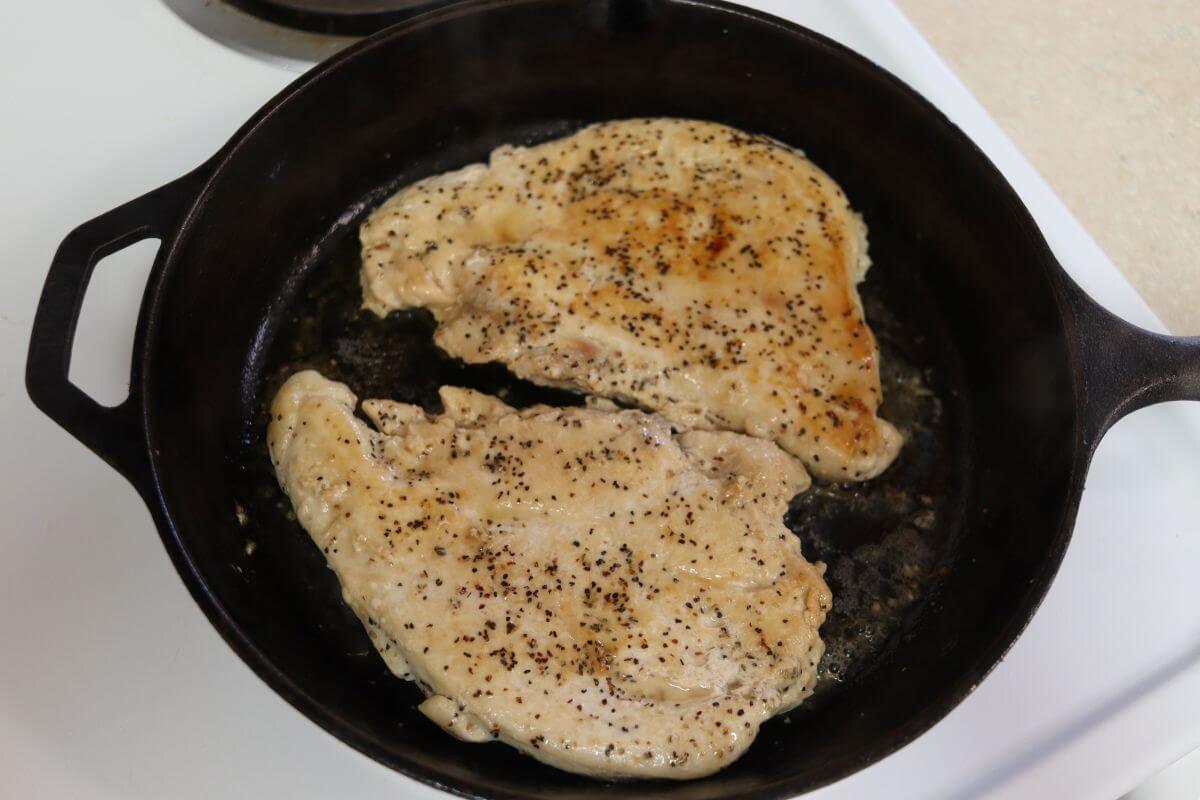
How to Cook Chicken Evenly on the Stove
Uneven cooking usually comes from uneven thickness or heat that’s too aggressive. The tips below help prevent both issues.
- Start with uniform pieces: Pound chicken breasts to an even thickness or slice them into cutlets so they cook at the same rate in the pan.
- Preheat the pan properly: Heat the skillet first, then add fat and let it warm before adding the chicken.
- Use medium to medium-high heat: Heat that’s too high browns the outside of the chicken before the inside cooks through.
- Avoid crowding the pan: Leave space between pieces so that the heat circulates evenly.
- Flip once, not repeatedly: Let the first side cook fully before turning the chicken to promote even browning.
How to Keep Chicken From Drying Out When Cooking
Dry chicken is almost always the result of overcooking, not a lack of oil or seasoning. You can prevent your chicken from drying out by following these guidelines.
- Stop cooking by temperature, not time: Remove the chicken from the skillet at 160°F (71°C) and let it rest; carryover heat can bring it up to 165°F (74°C). If it doesn’t reach 165°F, return it to the skillet briefly.
- Use the right cut for the job: Thighs tolerate heat better than breasts and stay juicy longer.
- Cover briefly if needed: Placing a loose lid on the skillet can help thicker pieces finish cooking without scorching.
- Rest after cooking: A short rest allows juices to redistribute instead of running out of the meat when cut.
Would you like to save this post for later?
How to Store Cooked Chicken Safely
Proper cooling and storage matter just as much as cooking. The tips below help you do both safely.
- Cool promptly: Let chicken cool slightly, then refrigerate it within two hours of cooking.
- Use airtight containers: This limits moisture loss and reduces exposure to bacteria.
- Label containers: Add the date to the container so you can easily track how long it’s been stored.
- Store in shallow portions: Smaller portions cool faster before storing and reheat more evenly for future use.
How Long Does Cooked Chicken Last in the Fridge?
Cooked chicken has a refrigerator storage time of 3-4 days when in airtight containers at or below 40°F (4°C).
Discard chicken if it develops a sour smell, slimy texture, or there are visible signs of mold. When in doubt, don’t taste it — throw it out.
Repeated reheating shortens shelf life and affects the texture of the meat; reheat only what you need.
Can You Freeze Cooked Chicken?
Yes, cooked chicken freezes well when handled correctly. Use the following guidelines for best results when freezing.
- Freeze promptly after cooling: This preserves both texture and flavor.
- Wrap tightly: Use freezer bags or airtight containers to prevent the meat from developing freezer burn.
- Label with date and cut: The date helps you track how long the chicken has been stored, and the cut indicates thickness and moisture level, which affects reheating time and texture.
- Freezer storage time: Up to 3 months for best quality.
- Thaw safely: Thaw overnight in the refrigerator, not on the counter.
Final notes
Cooking chicken properly on the stove comes down to even thickness, controlled heat, and knowing when to stop cooking. With these fundamentals in place, you get reliable results without relying on shortcuts or guesswork.
FAQs
This usually happens when the heat is too high or the chicken pieces are uneven in thickness. The outside browns quickly while the thicker center lags behind. Lowering the heat slightly and starting with uniform pieces helps prevent this.
Most stovetop chicken is cooked uncovered to allow moisture to evaporate and browning to occur. Covering briefly can help thicker pieces finish cooking, but leaving it covered the entire time can trap steam and affect texture.
Yes, chicken naturally releases moisture as it cooks, especially if the skillet is crowded or not hot enough. This liquid will cook off as heat stabilizes, but too much liquid can prevent proper browning.
Chicken dries out when it cooks past the point where it’s done, even by a small margin. This often happens from high heat or relying on time instead of temperature. Carryover heat after the chicken has fully cooked can also push it past that point.
Either is fine, but whole pieces retain moisture better during storage. Cutting chicken before storing can make it cool faster, but it may dry out more when reheated.