
Easy Homemade Cat Treats Recipe

Looking for an easy homemade cat treats recipe that uses a short ingredient list and a simple bake-and-score method? These treats come together quickly, don’t require special equipment, and can be shaped and portioned with minimal handling.
If you’re looking for more cat treat recipes, give my pumpkin cat treats a try too. It follows the same simple method and short ingredient list as this recipe.
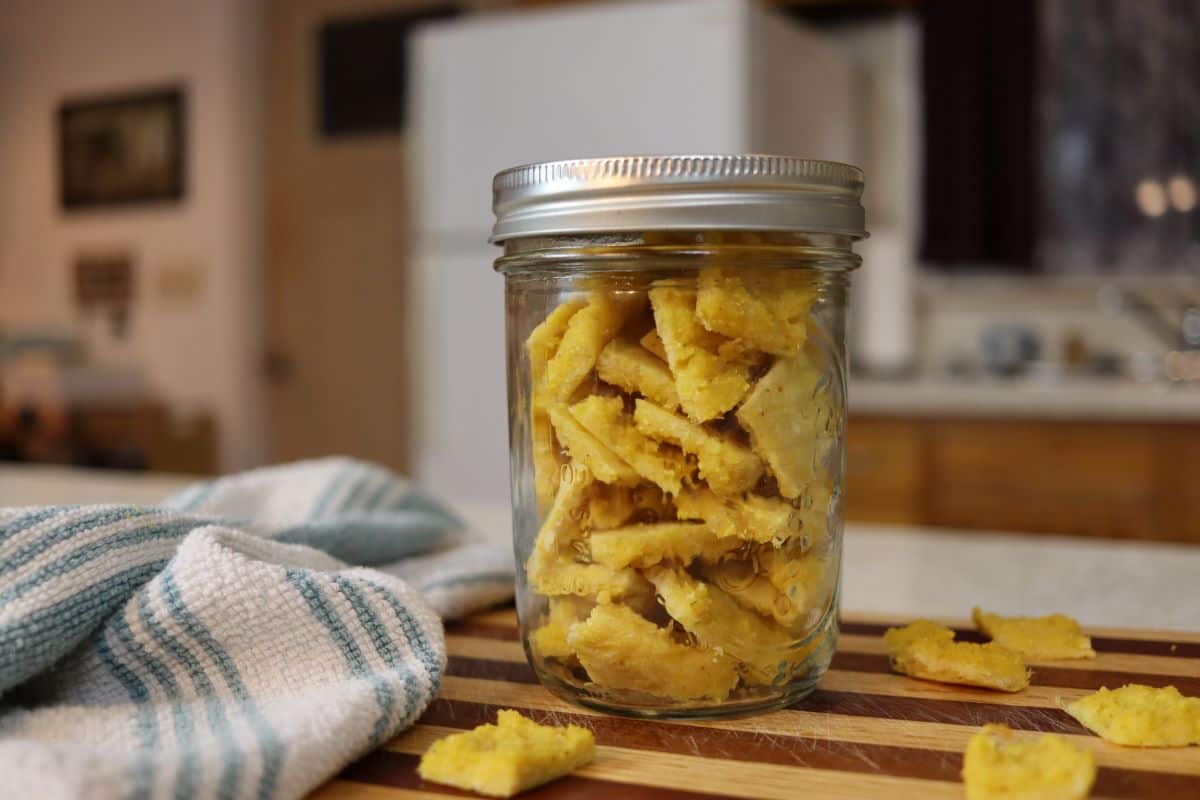
What are homemade cat treats?
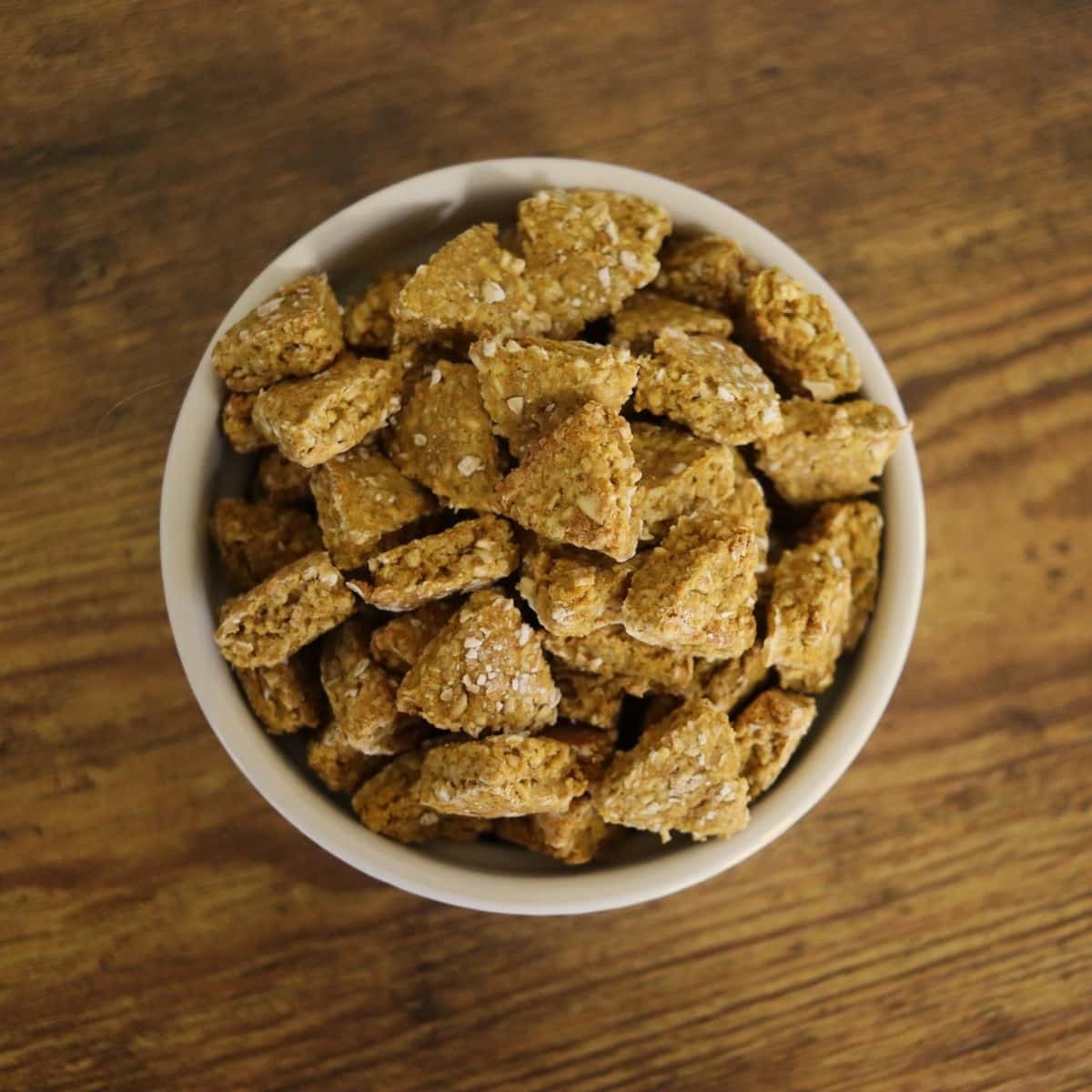
Homemade cat treats are simple baked treats made by mixing a small number of basic ingredients into a soft, pressable mixture and baking it just until set. The mixture spreads easily into an even layer, is lightly scored before baking, and then cut into small pieces once cooled.
This recipe is designed to be straightforward and repeatable, using a short bake time and uncomplicated ingredients. The finished treats stay soft enough to break cleanly, making them easy to portion and store without specialized tools or extra steps.
What makes this recipe so good?
- Simple ingredient combination: The ingredients mix evenly and bake into a cohesive sheet that’s easy to score and portion.
- Quick to make: It takes just a few minutes to mix up a batch. And they bake in under 10 minutes.
- Budget friendly: The ingredients used to make these treats are relatively inexpensive when compared with the price of store-bought cat treats.
- Soft, easy-to-break texture: The treats stay soft enough to score and break cleanly after baking.
Ingredients
This recipe uses just a few ingredients that are easy to find at any grocery store.
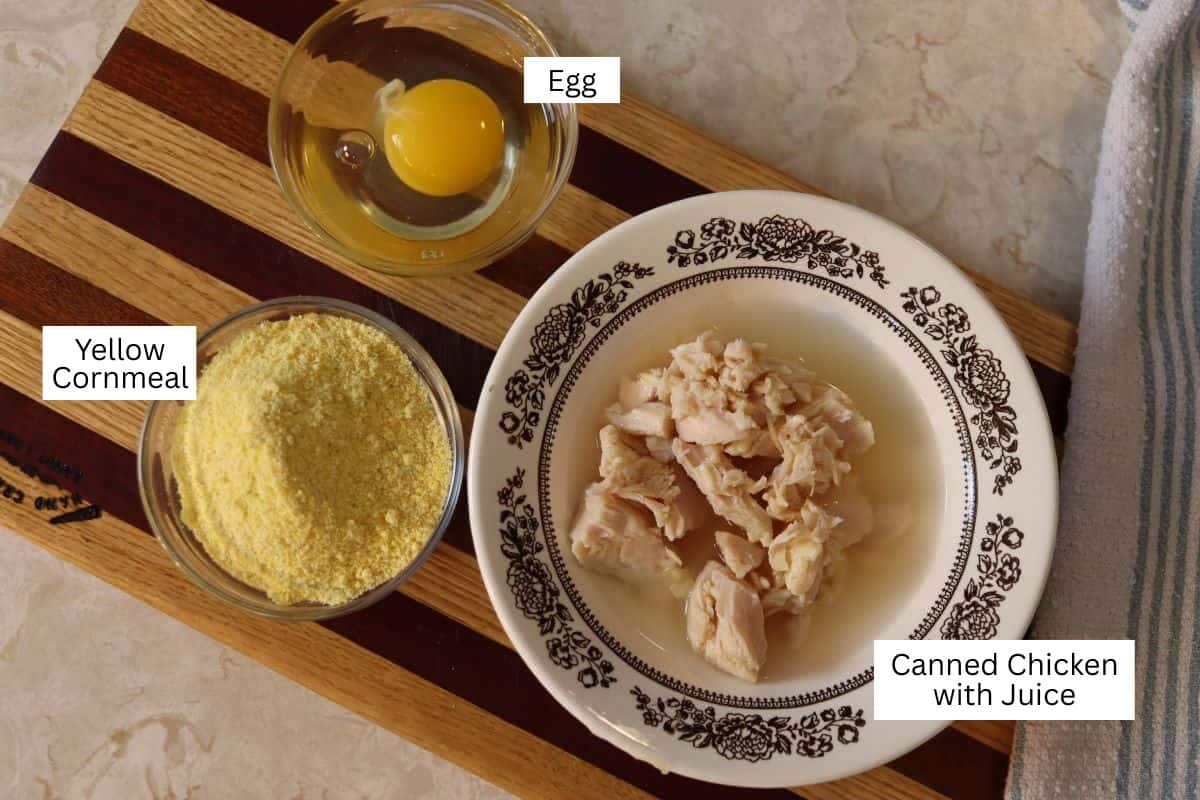
- Canned chicken: Canned chicken works well for this recipe because it’s soft and moist, and the liquid in the can adds just the right amount of moisture to bring the mixture together. If you’re using home cooked chicken instead, you’ll need to add water until the mixture is moist enough to hold its shape when scooped.
- Cornmeal – Yellow cornmeal gives the treats structure and helps the mixture hold together during shaping and baking.
See recipe card below for full information on ingredients and quantities.
Variations or Substitutions
- Swap the protein: If chicken isn’t a good fit, another plain canned meat can be used instead. Choose options packed in water, without added seasonings, so the texture and moisture stay consistent.
- Use canned fish: Mackerel, salmon, sardines, tuna, and anchovies are widely available too, and they are all great options.
- Replace the cornmeal: Oat flour, wheat flour, or rice flour can be used in place of cornmeal. Adjust the amount as needed until the mixture holds its shape when pressed or scooped.
Would you like to save this post for later?
How To Make Homemade Cat Treats
These treats come together quickly with just a few simple steps. You’ll have a batch ready in just minutes.
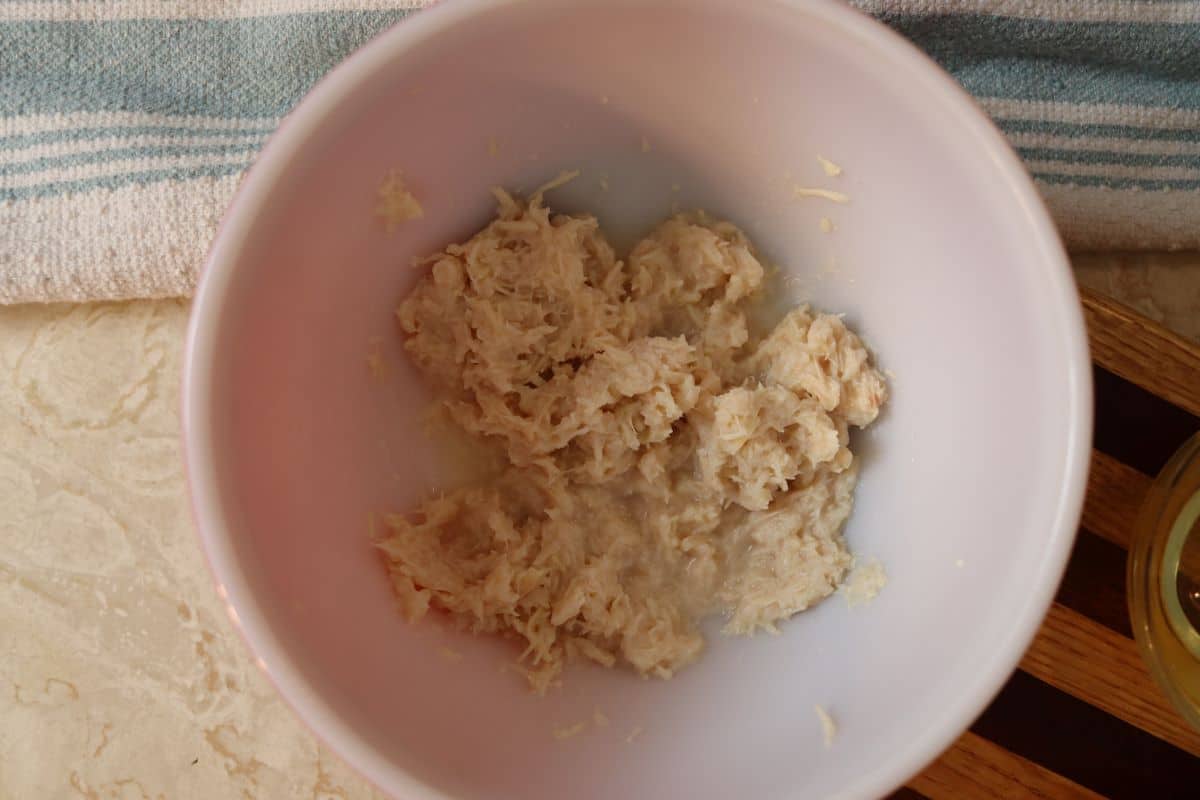
Step 1 – Prepare the chicken: Place the canned chicken, including the liquid, in a medium bowl and mash it as finely as possible. You can use a fork for this step. But it’s easiest to use your hands.
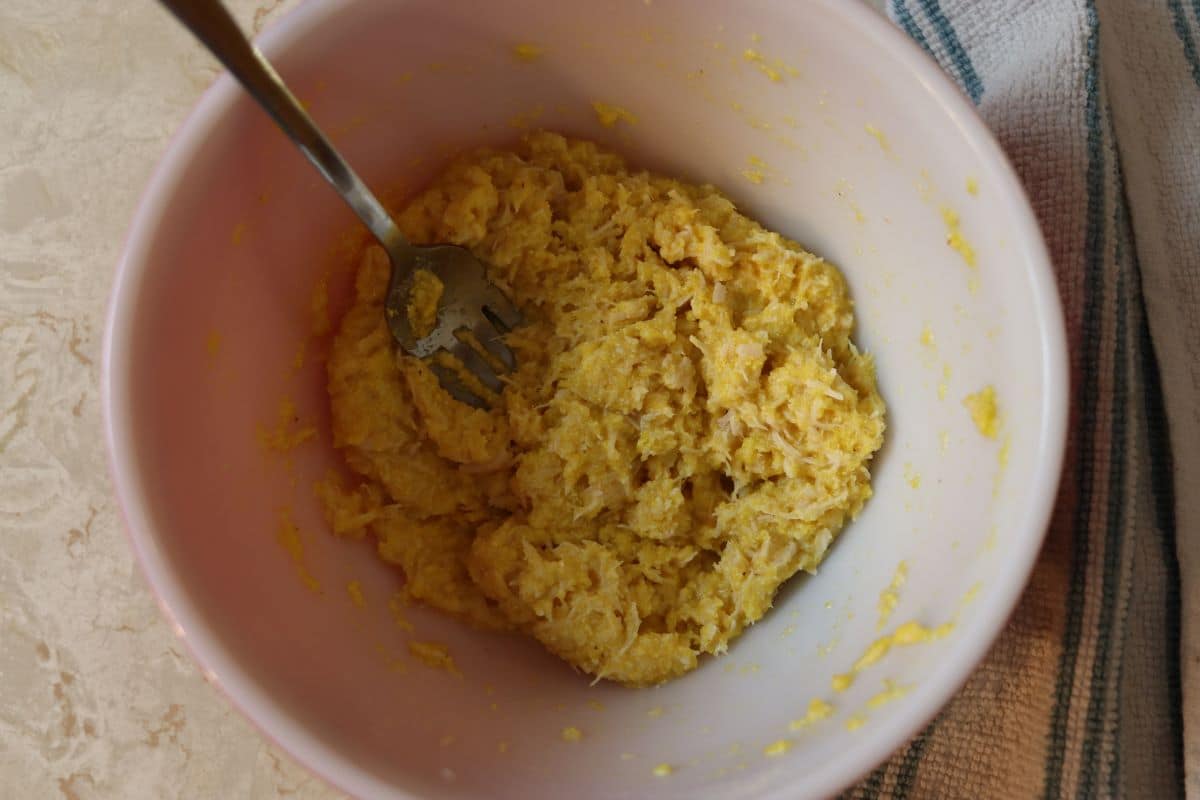
Step 2 – Add remaining ingredients: Mix in the cornmeal and egg until all the ingredients are well combined.
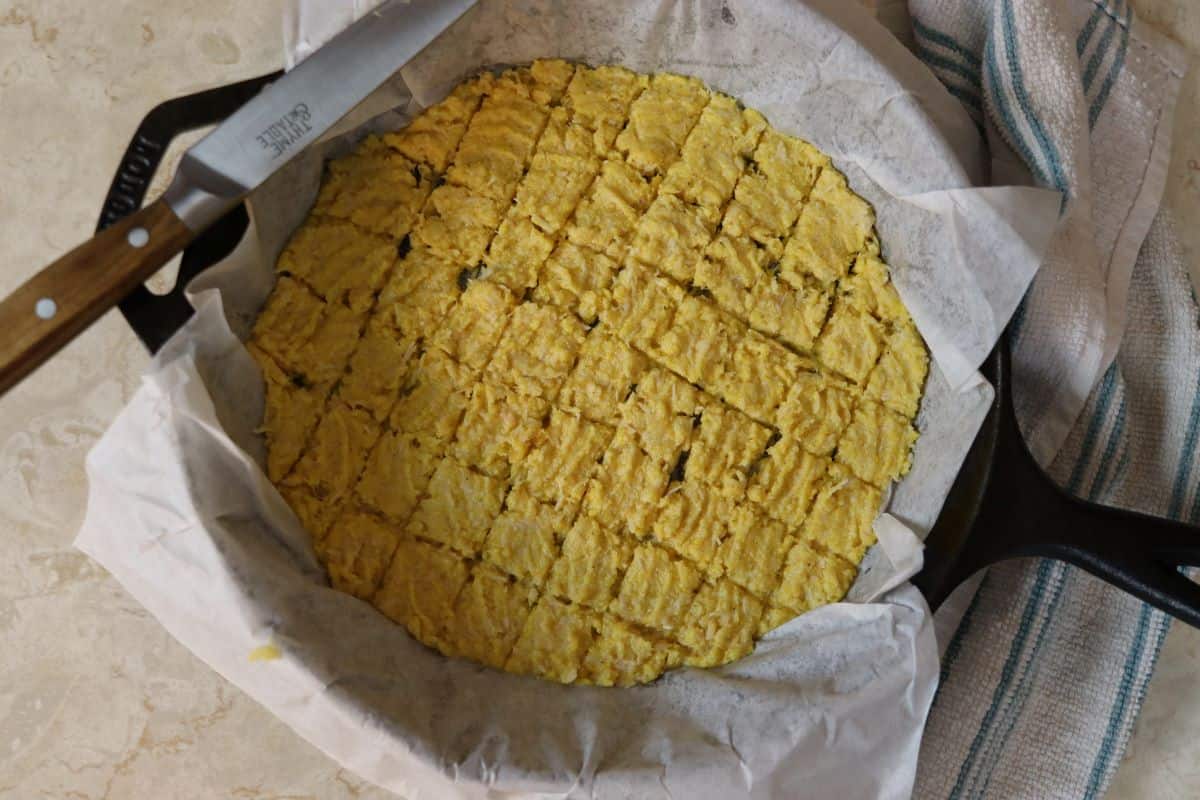
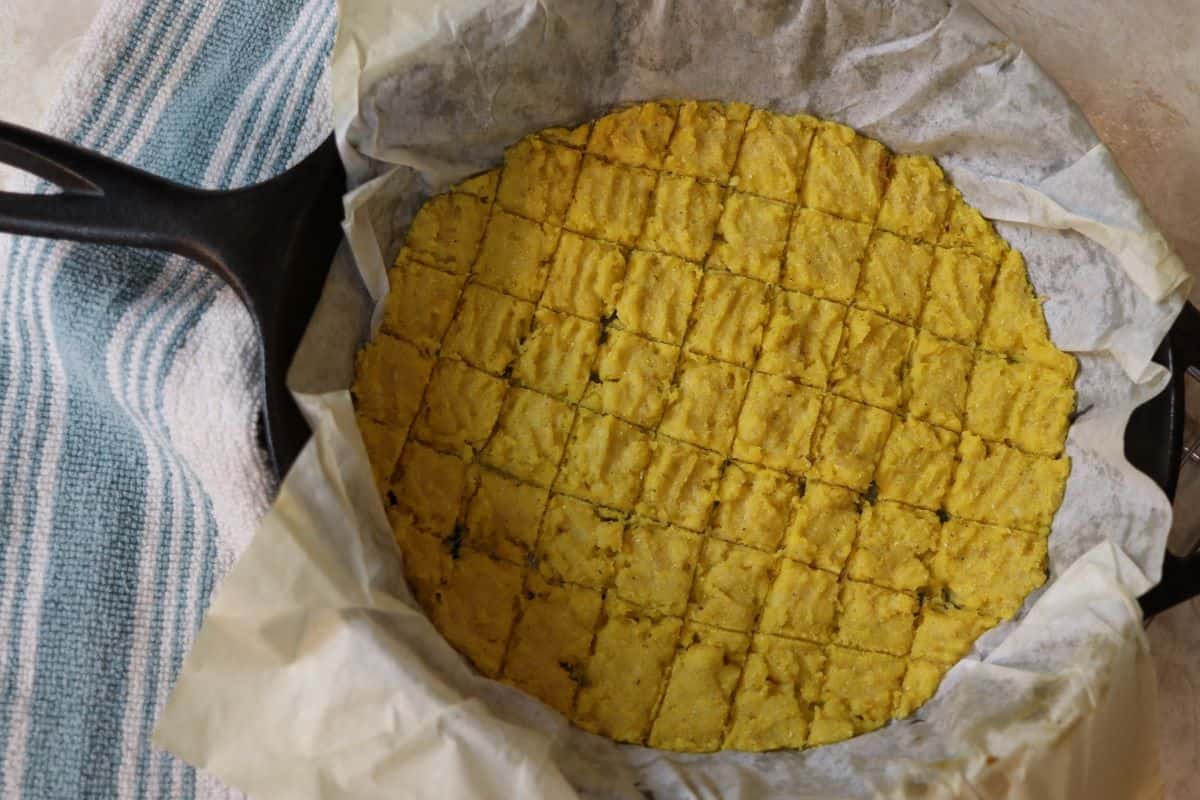
Step 3 – Shape, score, and bake: Press the mixture into a parchment-lined cast iron pan or baking sheet, score it into small squares with a sharp knife, and bake at 350°F (177°C) for 3–4 minutes.
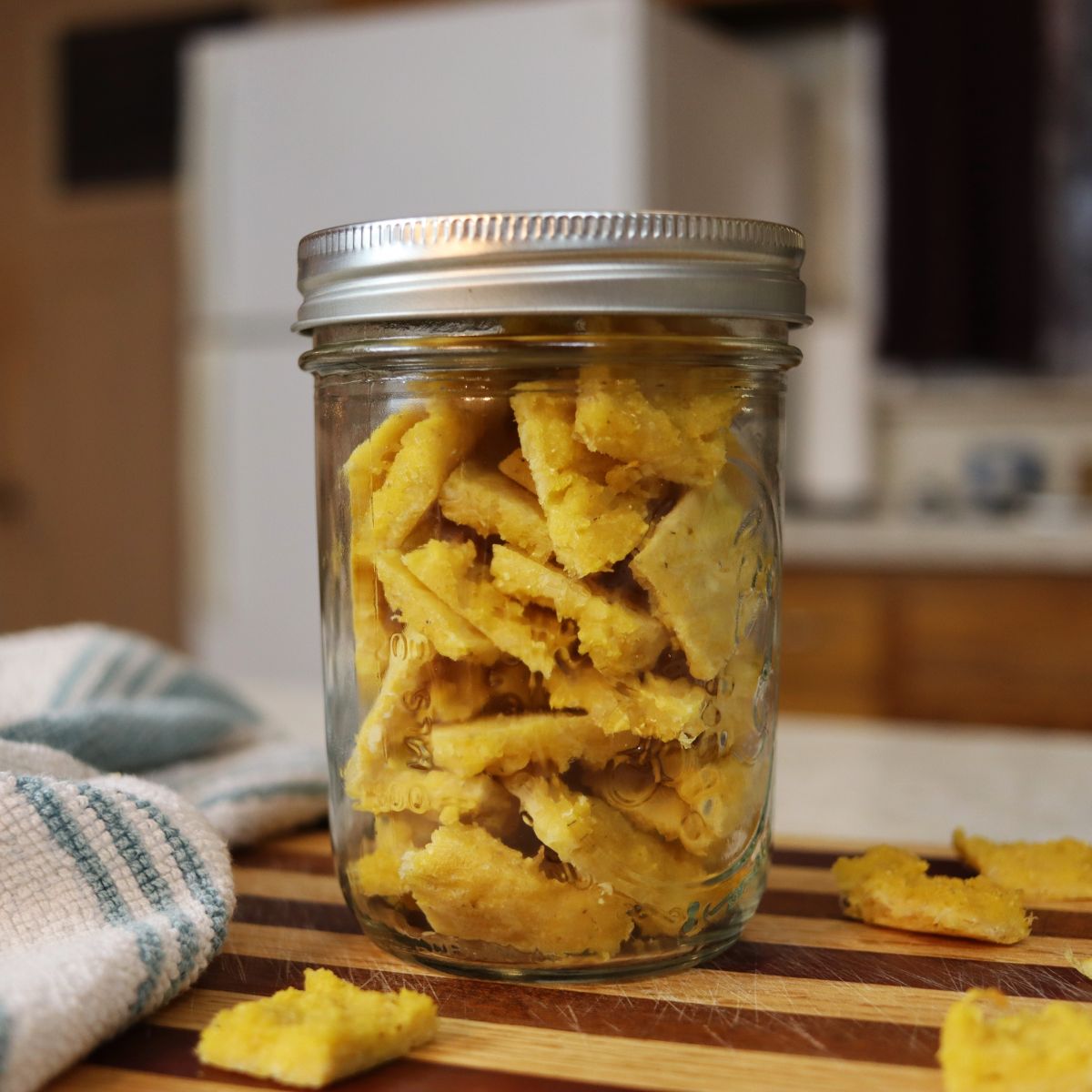
Step 4 – Rescore, bake, and cool: Remove the pan from the oven, refresh the score lines, and bake for another 3–4 minutes. Then transfer the parchment to a cooling rack, let the treats cool completely, and break them apart to serve or store.
Recipe FAQs
Yes, you can use chicken cooked from scratch. Just be sure to add enough water to make up for the moisture in canned chicken — the mixture should hold together easily when scooped.
Once completely cooled, store the treats in an airtight container in the refrigerator. They’re best used within 5–7 days.
Yes, these treats freeze well and can be stored in a freezer-safe container for up to a month.
You can use a different flour if needed — oat flour, wheat flour, and rice flour all work well.
How these treats are handled
These treats are intended as a small, homemade addition to a cat’s routine. They’re easy to portion into small pieces and served separately from regular feeding times.
If the treats have been stored in the freezer, let them come to room temperature before giving them to your kitty — most cats enjoy them more that way, as it brings out their natural flavor. You can take a few out in the morning to thaw, or pull enough out for a few days and keep them in the fridge.

Tips for consistent results
- Use chicken in water: Choose canned chicken packed in water, without added seasonings, so the flavor and moisture stay consistent in the mixture.
- Mash chicken thoroughly: This will keep the texture as smooth as possible, making it easier to spread evenly.
- Don’t overbake: Pull them from the oven before browning to maintain a softer texture.
- Freeze to increase shelf life: Freeze treats on a parchment lined baking sheet to prevent clumping. Then transfer them to a freezer-safe container for storage.
Other pet treat recipes you’ll love
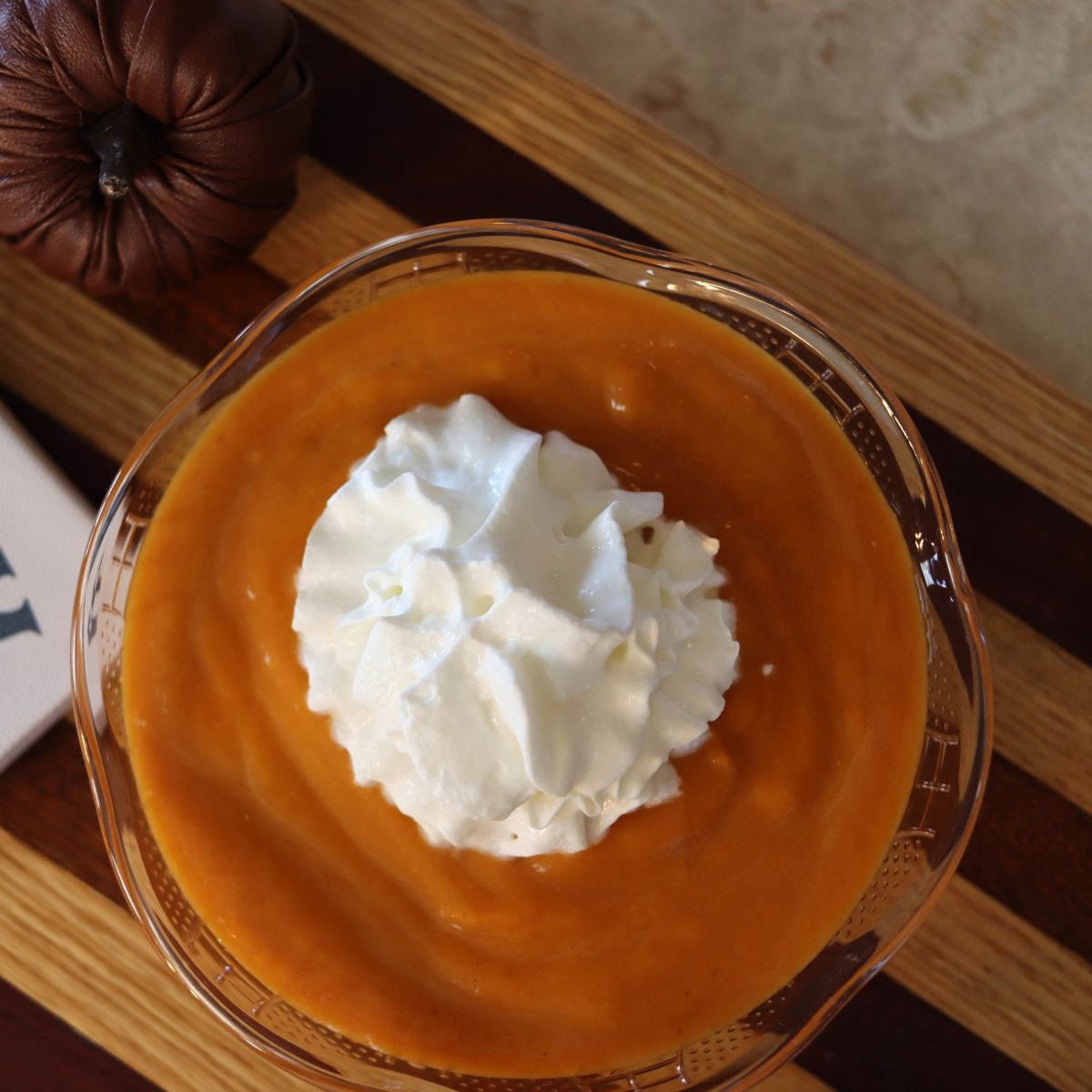
Pumpkin Spice Latte For Dogs
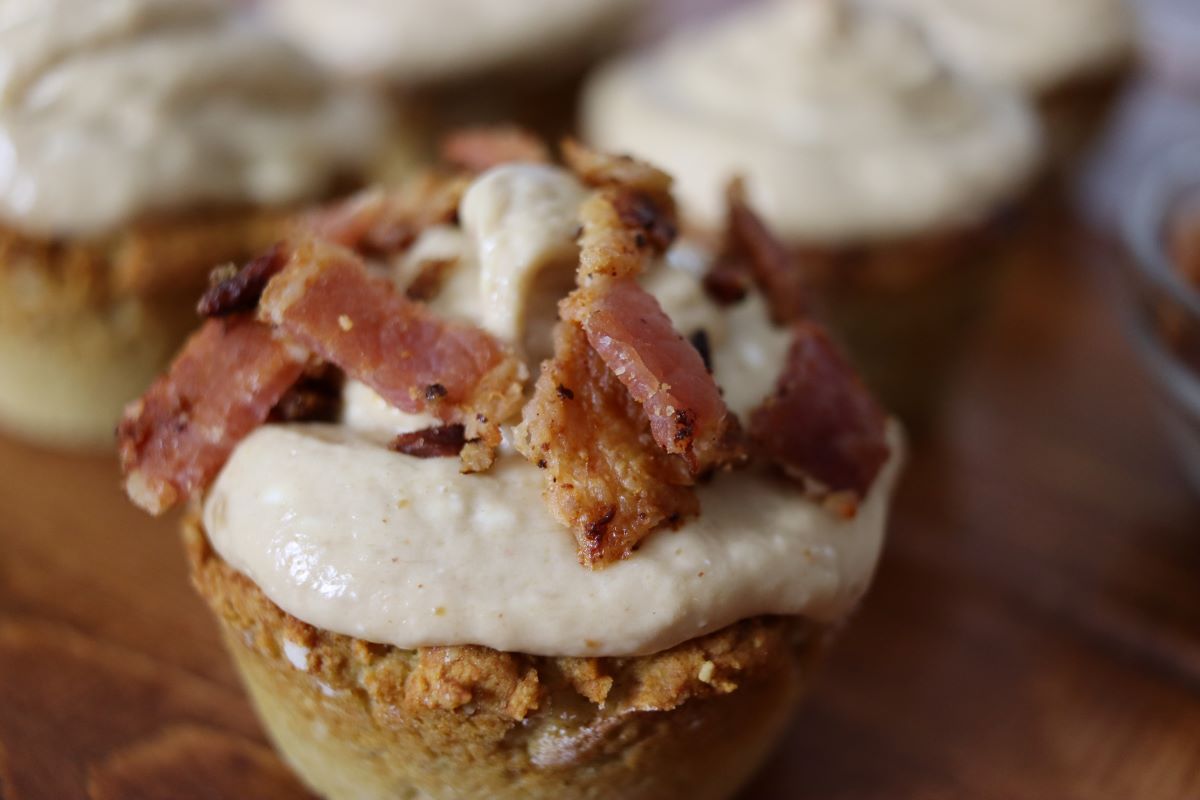
Peanut Butter Bacon Pupcakes
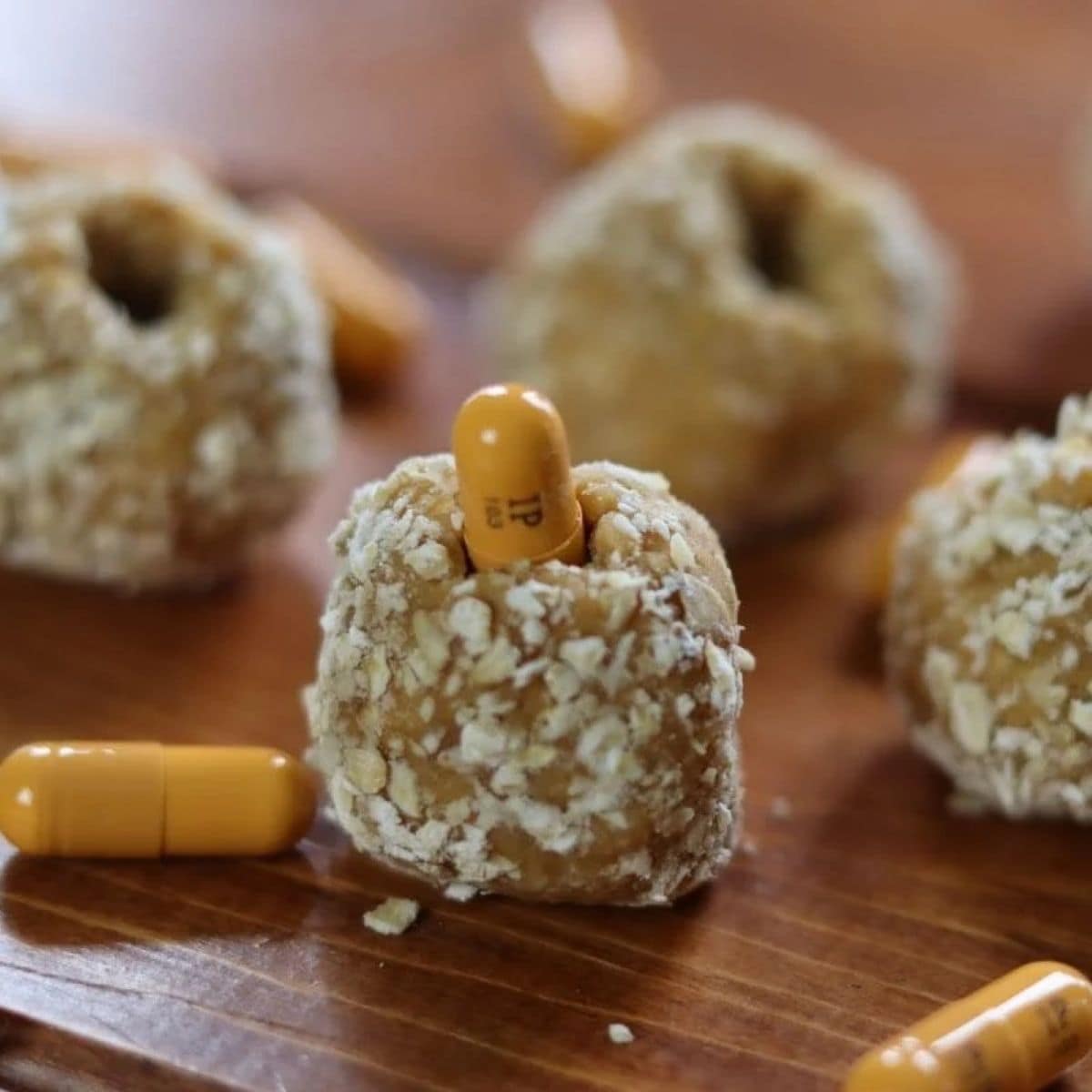
DIY Pill Pockets For Dogs
Homemade Apple Dog Treats
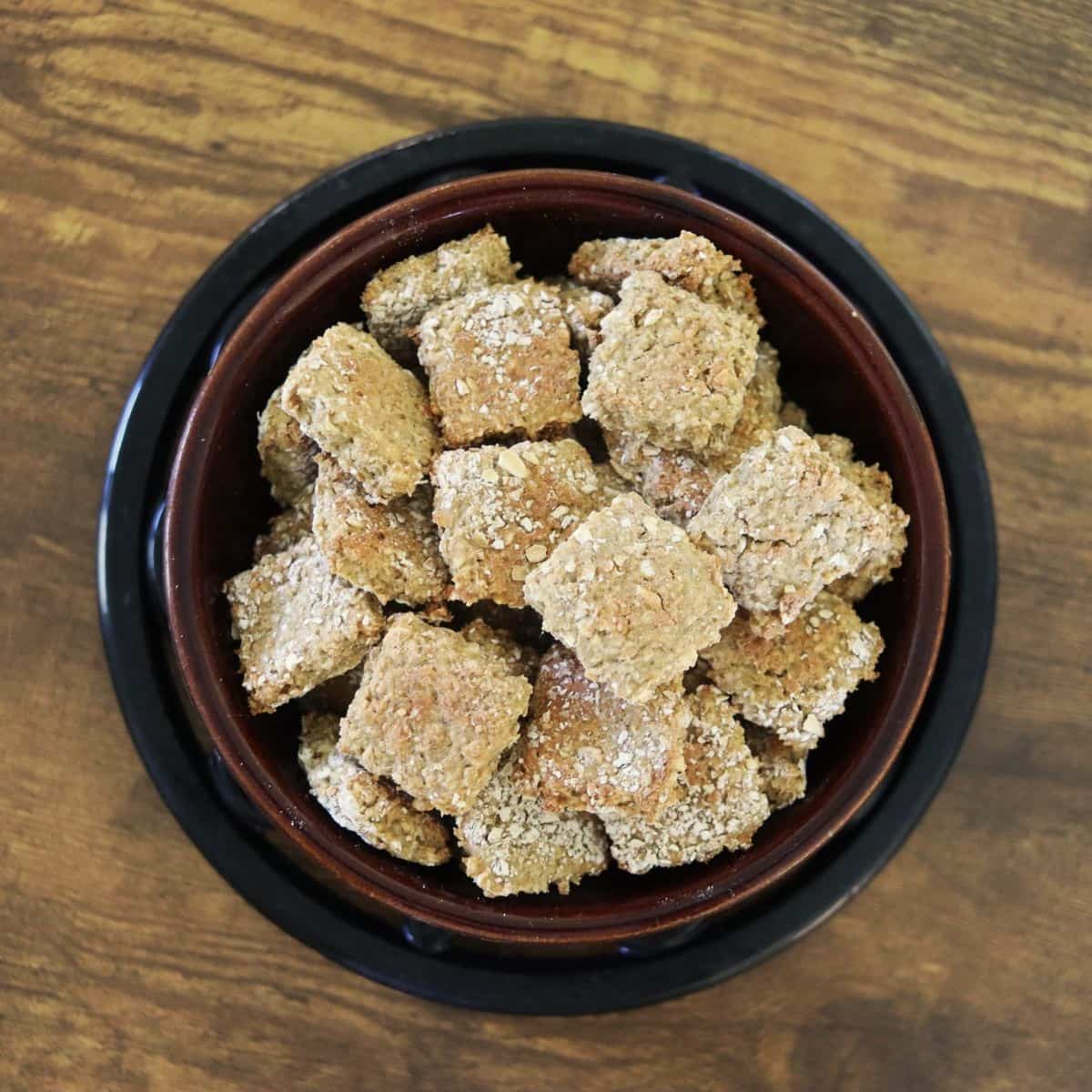
Soft Sweet Potato Dog Treats Recipe
If you like this recipe, share it with someone you know will love it too.
Follow us on Pinterest, Instagram, Facebook, and YouTube for more recipes.
Your support through shares, comments, and a 5-star rating means the world!
Homemade Cat Treats Recipe
Ingredients
- 5 oz canned chicken with juice
- 1/3 cup yellow corn meal
- 1 egg
Instructions
- Preheat oven: Set your oven to 350°F (177°C) to begin.
- Break down the chicken: Place the canned chicken with its juice into a small bowl. Use your hands to break it apart until it becomes a soft, mushy texture.
- Combine ingredients: Add cornmeal and the egg to the bowl. Mix thoroughly until well combined.
- Prepare baking surface: Line a cast iron skillet or baking sheet with parchment paper.
- Spread mixture: Press the treat mixture onto the lined surface, spreading to about ¼" thickness.
- Score treats: Use a knife to lightly score the mixture into small treat-sized pieces.
- First bake: Place in the oven and bake for 4 minutes.
- Cut through treats: Remove from oven and cut through the scored lines.
- Second bake: Return to oven for an additional 2–4 minutes. Do not allow the treats to brown.
- Cool on rack: Slide the parchment paper onto a cooling rack and allow the treats to cool completely.
- Serve and store: Allow treats to cool completely, then transfer to an airtight container and refrigerate.
Notes
- Choose chicken packed in water: Avoid varieties packed in broth or with added salt or seasoning.
- Break down the meat well: Mash the chicken thoroughly so the mixture spreads smoothly in the pan and bakes evenly.
- Bake gently: These treats are meant to be soft. Do not allow them to brown before removing them from the oven.
- Freeze for longer storage: Freeze treats on a parchment-lined tray to freeze individually, then transfer them to a sealed container or bag.
- Bring to room temperature before serving: Thawed treats are more flavorful and enjoyable for most cats.
- Keep portions small: These treats are meant to be given occasionally as a small homemade addition, not as a replacement for your cat’s regular meals.
Nutrition
Nutrition information is automatically calculated, so should only be used as an approximation.
Are they supposed to be soft, moist, not hard at all??
They are pretty soft. I wouldn’t say they aren’t ‘hard at all’. They may get a little crisp on the outside. But they are not hard like dry cat food would be.
Which canned chicken did you use ? I’m having trouble finding them in water and no salt added.
I used Swanson brand chicken. It does have a minimal amount of salt in it. It shouldn’t be hard to find canned chicken packed in water. Most brands are packed that way. You can use fresh cooked chicken if you prefer.
I too cannot find canned chicken w/o salt. How many mg is tolerable?
Do you have more recipes for cat treats?
Thanks for the question! I’m not able to give guidance on nutrient amounts or dietary suitability. For this recipe, I focused on the method and texture rather than nutritional specifics.
And yes there is another cat treat recipe on the blog: https://sustainableslowliving.com/pumpkin-cat-treats-recipe/
Can you put them in a dehydrator to keep the shelf life better?
Yes, you definitely can. I prefer to freeze them because they retain more flavor that way. But dehydration will extend their shelf life.
Could you use tuna in water and an air fryer? Just trying to use what I have on hand.
You can definitely use tuna. I have to admit that I have never used an air fryer. I don’t use very many small appliances because until recently I lived tiny. And for years before that off-grid. So small appliances became something I eliminated. I would make a batch and try a small amount of it in the air fryer to see if it works before cooking the whole batch.
My male cat really liked them but my female wouldn’t eat them.
Maybe try using a different kind of chicken for her. Or a different kind of meat altogether. They’re so easy to make. I hope you find a version she likes.