Farmhouse Red Beet Pickled Eggs (Old-Fashioned Recipe)

Farmhouse red beet pickled eggs are a classic old-fashioned recipe made with hard-boiled eggs, red beet juice, white vinegar, and simple seasonings. As the eggs sit in the brine, they gradually take on their signature deep pink color while absorbing it’s sweet, tangy flavor.
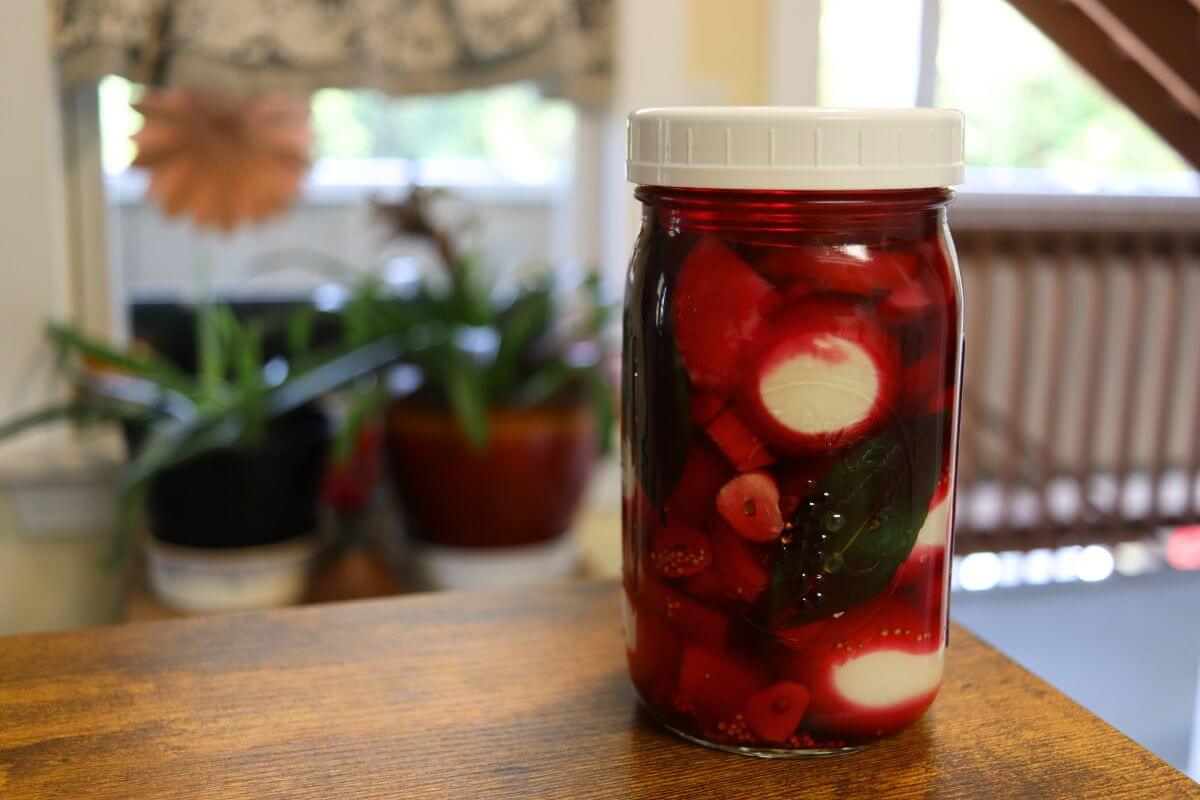
Grandma’s pickled eggs are the best pickled eggs
These red beet pickled eggs are the kind of recipe that shows up at family gatherings, church suppers, and holiday tables throughout the year. There was always a big jar of them in my grandma’s refrigerator too — I could count on it.
They are easy to make, require no special equipment, and transform a handful of simple ingredients into something satisfying and flavorful.
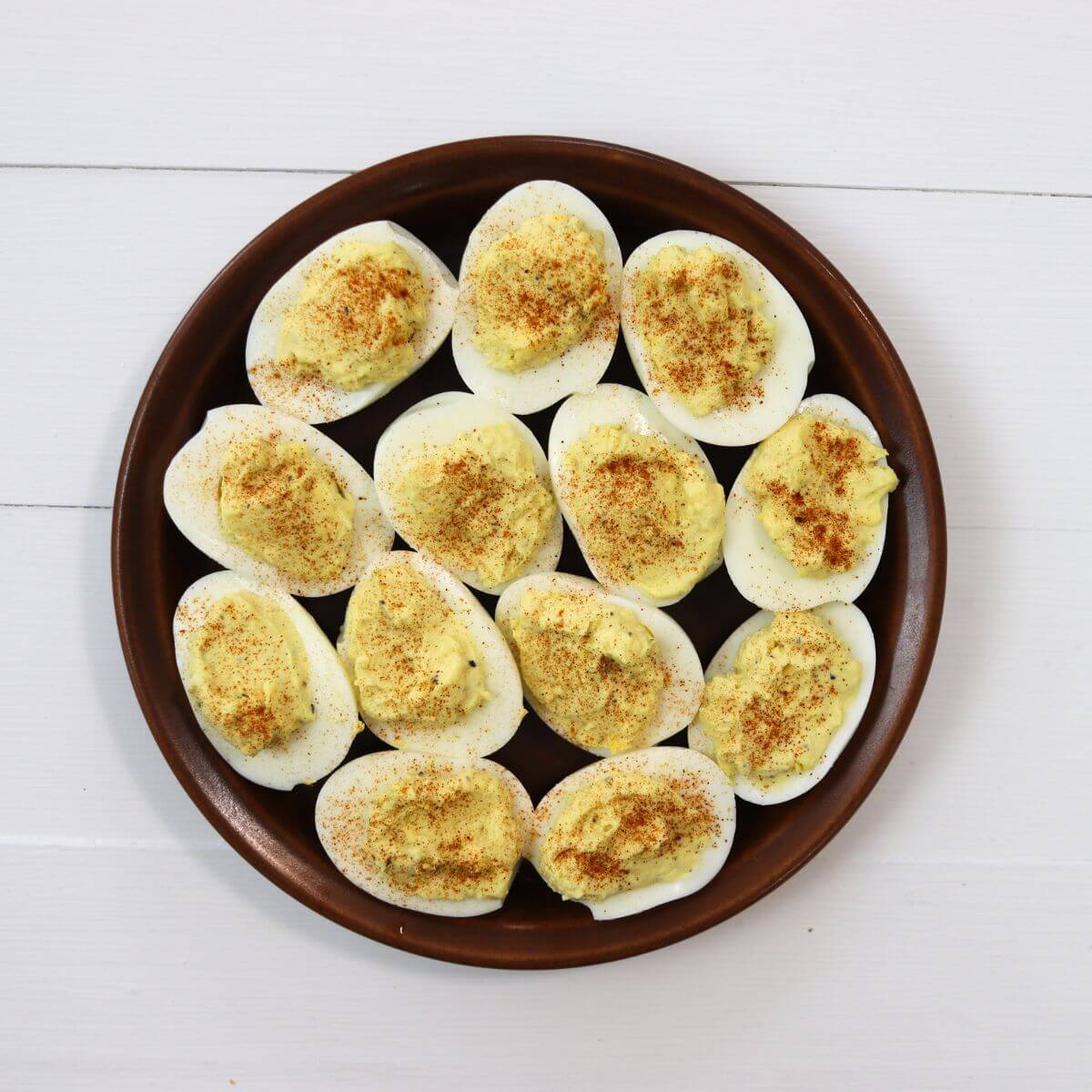
If you’re looking for other great appetizer recipes, try my classic deviled eggs, homemade mustard pickled eggs, and hot and spicy pickled eggs next.
Recipe ingredients
- Eggs: Farm fresh eggs are an excellent choice for this recipe. Their richer flavor pairs well with the sweet, tangy beet brine.
- Fresh Bay Leaves: Fresh bay leaves provide a cleaner, more pronounced flavor than dried bay leaves. If you have access to fresh leaves, they are worth using in this recipe.
- Red Beet Juice: Use the juice from canned sliced beets rather than sweetened beet products. The juice provides the traditional color and flavor that farmhouse red beet pickled eggs are known for.
- White Distilled Vinegar: Choose standard white distilled vinegar for the clean, sharp flavor that defines classic pickled eggs. It also allows the color of the beet juice to remain true without darkening the brine.
See the recipe card for full information on ingredients and quantities.
Would you like to save this post for later?
How to make farmhouse red beet pickled eggs
Step 1: Place a layer of hard-boiled eggs into a clean quart-size mason jar. Add some of the sliced onion, garlic, and mustard seeds. Continue layering until all of the ingredients have been added to the jar.
Step 2: Tuck the fresh bay leaves between the eggs and the side of the jar. This helps distribute their flavor throughout the pickling liquid while keeping them visible and easy to remove later if desired.
Step 3: Combine the red beet juice and white distilled vinegar. Stir until evenly mixed, then pour the brine into the jar, filling it to just below the band line and completely covering the eggs.
Step 4: Place a canning weight on top of the eggs to keep them fully submerged in the brine. Secure the jar with a plastic lid.
Step 5: Leave the jar at room temperature for 1 hour to allow the flavors to begin developing, then transfer it to the refrigerator.
Step 6: Refrigerate the eggs for at least 24 hours before serving. For the deepest color and the best flavor, allow them to pickle for a full week before serving.
Top tips
- Steam the eggs for easier peeling: Steamed eggs are often easier to peel cleanly than traditionally hard-boiled eggs. If you’ve never steamed eggs before, see my simple guide on how to cook eggs for step-by-step instructions.
- Bring to serving temperature before eating: Remove the eggs from the refrigerator about 15 minutes before serving. The flavors are easier to taste when they are not ice cold.
- Insert the bay leaves carefully: Fresh bay leaves can have surprisingly sharp edges. Slide them gently between the eggs and the side of the jar to avoid slicing or gouging the egg whites.
- Use Clean Tongs: Remove eggs from the jar with clean tongs each time. Introducing food particles or residue into the brine can shorten its storage life and affect the quality of the remaining eggs.
- Save the pickled onions: Don’t discard the onions after the eggs are gone. They make an excellent topping for sandwiches, burgers, salads, and wraps.
- Freeze extra bay leaves: If you purchased more fresh bay leaves than you need, freeze them individually on a silicone-lined baking sheet, then transfer them to a freezer-safe bag for long-term storage.
- Use the beets too: Canned beet juice works perfectly for this recipe, and the beets themselves don’t need to go to waste. Serve them alongside the pickled eggs for a traditional combination of sweet beets and tangy eggs.
Other recipes you’ll love
If you loved this appetizer recipe, give these other great appetizer recipes a try too!
Nacho Cheese Fondue Recipe (Thick, Rich & Easy)
Fresh Guacamole Recipe (Made at Home with Simple Ingredients)
Marry Me Chicken Dip
Savory Honey BBQ Chicken Dip
Crab Cake Dip Recipe
Sweet Italian Sausage Dip Recipe
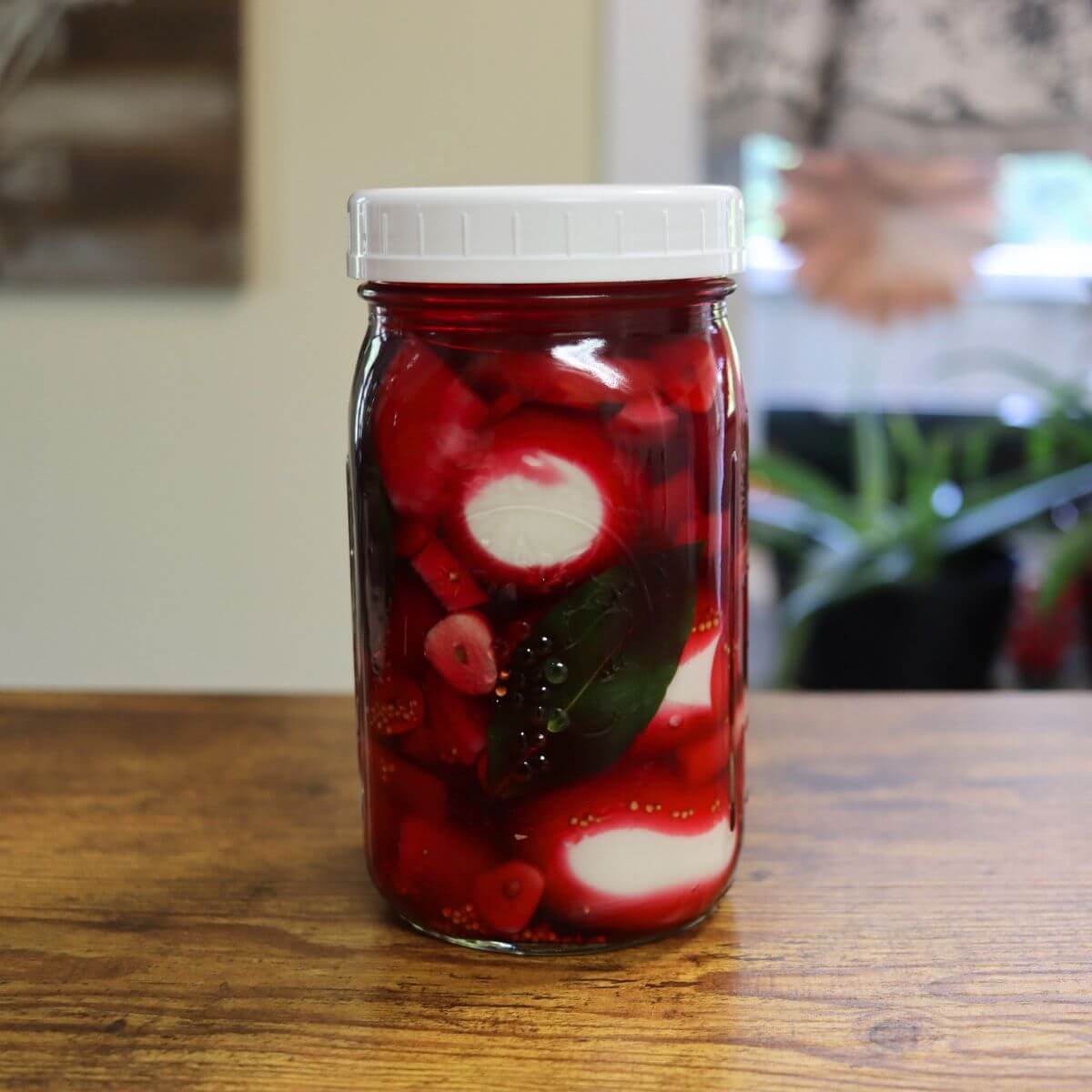
Farmhouse Red Beet Pickled Eggs
Ingredients
- 9 large eggs hard boiled and peeled
- 1/2 cup sliced yellow onion
- 2 fresh bay leaves
- 1 large garlic clove sliced
- 1/4 teaspoon mustard seeds
- 1 1/4 cup red beet juice
- 1/4 cup white distilled vinegar
Instructions
- Place a layer of hard-boiled eggs in a clean quart-size mason jar. Add some of the onion, garlic, and mustard seeds. Repeat the layers until all ingredients have been added.
- Tuck the bay leaves between the eggs and the side of the jar.
- Combine the red beet juice and white distilled vinegar. Pour the mixture into the jar, filling it to just below the band line and completely covering the eggs.
- Place a canning weight on top of the eggs to keep them submerged in the brine. Secure the jar with a plastic lid.
- Let the jar stand at room temperature for 1 hour.
- Transfer the jar to the refrigerator and refrigerate for at least 24 hours before serving.
- For the best color and flavor, refrigerate for 1 week before serving.
Notes
- Submerge the Eggs: Keep the eggs fully covered by the brine throughout the pickling process to ensure even color and flavor development.
- Use a Canning Weight: A canning weight helps prevent eggs from floating above the brine, which can lead to uneven pickling.
- Allow Extra Pickling Time: The eggs can be eaten after 24 hours, but additional time in the refrigerator produces deeper color and more developed flavor.
- Store Properly: Keep the jar tightly sealed and refrigerated between servings to maintain quality.
- Use Clean Utensils: Remove eggs with a clean fork or spoon each time to help keep the brine free from contamination.
Nutrition information is automatically calculated, so should only be used as an approximation.