Yellow Mustard Pickled Eggs Recipe

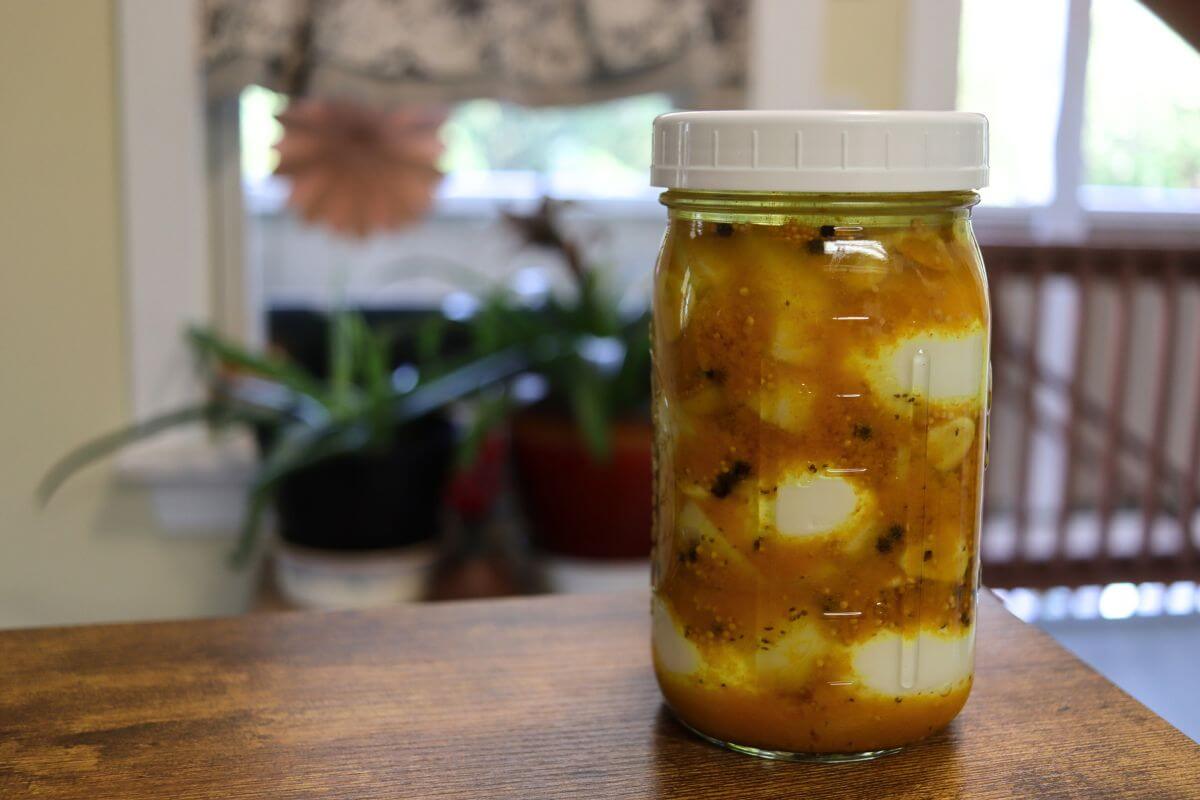
Yellow mustard pickled eggs combine hard-boiled eggs with a tangy vinegar brine flavored with classic yellow mustard and ground turmeric. The result is a jar of bright yellow pickled eggs with a bold, old-fashioned flavor that gets better as they sit.
When yellow mustard meets pickled eggs
This spring I decided to experiment with a few different ways to pickle eggs and yellow mustard style made my list. It was a great choice — these eggs are delicious! They’re perfect for snacking straight from the jar, adding to a charcuterie board, serving alongside sandwiches, or keeping in the refrigerator for a quick protein-packed bite.
They come together with simple pantry ingredients and only a few minutes of hands-on work. And have a gentle mustard flavor and an appealing signature golden color.
If you’re looking for other classic egg recipes to make in your kitchen, be sure to try my traditional deviled eggs, old fashioned spicy pickled eggs, and red beet pickled eggs next.
Recipe ingredients
- Eggs: Farm fresh eggs are an excellent choice for this recipe. Their rich flavor pairs well with the tangy mustard brine and earthy notes of turmeric.
- White Distilled Vinegar: Choose standard white distilled vinegar for the clean, sharp flavor that defines classic yellow mustard pickled eggs. Its clear color allows the mustard and turmeric to create the bright golden brine that gives these eggs their signature appearance.
- Yellow Mustard: Use a traditional prepared yellow mustard rather than a specialty mustard. Its smooth texture and familiar flavor create the classic taste associated with yellow mustard pickled eggs.
- Turmeric: Choose fresh, brightly colored ground turmeric for the strongest color. Since turmeric is responsible for the eggs’ signature golden appearance, fresher spices generally produce better results.
See the recipe card for full information on ingredients and quantities.
How to make yellow mustard pickled eggs
Step 1: Add the white vinegar, water, sugar, salt, yellow mustard, and turmeric to a saucepan. Place over medium heat and bring the mixture to a light simmer, stirring occasionally until the sugar and salt are completely dissolved.
Step 2: Remove the saucepan from the heat and allow the brine to cool to room temperature. This prevents the eggs from being exposed to unnecessary heat once they are packed into the jar.
Step 3: Layer the hard-boiled eggs, sliced onion, mustard seeds, peppercorns, celery seed, and garlic in a clean quart-size mason jar. Distribute the seasonings throughout the jar as you fill it.
Would you like to save this post for later?
Step 4: Pour the cooled brine into the jar, covering the eggs and seasonings. Fill the jar to just below the band line, leaving the appropriate headspace at the top.
Step 5: Place a canning weight into the jar to hold the eggs beneath the surface of the brine. Keeping the eggs fully submerged helps them pickle evenly.
Step 6: Secure the lid and allow the jar to sit at room temperature for 1 hour before transferring it to the refrigerator.
Step 7: Refrigerate the eggs for at least 24 hours before serving. For the best flavor and color, allow them to pickle for 1 week.
Top tips
- Steam The Eggs For Easier Peeling: Steamed eggs are often easier to peel cleanly than traditionally hard-boiled eggs. If you’ve never steamed eggs before, see my guide on how to cook eggs for step-by-step instructions.
- Choose A Wide-Mouth Jar: A wide-mouth mason jar makes it easier to pack the eggs, add the canning weight, and remove the finished eggs without damaging them.
- Bring To Serving Temperature Before Eating: Remove the eggs from the refrigerator about 15 minutes before serving. The flavors shine through more clearly when they are not ice cold.
- Use Clean Tongs: Remove eggs from the jar with clean tongs each time. Introducing food particles or residue into the brine can shorten its storage life and affect the quality of the remaining eggs.
- Save The Pickled Onions: Don’t discard the onions after the eggs are gone. They make an excellent topping for sandwiches, burgers, salads, and wraps.
Other recipes you’ll love
If you loved this appetizer recipe, give these other great appetizer recipes a try too!
Bang Bang Shrimp Recipe
Easy Bacon Blue Cheese Dip
Stuffed Portobello Mushroom Recipe
Savory Buffalo Chicken Dip
Garden Fresh Pico de Gallo
Nacho Cheese Fondue Recipe (Thick, Rich & Easy)
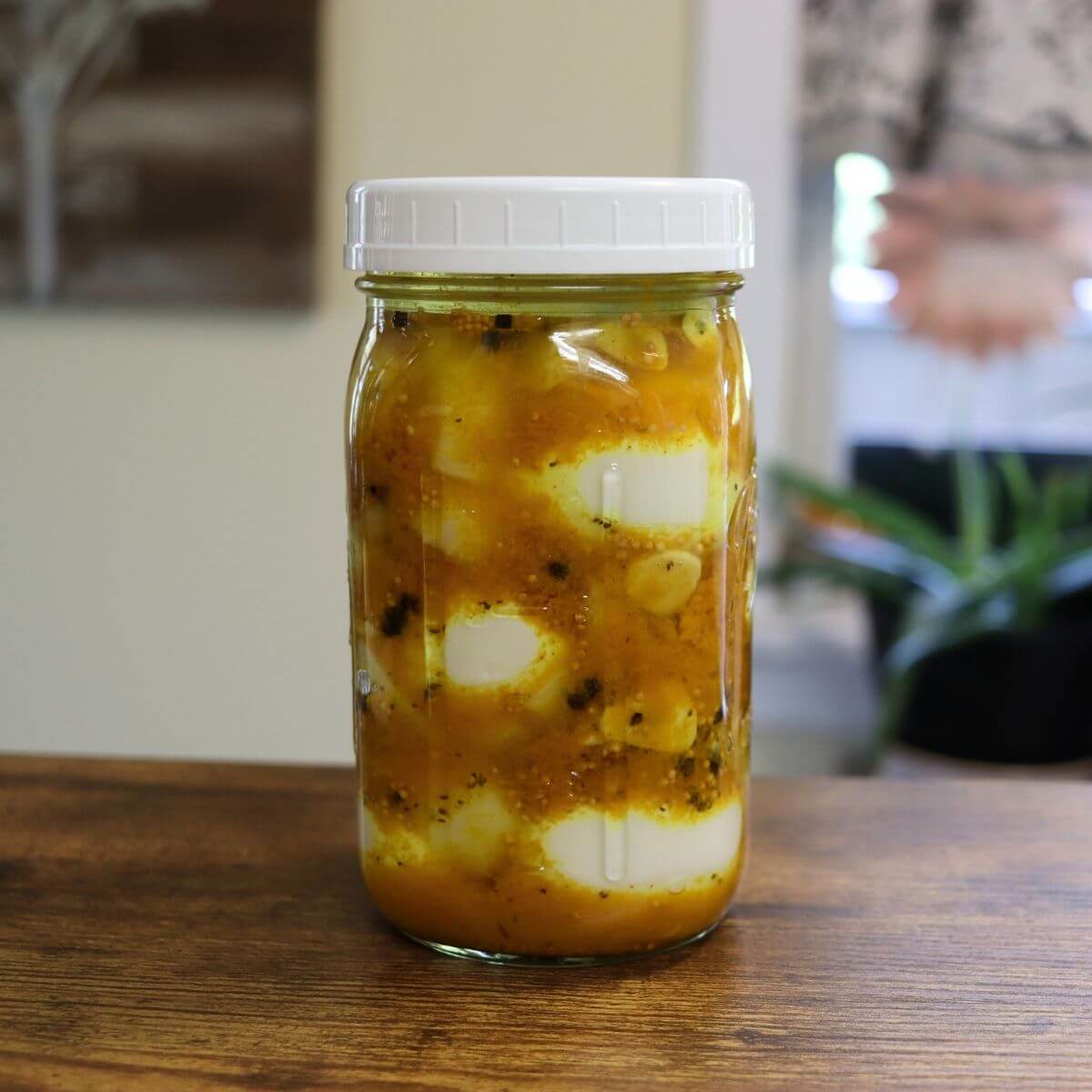
Yellow Mustard Pickled Eggs
Ingredients
- 1 1/2 cups distilled white vinegar
- 1/2 cup water
- 1/4 cup granulated sugar
- 1 1/2 teaspoons salt
- 1 1/2 teaspoons yellow mustard
- 9 large eggs hard boiled and peeled
- 2/3 cup sliced yellow onion
- 2 large garlic cloves sliced
- 1 1/2 teaspoons mustard seeds
- 1 teaspoon ground turmeric
- 1/2 teaspoon black peppercorn
- 1/8 teaspoon celery seed
Instructions
- In a saucepan, combine the white vinegar, water, sugar, salt, yellow mustard, and ground turmeric. Bring to a light simmer over medium heat, stirring until the sugar and salt are fully dissolved.
- Remove the brine from the heat and allow it to cool to room temperature.
- Layer the peeled hard-boiled eggs, sliced onion, mustard seeds, peppercorns, celery seed, and garlic in a clean quart-size mason jar.
- Pour the cooled brine into the jar, covering the eggs and seasonings. Fill to just below the band line.
- Place a canning weight into the jar to keep the eggs fully submerged in the brine.
- Cover the jar and let it stand at room temperature for 1 hour.
- Transfer the jar to the refrigerator and refrigerate for at least 24 hours before serving. For best flavor and color, refrigerate for 1 week before serving.
Notes
- Allow A Full Week: While the eggs can be eaten after 24 hours, 1 week of refrigeration produces the best flavor and color.
- Keep Eggs Submerged: Use a canning weight or other food-safe weight to ensure the eggs remain below the surface of the brine.
- Expect Turmeric Settling: Ground turmeric may settle to the bottom of the jar during storage. This is normal.
- Store In The Refrigerator: These are refrigerator pickled eggs and should remain refrigerated at all times.
- Save The Onions: The pickled onions can be used on sandwiches, burgers, salads, and wraps after the eggs have been eaten.
Nutrition information is automatically calculated, so should only be used as an approximation.