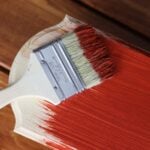
DIY Toxin Free Milk Paint
Make your own toxin-free milk paint at home for a safe, eco-friendly alternative to traditional paints. Perfect for wood, furniture, and walls, this natural paint creates a beautiful matte finish without harsh chemicals or VOCs. Ideal for adding a rustic or vintage touch to your projects, milk paint is safe for indoor use, and easy to customize for your desired color and consistency.
Yield: 3 cups
Cost: $3.00
Equipment
- 2 Medium mixing bowls
- Kitchen strainer
- Flour sack towel or muslin
- 2'-3' Length of string
- Spoon
- Fork or whisk
- Spatula
Materials
- 1 quart skim milk
- 1/2 cup white vinegar
- 4 tablespoons natural toxin free pigment color of your choice
Instructions
- Combine Milk and Vinegar: In a medium mixing bowl, pour 1 quart of skim milk and 1/2 cup of white vinegar. Stir well with a spoon until thoroughly mixed.
- Let the Milk Curdle: Allow the mixture to sit undisturbed for 24 hours. During this time, the milk will curdle, separating the milk curds from the whey.
- Strain the Mixture: Place a kitchen strainer inside another bowl and line it with flour sack towel or muslin. Slowly pour the curds and whey mixture into the strainer, letting the cloth catch the curds.
- Drain the Whey: Gather the corners of the cloth and tie them securely with the length of string. Hang the cloth over the bowl, allowing the whey to drain out. This may take a few hours, and you’ll know it’s done when the cloth no longer drips.
- Collect the Curds: After draining, remove the cloth from the string and place it into a mixing bowl. Use a spatula to scrape any remaining curds from the cloth.
- Blend the Curds: Using a fork or whisk, blend the curds in the bowl until they are smooth and lump-free.
- Add Pigment: Gradually add your chosen pigment to the curds, stirring a little at a time. Mix well until you reach the desired color. Keep in mind that the paint will dry slightly darker than it appears when mixed.
- Start Painting: Once your paint is ready, apply it to your project using a brush. Allow the first coat to dry for 2 to 4 hours. If you'd like a more opaque finish, feel free to apply a second coat.
Video
Notes
- Use Fresh Milk: If possible, opt for fresh skim milk to get the best curdling results. Older milk may not separate as effectively.
- Test Pigment Gradually: Milk paint will dry darker, so start with a little pigment and add more as needed to achieve your perfect color.
- Consider the Surface: Milk paint works best on porous surfaces like wood or untreated furniture.
