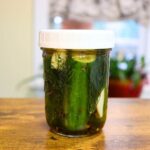
Garlic Pickles
These garlic pickles are crisp, tangy, and packed with fresh garlic and dill. Make them as quick refrigerator pickles or process the jars for shelf-stable storage.
Ingredients
- 2 pounds Kirby cucumbers
- 9 large garlic cloves peeled
- 1 1/2 teaspoons black peppercorns
- 3/4 teaspoon crushed red pepper flakes
- 9 fresh dill sprigs
- 1 1/2 cups apple cider vinegar
- 1 1/2 cups water
- 2 tablespoons pickling salt
Instructions
- Wash the jars, lids, and bands in hot, soapy water and rinse thoroughly. Inspect the jars for chips or cracks and the lids and bands for damage. Keep the jars hot if you will be processing the pickles.
- Wash and dry the cucumbers. Trim about 1/16 inch from the blossom ends. Leave the cucumbers whole or cut them into spears or slices.
- Divide the garlic cloves, black peppercorns, crushed red pepper flakes, and fresh dill sprigs evenly among 3 pint jars. Pack the cucumbers snugly into the jars without crushing them, leaving room for 1/2 inch headspace.
- Combine the apple cider vinegar, water, and pickling salt in a saucepan. Bring the brine to a boil, stirring until the salt is completely dissolved, then remove it from the heat.
- Pour the hot brine over the cucumbers, leaving 1/2 inch headspace. Remove trapped air bubbles with a plastic or wooden utensil. Recheck the headspace and add more brine if needed.
- Wipe the jar rims clean. Center the lids on the jars and secure the bands until fingertip-tight.
- For refrigerator garlic pickles, allow the jars to cool to room temperature, then refrigerate. Let the pickles develop their flavor in the refrigerator for about a week before serving.
- For shelf-stable garlic pickles, fill a water bath canner fitted with a canning rack with enough water to cover the filled jars by at least 1 inch. Bring the water to a boil. Using a canning jar lifter, lower the filled jars onto the rack and cover the canner. Bring the water back to a full rolling boil, then begin timing and process the jars for 10 minutes.
- Turn off the heat, remove the canner lid, and wait 5 minutes. Remove the jars while keeping them upright. Set them on a towel or cooling rack and leave undisturbed for 12 to 24 hours.
- Remove the bands and check the seals by pressing the center of each lid. Properly sealed lids will not flex or pop when pressed. Refrigerate any jar that did not seal. Label sealed jars and store them in a cool, dark place.
- Let the garlic pickles rest for at least 1 week before opening for the best developed flavor.
- Makes approximately 3 pint jars of garlic pickles.
Notes
- Cucumber cuts: Leave small pickling cucumbers whole for the firmest texture, cut them into spears, or slice them into chips. Thinner cuts will soften more quickly as they absorb the brine.
- Salt substitutions: This recipe uses 2 tablespoons pickling salt. Substitute 2 tablespoons fine sea salt or 3 tablespoons Diamond Crystal kosher salt, if preferred.
- Refrigerator storage: Keep unprocessed garlic pickles refrigerated, even if the lids appear to seal as the jars cool. A vacuum seal alone does not make the pickles shelf stable.
- Brine proportions: Do not alter the proportions of vinegar and water when making this recipe for shelf-stable storage. The garlic, dill, and dry seasonings can be adjusted to taste.
- Pickling weights: A glass pickling weight is optional for refrigerator pickles and can help keep cucumbers submerged beneath the brine.
